

Which women’s leadership conference in Canada is actually right for your career stage, budget, and goals in 2026? The honest answer is that it depends — and most roundup articles won’t tell you that. They hand you a list of names and call it a guide. This one is different. Each conference below gets a full profile: who it’s built for, what it costs, what you’ll actually walk away with, and whether it’s worth the travel to Toronto, Ottawa, Vancouver, Calgary, or Regina to be there.
Canada’s Top Women in Leadership Conferences 2026
- Art of Leadership for Women | Spring 2026 | Toronto, ON | Full-day speaker-driven leadership summit for professional women at all career levels
- The Women’s Summit Ottawa | Spring 2026 | Ottawa, ON | Regional leadership and networking event focused on public sector and policy-adjacent professionals
- GWEC Canada | TBC 2026 | Toronto, ON | Global Women’s Executive Conference addressing boardroom diversity and corporate advancement
- Global Conference Alliance | Multiple dates 2026 | Vancouver, BC | Multi-track professional development conferences with dedicated women’s leadership programming
- International Women’s Forum (IWF) Canada | Fall 2026 | Rotating Canadian cities | Exclusive peer network for senior executive women and board-level leaders
- Cornerstone Conference | Spring 2026 | Calgary, AB | Prairie-focused leadership event connecting women in business, government, and community sectors
- The Honest Talk Conference | 2026 | Toronto, ON | Intimate, candid leadership conversations for mid-career women seeking authentic professional growth
- Aspen Institute Canada | 2026 | TBC | Values-based leadership forum drawing on Aspen’s global intellectual framework
- Women of Influence Canada Summit | 2026 | Toronto, ON | High-profile gathering tied to Canada’s Top 100 Most Powerful Women Awards ecosystem
- GO WORLD Conference | 2026 | Vancouver, BC | Globally oriented women’s leadership event with a focus on cross-border impact and inclusion
Here’s the reality check behind all of it. According to Statistics Canada and research cited by Catalyst Canada, women still hold fewer than 35% of senior leadership roles across Canadian corporations — a number that has moved painfully slowly despite years of public commitments from organizations ranging from RBC Royal Bank of Canada to Deloitte Canada’s Women’s Initiative. The McKinsey Women in the Workplace Report consistently shows that the biggest drop-off for women happens in the middle of the pipeline, not at entry level. Figures like Claudette McGowan, Annette Verschuren, and Linda Hasenfratz didn’t build their careers by waiting for the gap to close — they sought out rooms where the right conversations were already happening. In 2026, choosing the right conference isn’t a nice-to-have on your professional development checklist. It’s a strategic decision about who you’ll meet, what you’ll learn, and how fast you move.
Canada’s Top 10 Women in Leadership Conferences in 2026 at a Glance
Before going deep on any single event, here’s a straightforward overview of all ten — who runs them, where they land on the calendar, what they cost, and who actually shows up. Use this as your quick reference before committing budget or PTO.
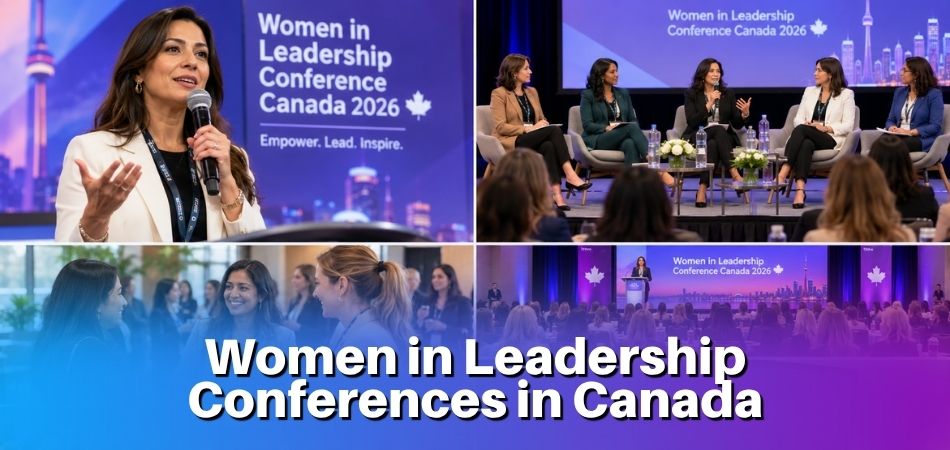
1. Art of Leadership for Women
- Location: Toronto, ON
- Typical timing: Spring (April–May)
- Audience: Mid-to-senior professionals across industries
- Price range: ~$700–$1,200 CAD
One of the most recognized names on this list. The Art of Leadership for Women pulls large crowds — think 2,000+ attendees in a single-day format — and focuses heavily on keynote speakers rather than workshops. Names like Claudette McGowan and international figures such as Mary Barra have been referenced in Canadian leadership circles in connection with this event. If you want inspiration and networking density in one day, this is a strong pick. If you want hands-on skill-building, it’s not your best option.
2. The Women’s Summit Ottawa
- Location: Ottawa, ON
- Typical timing: Late winter (February–March)
- Audience: Public sector leaders, policy professionals, nonprofit executives
- Price range: ~$400–$800 CAD
Ottawa draws a different crowd than Toronto. Government connections matter here. The Women’s Summit Ottawa tends to attract senior civil servants, association leaders, and policy-focused professionals. Given Ottawa’s proximity to federal decision-making, panels often touch on equity policy, IRCC — Immigration, Refugees and Citizenship Canada initiatives, and public leadership pipelines. Smaller than Art of Leadership. More conversational.
3. GWEC Canada (Global Women’s Economic Conference Canada)
- Location: Rotates — Calgary and Vancouver have both hosted
- Typical timing: Fall (September–October)
- Audience: Entrepreneurs, C-suite, investors
- Price range: ~$900–$1,500 CAD
GWEC Canada sits at the intersection of business and economic policy. Expect content on capital access, board representation data from sources like Statistics Canada and the McKinsey Women in the Workplace Report, and speakers tied to organizations like the Canadian Women’s Foundation and MasterCard Foundation. Strong showing from Western Canada’s business community.
4. Global Conference Alliance — Women’s Leadership Summit
- Location: Vancouver, BC (primarily)
- Typical timing: Varies; typically spring and fall cycles
- Audience: Broad professional range; international attendees
- Price range: ~$500–$1,100 CAD
Global Conference Alliance runs multiple professional events annually. Their women’s leadership programming attracts a genuinely international audience, which distinguishes it from more regionally focused Canadian events. Worth looking at if cross-border networking or global market exposure matters to your goals.
5. International Women’s Forum (IWF) Canada
- Location: Toronto and rotating regional chapters
- Typical timing: Multiple events throughout the year
- Audience: Senior executive women (invitation/membership-based)
- Price range: Membership-gated; annual fees in the $2,000–$4,000+ CAD range
IWF Canada isn’t a conference you just register for. It’s a membership organization, and events are exclusive to members and their guests. The connections here are genuinely senior — think board directors, CEOs, and the kind of people who get quoted in the Globe and Mail Women’s Collective. Chrystia Freeland and figures like Annette Verschuren operate in these circles. If you qualify and can afford the membership, the access is real.
6. Cornerstone Conference
- Location: Toronto, ON
- Typical timing: Spring
- Audience: Women of faith, nonprofit, and community leadership
- Price range: ~$200–$500 CAD
Cornerstone occupies a distinct lane. It blends professional leadership content with faith-based community values. It’s not for everyone, but it serves a specific audience well — particularly women in nonprofit leadership, social enterprise, and community organizations who find secular-only programming misses part of their context.
7. The Honest Talk Conference
- Location: Toronto, ON (with virtual options)
- Typical timing: Fall
- Audience: Women of color, early-to-mid career professionals
- Price range: ~$150–$400 CAD
The Honest Talk was built to fill a gap. It centers the experiences of Black and racialized women in Canada’s professional landscape — a conversation that larger conferences often sideline. More accessible price point, strong community feel. Lean In Canada and Women of Influence Canada have both intersected with this space. If you’re earlier in your career and want a room that actually reflects your experience, this belongs on your shortlist.
8. Aspen Institute Canada — Women’s Leadership Programs
- Location: Various (Ottawa, Toronto)
- Typical timing: Year-round seminar format
- Audience: Senior leaders across sectors
- Price range: Fellows programs vary; some events are invitation-only
Aspen Institute Canada takes a different approach entirely. Less conference, more seminar. Their methodology is Socratic — small groups, texts, structured dialogue. It attracts people who want to think carefully rather than accumulate keynote quotes. Wes Hall has appeared in Aspen contexts as an ally speaker. Not the right fit if you’re after networking volume. Exactly the right fit if you want depth.
9. Women’s Executive Network (WXN) — Canada’s Most Powerful Women Summit
- Location: Toronto, ON
- Typical timing: Fall (November, typically tied to Canada’s Top 100 Most Powerful Women Awards)
- Audience: Senior executives, board members, emerging leaders (separate programming streams)
- Price range: ~$800–$1,500 CAD; WXN membership adds access
WXN’s annual summit is attached to Canada’s Top 100 Most Powerful Women Awards, which means the room includes active honorees from RBC Royal Bank of Canada, Deloitte Canada’s Women’s Initiative, and similar anchor institutions. Linda Hasenfratz has been recognized in this sphere. High networking value. The awards ceremony itself shifts the energy — it’s celebratory in a way that most leadership conferences aren’t.
10. GO WORLD Women’s Leadership Conference
- Location: Regina, SK (and expanding)
- Typical timing: Spring
- Audience: Prairie-based and rural women leaders, Indigenous women professionals
- Price range: ~$300–$700 CAD
GO WORLD punches above its weight for Prairie professionals. Regina doesn’t get much attention on national lists, but this conference consistently draws strong regional attendance and has built real programming around Indigenous women’s leadership and rural economic participation. If you’re in Saskatchewan, Manitoba, or rural Alberta, this is worth your attention in a way the Toronto-centric events simply aren’t.
How These 10 Stack Up Side by Side
| Conference | Location | Format | Price Range (CAD) | Best For |
|---|---|---|---|---|
| Art of Leadership for Women | Toronto | Single-day keynote | $700–$1,200 | Inspiration, large networking |
| The Women’s Summit Ottawa | Ottawa | Multi-session | $400–$800 | Public sector, policy |
| GWEC Canada | Calgary/Vancouver | Multi-day | $900–$1,500 | Entrepreneurs, C-suite |
| Global Conference Alliance | Vancouver | Multi-day | $500–$1,100 | International networking |
| IWF Canada | Toronto/rotating | Members-only | $2,000–$4,000+ | Senior executive |
| Cornerstone Conference | Toronto | Multi-session | $200–$500 | Faith-based, nonprofit |
| The Honest Talk | Toronto/virtual | Single-day | $150–$400 | Women of color, early career |
| Aspen Institute Canada | Ottawa/Toronto | Seminar series | Varies | Deep leadership thinking |
| WXN Summit | Toronto | Multi-day | $800–$1,500 | Senior exec, awards |
| GO WORLD | Regina | Multi-day | $300–$700 | Prairie, Indigenous leaders |
Price ranges are estimates based on historical registration data. Always verify directly with organizers — early-bird pricing and group rates can shift these figures significantly. LinkedIn Canada’s events listings and the Canadian Women’s Foundation calendar are both useful secondary sources for confirming 2026 dates as they’re announced.
Women in Leadership in Canada: 2026 Statistics and Trends
The numbers tell a complicated story. Canada has made real progress on gender equity in leadership over the past decade — and it’s also nowhere near done.
According to Statistics Canada, women make up just under 35% of senior management roles across the country as of 2024. That’s up from 27% in 2015, but the pace of change has slowed. At the board level, Canada’s largest publicly traded companies average about 30% female directors — better than many G20 nations, but still a long way from parity.
The McKinsey Women in the Workplace Report (which includes Canadian data in its North American scope) consistently shows the same bottleneck: women are well-represented at entry and mid-levels, then the numbers drop sharply at the VP and C-suite threshold. The “broken rung” problem isn’t theoretical here. It’s showing up in Canadian org charts.
Where the Gaps Are Sharpest
Racialized women face a steeper climb. The Canadian Women’s Foundation reports that Black, Indigenous, and women of colour hold fewer than 5% of executive roles at major Canadian organizations. Claudette McGowan — one of the most visible Black women tech executives in Canada — has spoken publicly about building career pathways without mentors who looked like her. That reality hasn’t changed fast enough.
Geography matters too. Leadership opportunities concentrate in Toronto, Vancouver, and Calgary. Women in Regina, rural Ontario, or Atlantic Canada have fewer in-person conference options, fewer local networks, and less access to the kind of visibility that accelerates careers. GO WORLD and virtual programming from organizations like Global Conference Alliance are starting to address this, but it’s still a gap.
Sector breakdown is also worth understanding before you pick a conference:
- Financial services: RBC Royal Bank of Canada and peers have invested heavily in women’s leadership pipelines. Women now hold around 40% of VP-level roles at major Canadian banks, though C-suite numbers lag.
- Tech: Still the worst performer. Female founders received less than 4% of Canadian venture capital in 2023 (per data cited by Lean In Canada).
- Public sector: Strongest representation. Federal deputy ministers and ADMs are roughly 50/50, partly driven by policy targets.
- Manufacturing and resource extraction: Linda Hasenfratz (Linamar CEO) and Annette Verschuren (NRStor) are well-known names, but they’re outliers in sectors that remain male-dominated at the top.
What’s Driving Conference Growth in 2026
Attendance at women’s leadership events in Canada has grown sharply post-pandemic. The Art of Leadership for Women routinely sells out its Toronto and Vancouver dates. Canada’s Top 100 Most Powerful Women Awards, run by Women’s Executive Network (WXN), has expanded its programming beyond the annual gala into year-round content.
Three things are pushing this growth:
- Hybrid work created visibility problems for women. Research cited by Deloitte Canada Women’s Initiative shows women in hybrid roles are being passed over for high-profile assignments more often than their in-office peers. Conferences have become a corrective — a place to be seen, to build relationships that don’t happen over Slack.
- Sponsorship is replacing mentorship as the focus. Mentorship tells you what to do. Sponsorship gets you in the room. Events like the International Women’s Forum (IWF) Canada gatherings and the Cornerstone Conference are explicitly designed around sponsor relationships, not just skill sessions. That shift in framing is attracting more senior attendees.
- Immigration is reshaping the talent pipeline. IRCC — Immigration, Refugees and Citizenship Canada data shows that internationally trained professional women are one of the fastest-growing cohorts in the Canadian workforce. Organizations like MasterCard Foundation and United Nations Women Canada are actively funding programs that connect immigrant women to leadership pathways. Conferences are starting to reflect this, building programming around credential recognition, cultural navigation, and network-building for newcomers.
The Ally Question
Men showing up at women’s leadership events is no longer unusual. Wes Hall has been a visible example of an executive who actively participates in these spaces rather than just endorsing them from a distance. The Globe and Mail Women’s Collective and LinkedIn Canada have both published data showing that gender equity initiatives stall without meaningful male allyship at the senior level.
Some conferences are now explicitly including ally tracks. Others keep programming women-only by design. Neither is wrong — they’re solving different problems. Knowing which model a conference uses before you register matters, especially if you’re trying to bring colleagues or sponsors.
What This Means for Your 2026 Planning
The data points to a few practical conclusions. If you’re early-career and trying to close a skills gap, you need different programming than someone at the VP level looking for board placement support. If you’re a racialized woman, events with explicit DEI commitments in their speaker lineups and programming — not just a diversity statement on their website — are going to give you more value.
Chrystia Freeland has spoken at several Canadian leadership forums about the structural barriers that keep women out of economic decision-making. Mary Barra gets referenced in Canadian leadership circles as the benchmark for what’s possible. But benchmarks and speeches don’t replace finding one event where you actually make the connection that changes your trajectory.
That’s the real case for investing in conferences in 2026. Not inspiration. Access.
The Top 10 Women in Leadership Conferences in Canada 2026 — Full Breakdown
1. Art of Leadership for Women — Toronto and Ottawa
This one consistently draws the largest crowds. Art of Leadership for Women runs full-day events in both Toronto and Ottawa, typically pulling 1,500–2,500 attendees per city. The format is simple: a single mainstage track, no breakouts, high-profile speakers back to back.
Speakers have included executives referenced regularly in Canadian leadership circles — think profiles adjacent to Linda Hasenfratz and Annette Verschuren — alongside international names. The event is produced by The Art of Productions, the same group behind the broader Art of Leadership series.
Who it’s for: Mid-to-senior professionals who want a curated, high-production day without conference logistics fatigue. You show up, sit down, absorb.
Pricing: General admission typically sits around $595–$795 CAD. Group rates are available, and many employers cover it under L&D budgets without question.
What to watch for in 2026: The Ottawa date often gets less attention than Toronto but frequently has a stronger public-sector and government policy angle — relevant if your work touches federal institutions or Chrystia Freeland’s economic portfolio areas.
One honest limitation: there’s no structured networking built into the day. You’ll meet people, but it’s organic. If you’re specifically there to build connections, plan to arrive early or stay after.
2. The Women’s Summit Ottawa
The Women’s Summit Ottawa operates at a different scale than Art of Leadership — more intimate, more policy-adjacent, and deliberately rooted in the National Capital Region’s unique mix of public servants, NGO leaders, and federal executives.
Sessions tend to address systemic barriers more directly than most commercial events. You’ll find panel conversations on pay equity data from Statistics Canada, representation gaps in federal senior leadership, and occasionally direct input from Canadian Women’s Foundation program officers.
Format: Usually one to two days, mix of keynotes and facilitated roundtables.
Pricing: More accessible than the larger events — often in the $250–$450 CAD range depending on registration tier.
Good fit for: Women in the public service, policy professionals, non-profit executives, and anyone building networks specifically in Ottawa’s leadership ecosystem. If you’re trying to get a seat at tables that shape national women’s policy, this is where those conversations happen informally.
The summit doesn’t always get the national media coverage of Toronto-based events. That’s part of why it’s underrated.
3. GWEC Canada — Regina
GWEC Canada — the Global Women’s Economic Conference — is the one on this list that most people outside Saskatchewan haven’t heard of. That’s a mistake.
Regina hosts this conference, and the prairie context matters. The agenda skews heavily toward women in resource industries, agriculture, entrepreneurship in smaller markets, and economic development outside Canada’s major metros. These conversations don’t happen at Toronto conferences.
Audience: Women entrepreneurs, rural business owners, Indigenous women leaders, and executives in energy and agriculture sectors. Catalyst Canada has cited the need for exactly this kind of regional coverage in their equity research.
Why go if you’re not from Regina: The networking-to-cost ratio is exceptional. Fewer attendees means more actual conversation. You won’t be fighting through 2,000 people to get five minutes with a speaker.
2026 note: Watch for session tracks on Indigenous women’s economic leadership — this has grown significantly in recent iterations and reflects broader national momentum.
Registration is typically well under $400 CAD, and the city is genuinely easy to navigate for a quick two-day trip.
4. Global Conference Alliance Women’s Leadership Events
Global Conference Alliance operates across multiple Canadian cities and runs several women’s leadership-focused events under different banners throughout the year. Think of them less as a single conference brand and more as a pipeline of professional development events.
Vancouver and Calgary are the most active hosting cities for their women’s leadership programming.
The practical reality: Quality varies by event. Some draw genuinely senior speakers and well-structured content. Others are more introductory. You need to look at the specific agenda and speaker list for each event rather than assuming consistency across the brand.
Pricing: Generally mid-range, $400–$700 CAD depending on the event and format. Multi-event passes exist if you’re planning to attend more than one.
Best use case: If you’re based in Western Canada and the major national events don’t fit your schedule or budget, Global Conference Alliance events fill the calendar gap. They’re also good for teams — the volume of events means you can stagger attendance across a year.
Check their 2026 schedule early. Some events sell out faster than the brand’s profile might suggest.
5. IWF Canada Chapter Events — International Women’s Forum
IWF Canada is a different animal entirely. It’s not a public conference — it’s a membership organization. The International Women’s Forum operates through chapters across Canada, and access to events is largely member-driven.
The women in IWF Canada are typically C-suite, board directors, senior government officials, and founders of significant organizations. Claudette McGowan, the cybersecurity executive and tech leader, is the kind of profile that fits this network. So is the caliber of conversation you’d expect at Canada’s Top 100 Most Powerful Women Awards circles.
How to access it: You need to be nominated or invited for full membership. However, some chapter events — particularly in Toronto and Vancouver — include limited guest seating or public programming.
Why it matters for this list: If you’re at a stage where you’re looking for peer networks at the executive level rather than professional development content, IWF Canada is the right room. The events are smaller, often under 100 people, and the density of seniority in the room is unlike anything at a commercial conference.
Practical step: Check the IWF Canada website directly and contact your nearest chapter. If you’re not yet at the membership level, look at whether your organization has existing IWF-connected executives who could facilitate an introduction.
6. Cornerstone Conference
Cornerstone Conference has a distinct identity: it centers on women of faith in leadership. That’s a specific audience, and if it’s yours, this conference punches well above its name recognition.
It’s held in Canada — often in Ontario — and the programming addresses leadership development, organizational influence, and community impact through a values-based lens. The speakers tend to be women leading non-profits, social enterprises, churches, and community organizations.
Who this is genuinely for: Women in faith-adjacent leadership roles, non-profit directors, community organizers, and anyone whose leadership philosophy is meaningfully shaped by spiritual or ethical frameworks.
Who it’s not for: If you’re looking for corporate advancement strategies or secular professional development, the framing won’t land the way you want it to.
Pricing: Generally very accessible — often under $300 CAD, sometimes significantly less for early registration.
The Cornerstone community tends to be tight-knit, which means the networking has real follow-through. People actually stay connected after.
7. The Honest Talk Conference
The Honest Talk Conference is building a reputation quickly, particularly among women in their 30s and 40s navigating mid-career pivots, career transitions, and the gap between what professional success looks like on paper and what it feels like in practice.
The name signals the format. Sessions are candid. Speakers talk about failure, burnout, pivoting industries, and the parts of leadership nobody puts in a LinkedIn post. LinkedIn Canada’s data on women’s career trajectory concerns — particularly around the mid-career plateau — is exactly the context this conference speaks to.
Format: Usually one day, mix of keynotes and facilitated conversations. Smaller scale, deliberately.
Audience: Women in the 5–15 year career mark who want honest frameworks, not inspiration theater.
Pricing: Competitive — typically in the $200–$400 CAD range.
One note: The conference is still growing its national profile. The content quality has outpaced its marketing budget. Worth watching for 2026 speaker announcements before dismissing it based on brand recognition alone.
8. Aspen Institute Canada Leadership Programs
Aspen Institute Canada isn’t a single annual conference — it’s a cohort-based leadership development organization. Knowing this distinction matters before you register for anything.
Their programs run over multiple sessions, sometimes spanning months, and are explicitly designed for leaders who want deep engagement rather than one-day inspiration. The Aspen framework focuses on values-based leadership through text-based seminars, peer dialogue, and structured reflection.
Who this is actually for: Senior leaders — executives, directors, policy leaders — who have time and organizational support for an extended development commitment. The McKinsey Women in the Workplace Report framework on moving women into senior leadership is the kind of systemic thinking As
Virtual vs. In-Person: Which Conference Format Works Best for You in 2026?
This isn’t a simple answer. It depends on where you are in your career, what your employer will fund, and honestly, what you’re actually trying to get out of the experience.
Here’s the honest breakdown.
What In-Person Still Does Better
Hallway conversations. That’s the real answer. The structured sessions are valuable, but the relationships that shift careers tend to happen in the coffee line between panels, not during them.
Events like Art of Leadership for Women in Toronto and the Cornerstone Conference are designed around this. The room matters. Sitting beside a VP from RBC Royal Bank of Canada or a board director like Linda Hasenfratz’s peer group during a breakout session — that’s a different kind of access than a Zoom chat window.
A few things in-person does that virtual genuinely cannot replicate:
- Body language and presence practice. If you’re working on executive presence, you need real rooms.
- Spontaneous introductions. Nobody’s “randomly meeting” anyone in a virtual lobby.
- Multi-day immersion. Events like IWF Canada gatherings and Aspen Institute Canada programs run deep precisely because participants are away from their desks for 48+ hours.
- Recruiter and sponsor visibility. Companies like Deloitte Canada and MasterCard Foundation often have representatives at in-person events specifically looking for talent.
The tradeoff is real. In-person conferences in Toronto, Ottawa, or Vancouver run anywhere from $800 to $4,000+ CAD once you factor in registration, travel, hotel, and meals. That’s a significant number if your company isn’t covering it.
Where Virtual Holds Its Own
Don’t dismiss virtual conferences as the consolation prize. For some career stages and situations, they’re simply the smarter choice.
The GWEC Canada digital programming and GO WORLD sessions have built genuine community online. The Honest Talk Conference has run hybrid successfully, with virtual attendees reporting strong engagement when the event architecture is built for it — not just a webcam pointed at a stage.
Virtual works well when:
- You’re earlier in your career and still building your knowledge base. You need content more than you need a senior network right now.
- You’re based outside major urban centres and travel costs are prohibitive. Statistics Canada data consistently shows women in mid-sized cities face career development gaps partly because of access to events like these.
- You’re managing caregiving responsibilities. A two-day conference in Ottawa is logistically different from a two-day conference you attend from your kitchen between school pickups.
- You want to sample a conference before committing to the full in-person experience. Many events now offer hybrid tickets at a lower price point.
LinkedIn Canada reported post-pandemic that women cited scheduling flexibility as the top factor in professional development participation. That hasn’t changed in 2026.
The Hybrid Middle Ground
Several conferences in this list now offer genuine hybrid models — not just a livestream, but parallel programming, virtual networking rooms, and on-demand access after the event.
Women of Influence Canada and the Women’s Executive Network (WXN) have both moved toward this structure, which makes sense given their national audience. A WXN member in Regina shouldn’t have a fundamentally worse experience than one in downtown Toronto.
Hybrid done right means:
- Live Q&A access for virtual attendees, not just passive watching
- Recorded sessions available for 30-90 days post-event
- Digital networking tools that actually get used (this is where most hybrids fail — the tech exists, but nobody drives adoption)
When you’re evaluating a hybrid option, ask the organizer directly: what percentage of virtual attendees reported meaningful connections in the last event? If they can’t answer that, the virtual experience is probably just a livestream with a different price tag.
A Quick Decision Framework
| Your Situation | Recommended Format |
|---|---|
| Senior leader, building board-level network | In-person, full stop |
| Mid-career, company-sponsored, urban centre | In-person or hybrid |
| Early career, self-funded | Virtual or hybrid |
| Caregiver or rural/remote location | Virtual with on-demand access |
| International speaker or global focus | Hybrid (IWF Canada, GO WORLD) |
| First-time conference attendee | Virtual to assess fit, then in-person |
One more thing. The Canadian Women’s Foundation and Lean In Canada have both published research showing that peer networks formed at in-person events have higher long-term retention and reciprocity than those formed virtually. That data should inform your thinking, especially if you’re at a stage where mentorship and sponsorship relationships are what you actually need next.
Choose the format that serves your actual goal — not the one that looks most impressive on a LinkedIn post.
Free vs. Paid Women’s Leadership Conferences in Canada 2026
Cost is a real factor. Not every professional has an employer footing the bill, and conference fees in Canada range from zero to over $2,500 depending on the event, city, and whether you’re booking early or late. Knowing what you’re actually getting at each price point helps you spend — or not spend — wisely.
What You Get at the Free End
Several high-quality events in Canada either run at no cost or offer free-access tiers worth taking seriously.
- Lean In Canada hosts regular leadership circles and panel events, many of them free or under $25. These aren’t massive keynote productions, but the networking-to-cost ratio is genuinely hard to beat, especially for early-career women or those between roles.
- United Nations Women Canada runs public events, webinars, and community roundtables tied to global campaigns like Generation Equality. Most are free. The content skews more advocacy than career strategy, but if policy, gender equity frameworks, or international development intersect with your work, these sessions are substantive.
- LinkedIn Canada periodically hosts free virtual events specifically targeting women professionals — often tied to data releases like their annual workforce reports. Short, focused, and useful if you have 60 minutes rather than two days.
- Globe and Mail Women’s Collective events occasionally offer free or low-cost access to panel discussions, particularly for subscribers. The speakers tend to be senior — think C-suite and board-level executives — without the four-figure ticket price.
The honest limitation of free events: they’re usually shorter, lighter on structured curriculum, and the follow-up networking is less organized. You get what you need for awareness or inspiration. You don’t get the depth of a two-day immersive program.
The Mid-Range: $200–$800
This is where most people land, and where the value proposition gets genuinely interesting.
- The Honest Talk Conference typically sits in this range depending on your registration timing. It’s built around candid conversation — less corporate polish, more direct dialogue about what women actually face at work. Early bird pricing can bring it under $300.
- The Women’s Summit Ottawa also tends to price accessibly, with government and public sector employees making up a large portion of attendees. If you’re in the federal sphere, the policy-adjacent programming is directly relevant to your daily work, which matters more than the ticket cost.
- Cornerstone Conference out of Regina targets women across Western Canada, including many attendees from agriculture, energy, and the trades. Pricing is competitive with the regional market, and the room reflects industries that larger Toronto-centric events often ignore.
For this price tier, you’re typically getting a full day or day-and-a-half program, access to breakout sessions, and some form of structured networking. It’s enough to make a real connection or walk away with a framework you’ll actually use.
The Premium Tier: $1,000–$2,500+
Art of Leadership for Women is the most attended paid conference in this space in Canada. Pricing varies by city — Toronto, Calgary, and Vancouver all run versions of the event — and full-price tickets regularly exceed $1,200. The speaker roster explains why. Past lineups have included figures referenced heavily in Canadian leadership circles, from executives like Annette Verschuren and Linda Hasenfratz to international names like Mary Barra. You’re paying for production quality, brand-name speakers, and a room full of senior professionals who’ve also paid $1,200.
GWEC Canada (Global Women’s Economic Council) and events connected to Global Conference Alliance sit at the higher end too, particularly when you factor in accommodation in Vancouver or Toronto. These conferences lean heavily into policy, DEI strategy, and cross-sector leadership — useful if you’re in a senior role trying to influence organizational change rather than just advance your own career.
International Women’s Forum (IWF) Canada operates more as a membership model with event access tied to affiliation. The entry point is high — this is not a conference for someone three years into their career — but the access to a curated peer group of senior women leaders is the actual product here, not the sessions themselves.
Canada’s Top 100 Most Powerful Women Awards (hosted by Women’s Executive Network, WXN) includes a summit component. For senior women or organizations nominating employees, the networking around the awards event has genuine strategic value. The cost reflects that.
Is Employer Sponsorship Realistic?
More than people assume. Many Canadian employers — including those with active programs like Deloitte Canada Women’s Initiative or RBC Royal Bank of Canada’s internal advancement initiatives — have professional development budgets that cover conferences explicitly. The key is framing your ask around business outcomes, not personal growth. “I’ll bring back a session framework we can apply to our next talent review” gets approved more often than “I want to develop as a leader.”
Catalyst Canada has published guidance on how organizations should be funding conference participation as part of retention strategy. That’s a useful reference if you’re making the internal case.
Grants and Subsidized Access
A few practical options that don’t get mentioned enough:
The Canadian Women’s Foundation has funded participation in leadership programs and events, particularly for women from equity-deserving communities. Worth checking their grant cycles.
MasterCard Foundation initiatives in Canada have supported professional development access for young women, particularly those connected to post-secondary or entrepreneurship programs.
Some conferences — including Art of Leadership for Women — offer subsidized tickets for nonprofit sector employees or women from underrepresented groups. These aren’t always advertised loudly. Email the organizers directly and ask. The answer is sometimes yes.
IRCC — Immigration Refugees and Citizenship Canada has settlement and integration programming that, depending on the stream, can connect newcomer professional women to subsidized leadership development. Not a direct conference subsidy, but relevant if you’re helping connect newcomer colleagues to these opportunities.
The Actual Calculation
Here’s a simple way to think about it. A free 90-minute webinar from LinkedIn Canada costs nothing and might give you one good idea. A $1,500 Art of Leadership for Women ticket in Toronto might give you three conversations that shift your trajectory. Neither is automatically better. It depends entirely on where you are in your career and what you actually need right now.
If you’re early-career and budget-constrained, stack the free and mid-range events. If you’re senior and the ROI of one good introduction could translate into a board seat or a major client, the premium price is reasonable math. Just be honest with yourself about which one applies.
Networking Opportunities at Canada’s Women’s Leadership Events — What to Expect
Conferences are sold on their speakers. The real value, most attendees will tell you afterward, was the person they met at lunch.

That’s not a cliché — it’s consistently what comes out of post-event surveys from organizations like Women of Influence Canada and the Women’s Executive Network (WXN). The content is the reason you register. The network is the reason you go back.
Here’s what you can actually expect at Canada’s major women’s leadership events in 2026, so you’re not winging it when you show up.
Structured vs. Unstructured Networking — Know the Difference
Most conferences offer both, and they work very differently.
Structured networking means the organizers have built it into the schedule deliberately. Think assigned roundtables, speed networking rounds, mentorship matchmaking sessions, or hosted dinners. The Art of Leadership for Women, for example, has consistently programmed structured peer group sessions where attendees are grouped by industry or career stage — you don’t have to be aggressive or outgoing to make a meaningful connection. You just have to show up to the right room.
Unstructured networking is the coffee break, the cocktail reception, the post-panel mingle. This is where extroverts thrive and where introverts often disappear back to their hotel rooms. If you know you’re the latter, don’t rely on the cocktail hour. Book your value into structured programming instead.
The Cornerstone Conference, which draws a strong contingent of women in trades, agriculture, and rural business across Canada, uses facilitated table discussions specifically because their attendees have told them traditional networking formats don’t work for them. That kind of design choice matters.
Digital Networking Tools Before and After the Event
LinkedIn Canada data consistently shows that connection requests sent within 24 hours of meeting someone at an event have dramatically higher acceptance and response rates than cold outreach. Most major conferences now lean into this.
Global Conference Alliance events and The Women’s Summit Ottawa both use event apps that let you browse the attendee list before the conference starts, send connection requests within the platform, and schedule one-on-one meetings during breaks. Check whether the conference you’re attending offers this — and if it does, use it the week before, not the morning of.
Some conferences tie into Women of Influence Canada’s broader community platform, which extends networking beyond the event itself. Others, like those affiliated with GWEC Canada, feed into ongoing peer networks you can access year-round.
Mentorship Matchmaking — Available at More Events Than You’d Think
This has grown significantly. Several 2026 conferences are offering formal mentorship matching as part of registration — either same-day or as a follow-up program.
Canada’s Top 100 Most Powerful Women Awards, run by WXN, has long connected emerging leaders with senior executives through curated pairings. Some of the leadership conference programs affiliated with that recognition ecosystem offer similar short-form mentorship engagements on-site. A 20-minute conversation with someone like Claudette McGowan or a senior leader from Deloitte Canada’s Women’s Initiative isn’t just a photo opportunity — if you walk in with a specific question and walk out with a follow-up email, that’s a mentorship connection you can build on.
Be specific about what you want from these sessions. “I’m looking for general advice” will get you a general conversation. “I’m a mid-level finance manager trying to move into a P&L role in the next 18 months — can I ask how you made that transition?” gets you something you can actually use.
Industry-Specific Networking Tracks
Not every conference mixes everyone together. Some have started segmenting deliberately, which makes networking far more efficient.
The International Women’s Forum (IWF) Canada events tend to attract C-suite and board-level women, meaning the peer network is senior and selective. If you’re early-career, you’re more likely to benefit as a guest or emerging leader participant than as a full member attendee. That’s not a criticism — it’s just worth knowing before you register.
Lean In Canada circles embedded within some conference programming attract mid-career professionals who are actively working through specific challenges — compensation negotiation, re-entry after leave, cross-functional moves. These peer groups tend to be more immediately useful for people who aren’t yet at the executive level.
The Aspen Institute Canada events draw a policy and social impact crowd alongside business leaders. If your networking goal is to connect with people working on gender equity at the systems level — think people connected to Canadian Women’s Foundation, United Nations Women Canada, or IRCC-adjacent work — this is the room for that.
What to Do at the Event Itself
A few practical things that make a real difference:
- Don’t try to meet everyone. Set a goal of three to five meaningful conversations per day. Quality beats volume, every time.
- Have a clear one-liner. Not an elevator pitch. Just a clear sentence about what you do and what you’re working on right now. “I’m a VP of Operations at a mid-size tech company in Calgary, and I’m figuring out how to build a more diverse hiring pipeline” is specific enough to start a real conversation.
- Follow up within 48 hours. Every hour you wait after that window, the connection gets colder. A short LinkedIn message — reference something specific from your conversation, not just “great to meet you” — is enough.
Take photos of business cards or connect on the event app on the spot. Don’t trust yourself to remember names at the end of a long conference day. You won’t.
Corporate Attendees and Team Networking
If your company is sending multiple people to a conference — which is common at larger events like the Art of Leadership for Women or Globe and Mail Women’s Collective events — coordinate before you go. Split up across sessions and roundtables rather than sitting together. You’ll collectively cover more ground, and you’ll have more to debrief on afterward.
Some organizations, including those with active Deloitte Canada Women’s Initiative chapters or RBC Royal Bank of Canada internal women’s networks, use conference attendance as part of a broader development cohort. If your employer has something like that, plug into it — the internal community you build around a shared external experience can outlast the conference itself.
A Realistic Expectation Check
Not every connection turns into something. Most won’t. That’s fine.
What you’re building at these events isn’t a transaction — it’s a network that compounds slowly. The woman you meet at The Honest Talk Conference in 2026 might not be relevant to your career for two years. But if you stayed in touch, exchanged a few LinkedIn comments, and crossed paths again at the WXN Canada’s Top 100 Awards event, by year three you’re a warm contact, not a stranger.
The McKinsey Women in the Workplace Report has flagged for several years running that women tend to have smaller professional networks than men at equivalent career stages, and that this gap widens at senior levels. Conferences are one of the most direct ways to close that gap — but only if you treat the networking as a skill you’re actively building, not a side effect of attending.
Notable Female Leaders in Canada Who Speak at These Conferences
The speaker lineups at Canadian women’s leadership conferences aren’t just impressive on paper — they shape what you actually take away from the room. Knowing who tends to show up, and where, helps you pick the right event for where you are in your career.
Here are the names you’ll see most often across 2026 programming, and what they typically bring to the table.
Claudette McGowan
McGowan is probably the most in-demand Canadian speaker on the circuit right now. As founder and CEO of Protexxa and a former TD Bank and BMO executive, she bridges cybersecurity and women’s leadership in a way that very few people can. She’s a regular presence at Art of Leadership for Women and has appeared at events backed by Catalyst Canada. Her talks aren’t theoretical — she gets specific about what it costs organizations when they lose senior women in tech, and backs it up with numbers.
Annette Verschuren
Chair of NRStor and former Home Depot Canada president, Verschuren has been speaking at Canadian leadership conferences for close to two decades. She shows up most often at events connected to the Women’s Executive Network (WXN) circuit and the Globe and Mail Women’s Collective. Her angle is scaling — she talks about how she ran a 30,000-person organization and what that actually required from her as a woman in that chair. Practical. Direct. No fluff.
Linda Hasenfratz
CEO of Linamar Corporation, Hasenfratz is one of the few manufacturing executives who regularly headlines women’s leadership events. She’s a fixture in the Canada’s Top 100 Most Powerful Women Awards community and tends to speak at conferences that lean toward business performance rather than wellness or self-development. If you’re in operations, finance, or industrial sectors, her sessions are worth planning around.
Chrystia Freeland
Her conference appearances depend heavily on the political calendar, but Freeland has participated in International Women’s Forum (IWF) Canada events and high-profile panels tied to United Nations Women Canada programming. She tends to draw large general sessions rather than breakout workshops. Expect policy framing, global economic commentary, and the occasional sharp observation about what structural change actually takes. She doesn’t do motivational speaking.
Wes Hall
Yes — a man on this list. Hall, founder of Kingsdale Advisors and a co-host of Dragon’s Den, frequently appears at women’s leadership events in an explicit ally capacity. He’s been part of panels at Cornerstone Conference programming and at events linked to the MasterCard Foundation’s Canadian work. His message tends to focus on what corporate boards need to actually change, not just aspire to. Worth attending if sponsorship and board access are on your agenda.
Women of Influence Canada and WXN-Adjacent Speakers
Several conferences pull their speaker pool heavily from the Women of Influence Canada and WXN networks. This includes executives from RBC Royal Bank of Canada, Deloitte Canada’s Women’s Initiative alumni, and senior leaders from Lean In Canada chapters. If a conference is partnered with any of these organizations, expect polished, experienced speakers who understand corporate Canada deeply — though the sessions can sometimes skew toward large-company contexts.
What the McKinsey and Statistics Canada Data Reveals About These Speakers
One pattern worth paying attention to: the McKinsey Women in the Workplace Report and Statistics Canada data consistently show the largest leadership gaps at the VP-to-C-suite transition. The best conference speakers — the ones worth rearranging your schedule for — tend to address this gap directly rather than talking around it. When you’re reviewing a conference agenda, look for session descriptions that reference specific barriers, not just “leadership development.” That’s usually a sign the speaker has something concrete to say.
How to Use Speaker Lineups to Choose Your Conference
Don’t just recognize the names. Look at what industry they come from and whether it maps to yours. A keynote from a Canadian Women’s Foundation executive will be shaped very differently than one from a LinkedIn Canada VP or a Aspen Institute Canada fellow. Both are valuable — just not equally valuable to every attendee.
Check if speakers are listed under general sessions only, or if they’re running workshops. A 90-minute workshop with Claudette McGowan will do more for your network than a 45-minute keynote where 800 people are in the room and you’ll never get to the microphone.
GO WORLD and Global Conference Alliance events sometimes bring in international names alongside Canadian ones — which adds range but can dilute the Canada-specific policy and market insight you’d get from a conference built entirely around the domestic context.
Bottom line: the speaker list is a filter, not a selling point. Use it as one.
How to Choose the Right Women’s Leadership Conference for Your Goals
Not every conference is worth your time or money. The right one depends on where you are in your career, what you actually need right now, and whether the event delivers on its promises.
Step 1 — Define Your Career Stage and Objective
Be honest with yourself before you register anywhere. Are you trying to get promoted into your first senior role? Build a board-level network? Switch industries? Each of these needs a different kind of room.
If you’re mid-career and hungry for tactical skills, something like The Honest Talk Conference or Lean In Canada events tends to hit harder than a large keynote-heavy summit. If you’re already in the C-suite or heading there, IWF Canada and the Art of Leadership for Women attract the kind of peer group — think Linda Hasenfratz, Annette Verschuren, Claudette McGowan — where the hallway conversations are worth more than most keynotes.
Entry-level? Don’t spend $1,200 on a conference built for VPs. Look at the Canadian Women’s Foundation programming or community events affiliated with Lean In Canada chapters first.
Write down one specific outcome before you register. One. “Meet three people who work in impact investing.” “Get a concrete framework for salary negotiation.” Vague goals produce vague results.
Step 2 — Match the Conference Focus to Your Industry
This matters more than most people admit. A conference designed around Bay Street finance will feel disconnected if you work in healthcare or tech. The speaker examples, the case studies, the networking tables — all of it skews toward the organizing audience.
GWEC Canada and Global Conference Alliance events tend to pull cross-industry crowds, which works well if you’re in a pivot. The Women’s Executive Network (WXN) and Canada’s Top 100 Most Powerful Women Awards are heavily weighted toward corporate Canada — financial services, consulting, energy. Great if that’s your world. Less useful if you’re a social entrepreneur or public sector leader.
The Cornerstone Conference in Regina draws heavily from the Prairies private sector and agriculture-adjacent industries. If you’re based in Saskatchewan or Manitoba and your LinkedIn network is thin, that event gives you a density of relevant local contacts that a Toronto-based conference simply can’t replicate.
Check the sponsor list too. RBC Royal Bank of Canada, Deloitte Canada Women’s Initiative, and MasterCard Foundation sponsoring an event tells you something about the audience it’s built for.
Step 3 — Consider Format, Location, and Budget
Be practical here. A $2,400 ticket to fly to Vancouver plus two hotel nights and meals might actually cost you $4,500 by the time it’s done. That math changes whether the conference is worth it.
Break the real cost into three buckets: registration, travel and accommodation, and time out of office. Some mid-market events — The Women’s Summit Ottawa, regional GO WORLD events — run under $500 all-in if you’re local. Others, like flagship Art of Leadership for Women days in Toronto or Calgary, land in the $600–$900 registration range before travel.
Virtual formats have improved a lot. The networking is still weaker, but if your main goal is learning content — keynotes, panels, frameworks — a hybrid or fully virtual option from Aspen Institute Canada or Women of Influence Canada delivers real value at a fraction of the cost.
If your employer covers professional development, get the request in early. Many of these conferences sell out by February for 2026. IRCC — Immigration Refugees and Citizenship Canada and other federal department employees should check internal PD budget timelines — federal fiscal year planning usually locks budgets by late Q3.
One more thing: check whether the conference offers early-bird pricing, group rates, or scholarship spots. United Nations Women Canada affiliated events and some nonprofit-organized summits set aside reduced-rate tickets. They don’t always advertise these loudly. Email and ask directly.
Step 4 — Evaluate the Speaker Lineup and Past Attendee Reviews
The speaker list is your clearest signal. Look past the headline names.
A single famous keynote surrounded by twelve panels of brand sponsors talking about their own initiatives is a marketing event with a conference wrapper. That’s fine if you know going in, but don’t mistake it for a development opportunity.
What you want to see: speakers who work in roles similar to where you want to be, a mix of Canadian leaders and international voices, and at least a few people you’ve never heard of. Globe and Mail Women’s Collective events and McKinsey Women in the Workplace Report release discussions tend to bring substantive, research-backed speakers. The Wes Hall inclusion in ally speaker contexts at some events signals the conference is thinking about intersectionality and systemic change, not just surface-level inclusion messaging.
For reviews, don’t rely on the conference website. Search the event name on LinkedIn Canada and filter by people in your industry. Look for posts from last year’s attendees — specifically, what they said they took away, not just cheerful post-event photos. The absence of specific takeaways in those posts tells you something.
Catalyst Canada publishes research that sometimes references which convenings generate measurable career outcomes. That’s a useful secondary check if you’re deciding between two similarly priced events.
Bottom line: spend 45 minutes doing this research before you spend $1,000 registering. Most people don’t. You should.
Corporate Sponsorship and Reimbursement — How to Get Your Employer to Pay
Conference fees in Canada aren’t cheap. Art of Leadership for Women runs around $800–$1,200 CAD per ticket. WXN’s events can push higher once you add travel and hotel. If you’re waiting until you can personally afford it, you might be waiting a while.
The good news: most mid-size and large Canadian employers already have a budget line for professional development. You just have to ask for it correctly.
Know What Budget You’re Actually Asking From
This matters more than people realize. There are usually two separate pools of money:
- Learning & Development (L&D) — covers courses, certifications, conferences directly tied to skills
- Diversity, Equity & Inclusion (DEI) budgets — covers events specifically focused on equity, representation, and inclusion initiatives
A women’s leadership conference can legitimately pull from either. If your HR department has a DEI mandate — and most Canadian companies with 500+ employees do, particularly those aligned with Catalyst Canada or Deloitte Canada Women’s Initiative benchmarks — frame your request accordingly. Don’t just walk into your manager’s office and say “I want to go to a conference.”
Build a One-Page Business Case
Your manager needs to say yes to their manager. Give them something they can forward. Keep it to one page, max.
The structure that works:
- Conference name and dates — specific. “Art of Leadership for Women, [city], [date]” not “a leadership event”
- Cost breakdown — registration, travel, accommodation, any materials
- What you’ll bring back — be concrete. Not “I’ll learn leadership skills.” Try: “I’ll return with frameworks from at least three sessions directly applicable to our Q3 people management review. I’ll share a written summary with the team.”
- Alignment to company goals — tie it to something already in your performance review or company strategy. If your employer has signed the Canadian Women’s Foundation’s equity pledge or references McKinsey Women in the Workplace data in their annual report, use that language back at them.
- ROI framing — mention that Women of Influence Canada and LinkedIn Canada data consistently show that employees who attend targeted professional development events show measurable retention improvements. HR people respond to retention arguments.
Timing Your Request
Don’t ask in December or in the middle of a fiscal quarter close. The best windows are:
- January–February, when new annual budgets are open and unspent
- Right after your performance review, when development is already on the table
- When a new DEI initiative launches internally — you’re providing a concrete action, not an abstract commitment
If your company is connected to RBC Royal Bank of Canada’s supplier or partner networks, or has worked with MasterCard Foundation on workforce programs, there’s often an existing internal culture around investing in women’s professional development. Reference that if it applies.
What If Your Company Doesn’t Have a Formal Policy?
Some smaller employers genuinely don’t have a process for this. That doesn’t mean no. It means you’re creating the precedent.
Write a short email, not a long one. Something like: “I’d like to attend [conference name] on [date]. The cost is $X. I believe it aligns with [specific company goal or initiative]. I’d be glad to share notes with the team afterward. Can we discuss?” That’s it. Short requests get answered faster.
Follow up once if you don’t hear back in a week.
Partial Reimbursement Is Still Worth Asking For
If the answer is “we can cover part of it,” take it. Even $300–$400 toward an $800 ticket is meaningful. Some employers will cover registration but not travel. Others will cover travel but not registration if the event isn’t pre-approved. Ask what they can cover, not just whether they’ll cover everything.
For the Cornerstone Conference or The Women’s Summit Ottawa, some attendees have successfully negotiated split costs — employer covers the ticket, employee covers the hotel. It’s a reasonable middle ground.
Tax Deductions for Self-Employed Attendees
If you’re self-employed or running your own business, conference costs are generally deductible as a business expense under CRA guidelines — registration, travel, and accommodation included, provided the event is directly relevant to your professional activities. Talk to your accountant, but don’t overlook this. A $1,000 conference ticket at a 30% marginal rate effectively costs you $700 out of pocket.
Early Bird Pricing Reduces the Fight
Conferences like GWEC Canada and those organized under the Global Conference Alliance umbrella typically open early bird registration 4–6 months out, sometimes saving $200–$400 per ticket. Submit your reimbursement request before early bird closes. It’s a lot easier to get approval for $699 than $999, and it signals you’ve done the planning properly.
The ask itself isn’t complicated. What makes it work is specificity, timing, and showing your employer exactly what they’re getting for the money.
Awards and Recognition Programs at Canada’s Women’s Leadership Conferences
Getting recognized at a conference is different from attending one. Several of Canada’s leading events have built formal awards programs that carry real weight on a CV — and in some cases, real visibility in Canadian business media.
Here’s what’s actually out there, and why it matters more than a certificate of attendance.
Canada’s Top 100 Most Powerful Women Awards
This is the one that moves careers. Run by Women’s Executive Network (WXN), the Canada’s Top 100 Most Powerful Women Awards is one of the most cited recognition programs in Canadian corporate circles. Winners get profiled in a dedicated report, picked up by Globe and Mail coverage, and tend to appear on future conference speaker rosters — including Art of Leadership for Women and Women of Influence Canada events.
Nominations open annually. Categories cover corporate executives, entrepreneurs, public sector leaders, and emerging leaders under 40. If you’re eligible or know someone who is, the nomination process is detailed but publicly available on the WXN site.
The awards gala itself is an event. It draws leaders like Linda Hasenfratz and Annette Verschuren in past recognition years, and it’s where you’ll find Catalyst Canada and Deloitte Canada Women’s Initiative sponsors in the same room as the people being honoured. For attendees, it’s a legitimate networking opportunity — not just a ceremony to watch.
Art of Leadership for Women — Spotlight Recognition
The Art of Leadership for Women doesn’t run a formal awards program in the traditional sense, but they spotlight emerging leaders throughout the event through curated audience features and post-event editorial. Past spotlights have been picked up by LinkedIn Canada and shared across corporate networks.
It’s informal. But it’s visible.
Women of Influence Canada — Recognition Awards
Women of Influence Canada publishes recognition lists that overlap with their conference programming. The Ones to Watch list specifically targets women under 35 in leadership roles across Canadian industries. Getting listed brings conference invitations, speaker consideration, and editorial features.
The connection to MasterCard Foundation and United Nations Women Canada partnerships in recent program years has also broadened international exposure for honorees — which matters if your career goals go beyond the Canadian market.
GWEC Canada Recognition Components
The Global Women’s Economic Conference (GWEC Canada) includes a recognition component tied to economic impact. This isn’t a polished gala — it’s more of a structured acknowledgment of women whose work connects to trade, entrepreneurship, or immigration-linked business development. Given IRCC’s involvement in some GWEC programming, recognized leaders in newcomer entrepreneurship categories have used this as a credential in grant applications and government partnerships.
Concrete. Practical. Often overlooked.
The Cornerstone Conference — Community Impact Awards
The Cornerstone Conference, which pulls a strong Western Canadian audience with sessions in Calgary and sometimes Regina, runs community impact awards focused on mid-career leaders doing work outside the Bay Street narrative. Think healthcare administrators, social enterprise founders, and educators.
These awards don’t show up in the Globe and Mail. They do show up in local government recognition, board nomination conversations, and Canadian Women’s Foundation grant contexts. If your work is community-facing, these carry more relevant weight than a national corporate award you’ll never qualify for.
The Honest Talk Conference — Peer Recognition Model
The Honest Talk Conference takes a different approach entirely. Rather than a top-down awards committee, they’ve incorporated peer nomination rounds into their event structure — attendees nominate fellow participants for recognition during the conference itself.
It’s unconventional. It also creates genuine connections, because the person who nominated you just told a room of 200 people why your work matters.
IWF Canada and the Aspen Institute Canada — Fellowship Recognition
The International Women’s Forum Canada and Aspen Institute Canada both operate fellowship programs that function as long-term recognition tracks rather than single-event awards. IWF Canada’s fellowship connects recipients to a global network. Aspen Institute Canada’s fellowship programs are tied to their leadership curriculum and carry academic-adjacent credibility.
These aren’t “apply by Friday” situations. Fellowship processes run over months. But for senior leaders, being an IWF Fellow or Aspen Fellow is a designation that travels internationally — something a one-day conference award simply can’t match.
How Recognition Programs Actually Help Your Career
Being nominated matters almost as much as winning. A nomination to Canada’s Top 100 Most Powerful Women, for example, signals to your organization that external parties see your leadership as worth acknowledging. That’s useful internal currency — especially if you’re building the case for a promotion or a board seat.
The McKinsey Women in the Workplace Report has consistently shown that women are less likely than men to receive formal sponsorship. Conference awards programs partially fill that gap by creating a public record of achievement that sponsors and mentors can point to.
Statistics Canada data on women in senior management roles also suggests that external recognition accelerates internal advancement more reliably for women than additional credentials alone. A degree gets you qualified. A public award gets you noticed.
If you’re advising someone early in their career, point them toward peer-nomination formats like The Honest Talk Conference first. Lower barrier. Real visibility. A good introduction to what professional recognition actually feels like before the higher-stakes national programs.
A Note on Sponsored Awards
Some recognition programs at Canadian women’s leadership conferences are directly sponsored by RBC Royal Bank of Canada, Deloitte Canada, or other institutional partners. That’s not a problem — but it’s worth knowing that sponsor-aligned categories sometimes reflect the sponsor’s sector priorities.
Read the award criteria carefully. An “Innovation in Finance” category sponsored by RBC is going to skew toward nominees with financial services backgrounds. That’s not bias; it’s just the architecture of how sponsored recognition works.
Pick the programs where you actually fit the criteria. A well-matched nomination beats a long-shot application to a prestige award every time.
Frequently Asked Questions
Are these conferences only for senior executives, or can early-career women attend?
Most of them welcome all career stages, but a few skew heavily senior. Art of Leadership for Women and WXN events tend to draw a lot of C-suite and VP-level attendees, so if you’re three years into your career, you might feel out of place in the networking rooms. On the other hand, The Honest Talk Conference and many regional events through Global Conference Alliance are specifically designed with emerging professionals in mind. Read the speaker bios and session titles before you register — if every panel is about “board governance” and “enterprise transformation,” that’s a signal.
How far in advance do I need to register?
Earlier than you think. Art of Leadership for Women in Toronto typically sells out premium seating by October for a spring event. If a conference offers early bird pricing, that window is usually 90 to 120 days out, and the discount is often 20–30% off the standard rate. For smaller events like The Women’s Summit Ottawa or the Cornerstone Conference, you have more flexibility, but group registration for corporate tables fills fast.
Can my employer pay for this?
Yes, and many do. WXN, Catalyst Canada, and Deloitte Canada’s Women’s Initiative all produce internal reports and frameworks that HR departments recognize by name — drop those into your reimbursement request and it lands differently than just saying “leadership conference.” The section earlier in this article covers the full pitch strategy, but the short version: frame it around a business outcome, not personal development.
Are there conferences specifically for women of colour, Indigenous women, or immigrant women?
A few organizations are doing real work here. GWEC Canada has programming that specifically addresses racialized women in leadership. IRCC has partnered with some GO WORLD events focused on immigrant women entering Canadian professional environments. The MasterCard Foundation and United Nations Women Canada both fund programming that surfaces through conference panels, particularly in Toronto and Ottawa. It’s still an area where the main commercial conferences have room to grow — most of the most targeted programming happens through community organizations and smaller regional summits rather than the flagship ticketed events.
Do these conferences actually lead to jobs or promotions?
Not directly. No conference hands you a promotion. What they do is put you in a room with people who influence hiring decisions, board appointments, and referrals. Canada’s Top 100 Most Powerful Women Awards recipients — people like Claudette McGowan and Annette Verschuren — speak at these events and do take conversations seriously. LinkedIn Canada data consistently shows that career progression for women is heavily tied to sponsorship, not just mentorship. A well-timed conversation at a conference can start that chain. But you have to follow up. The business card means nothing if you don’t send an email within 48 hours.
What’s the difference between a women’s leadership conference and a women’s networking event?
Content. A conference has a structured program — keynotes, panels, workshops, sometimes certifications. A networking event is essentially a cocktail hour with a purpose. Both have value, but they serve different needs. If you want to learn frameworks, hear from researchers citing McKinsey Women in the Workplace data or Statistics Canada numbers, and leave with actionable strategies, go to a conference. If you want to build your local contact list quickly, a Women of Influence Canada mixer or Globe and Mail Women’s Collective event might be more efficient.
Are virtual attendance options still available in 2026?
For most major conferences, yes — but the experience gap is real. Hybrid options exist at Art of Leadership for Women and several Global Conference Alliance events, and they’re genuinely useful for the keynote content. The part that doesn’t translate is the hallway conversation, the lunch table introduction, or the post-session drink with a speaker. If cost or geography is the barrier, virtual is absolutely worth it. Just go in knowing what you’re getting and what you’re not.
Is there any free programming worth attending?
Yes. Lean In Canada runs free local circles and occasional online events. The Canadian Women’s Foundation hosts webinars tied to their research releases. Some Aspen Institute Canada programming is subsidized or invitation-based. These aren’t substitutes for a full conference, but they’re genuinely useful — especially if you’re in a city without a major conference infrastructure, like if you’re based outside Toronto, Vancouver, Calgary, or Ottawa.
How do I know if a conference is credible and not just a ticket-selling operation?
Look at three things: the speaker roster, the repeat attendance rate, and who’s sponsoring it. If RBC Royal Bank of Canada, Deloitte, or McKinsey Canada are listed as sponsors, someone vetted it. If the same speakers appear year after year and attendees publicly post about returning, that’s a better signal than any marketing copy. Also check whether the organizing body — whether that’s IWF Canada, WXN, or Catalyst Canada — has a track record outside of the conference itself.
Do men attend these conferences?
Some do, and it’s encouraged at several events. Wes Hall has spoken at women’s leadership conferences specifically in the context of allyship and inclusive governance. Many organizations actively recruit male allies into the audience. That said, the majority of attendees are women, and the programming is designed with that audience as the center. If you’re bringing male colleagues or managers as part of a corporate group, check the conference’s stated position on ally attendance — most will tell you directly on their website.
Final Thoughts — Invest in the Right Room in 2026
The conference you choose this year matters more than it might seem. Not because attending one event will change your career overnight, but because the right room — with the right people, at the right moment — genuinely shifts things.
Canada has more options than ever. From the Art of Leadership for Women drawing thousands to a single-day Toronto arena format, to the more intimate Cornerstone Conference where peer conversations run deep, to GWEC Canada connecting women across the public and private sectors — there’s no shortage of places to show up. The harder question is where you should be.
Go back to the basics before you book anything.
What do you actually need right now? If you’re a mid-career professional trying to break into senior leadership, a room full of executives from companies like RBC, Deloitte Canada, or organizations that regularly cite the McKinsey Women in the Workplace Report is probably more useful than a general inspiration event. If you’re an immigrant professional trying to build a Canadian network, GO WORLD or events connected to IRCC programming might move the needle faster than any keynote will.
Budget is real. Don’t pretend it isn’t. Some of these conferences cost $1,500 or more. Others — like select sessions through the Canadian Women’s Foundation or United Nations Women Canada — are free or deeply subsidized. If your employer won’t cover it, know that before you commit. The section earlier in this guide on corporate reimbursement gives you the actual language to use when asking.
One underrated move: attend one paid conference and one free or lower-cost event in the same year. You get the polish and the network of something like the Women’s Executive Network (WXN) summit or Canada’s Top 100 Most Powerful Women Awards circuit, and you get the raw, honest conversation that often happens in smaller rooms.
Speaker lineups matter, but don’t let them be the only thing you look at. Yes, hearing from Claudette McGowan or Annette Verschuren is valuable. But the best ROI from any conference usually comes from a hallway conversation, a roundtable with eight people, or a follow-up coffee with someone you met between sessions. Plan for that. Go with specific questions. Leave with specific names.
If you’re sending a team, stagger the conferences. Don’t send five people to the same event in the same year. Split them across The Women’s Summit Ottawa, GWEC Canada, and something in Calgary or Vancouver. Your organization gets broader exposure, and your team members return with different insights instead of the same one.
The data from Statistics Canada and Catalyst Canada is clear enough: Canadian women remain underrepresented at the senior leadership level, and that gap isn’t closing fast. Conferences alone don’t fix structural problems. But they do build the relationships, the visibility, and the confidence that create conditions for change — and sometimes that’s exactly what’s missing.
Pick one conference. Register before the early-bird deadline closes. Show up prepared.
That’s the whole strategy, honestly.
