

Which HR conference in Canada is actually worth your time and money? That’s a question most Canadian HR professionals can’t answer confidently — not because they haven’t done the research, but because there’s rarely a clear, side-by-side comparison available. Every year, dozens of conference names circulate through LinkedIn feeds, professional association newsletters, and HR Slack groups. Some are worth flying across the country for. Others are expensive networking events dressed up with a loose agenda. This guide cuts through the noise. Every conference on this list gets a practical breakdown covering dates, location, registration cost, who should genuinely attend, and what CPD hours or certification credits you can walk away with.
The top 10 Human Resource Management conferences in Canada include: the HRPA Annual Conference & Trade Show (January/February, Toronto), CPHR Canada National Summit (rotating cities, spring), Talent Canada Summit (Toronto, spring), Employee Experience Summit Toronto (Toronto, mid-year), GCHRM — Global Conference on Human Resource Management (Toronto, fall), Workhuman Live Canada (various dates), SHRM Canada events (multiple provinces), HR Tech Conference Canada (fall, Toronto/virtual), WorldatWork Total Rewards Conference (spring, with Canadian sessions), and Indigenous & EDI-Focused HR Events including programs tied to the Indigenous HR Council and Truth and Reconciliation Commission priorities. These conferences collectively cover AI in HR, total rewards, talent acquisition, DEI, workforce planning, employee experience, and HR technology — with options suited to CHRP, CHRL, and CPHR credential holders across Ontario, British Columbia, Alberta, and beyond.
No single conference is right for every HR professional. A compensation specialist in Calgary looking to maintain their WorldatWork designation has very different needs than a small business HR generalist in Ottawa trying to get a handle on remote work policy under the Canada Labour Code. That’s exactly why this guide goes conference by conference — so you can match your goals, your budget, and your calendar to the event that will actually move your career or your organization forward.
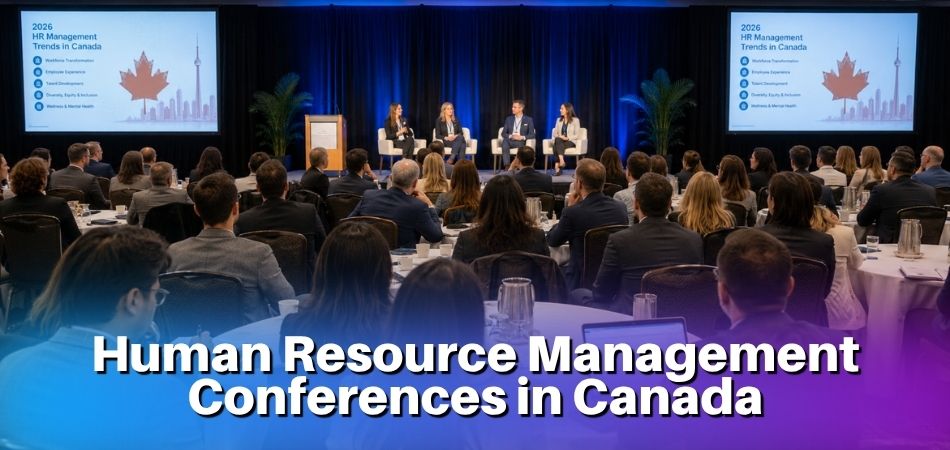
Top 10 Human Resource Management Conferences in Canada at a Glance
Before we get into the details of each event, here’s a quick reference table so you can compare your options side by side. Dates, costs, and formats shift year to year, so always verify directly with the organizer before booking flights or registering your team.
| SL | Conference | Location | Typical Cost (CAD) | CPD Hours | Best For |
|---|---|---|---|---|---|
| 1 | HRPA Annual Conference & Trade Show | Toronto, ON | $1,200–$1,900 | 15–20 | CHRP/CHRL holders in Ontario |
| 2 | CPHR Canada National Summit | Rotating cities | $800–$1,400 | 10–16 | CPHR-designated professionals across Canada |
| 3 | Talent Canada Summit | Toronto, ON | $600–$1,100 | 8–12 | Talent acquisition and workforce planning leads |
| 4 | Employee Experience Summit Toronto | Toronto, ON | $700–$1,200 | 8–10 | EX specialists, culture and DEI teams |
| 5 | GCHRM — Global Conference on Human Resource Management | Vancouver, BC | $900–$1,500 | 10–14 | Academic and senior-level HR practitioners |
| 6 | Workhuman Live Canada | Toronto, ON | $1,000–$1,800 | 10–15 | HR leaders focused on recognition and culture |
| 7 | SHRM Canada | Various | $1,100–$1,700 | 12–18 | SHRM members, US-Canada cross-border HR roles |
| 8 | HR Tech Conference Canada | Toronto, ON | $800–$1,300 | 8–12 | HR technology buyers and systems decision-makers |
| 9 | WorldatWork Total Rewards Conference | Calgary / Virtual | $1,500–$2,500 | 14–20 | Compensation, benefits, and total rewards teams |
| 10 | Human Capital Institute (HCI) Canada Sessions | Ottawa / Virtual | $500–$900 | 6–10 | Mid-level HR generalists, small business HR |
A few things worth knowing before you read further.
CPD hours listed are estimates based on recent editions of each event. The Human Resources Professionals Association (HRPA) and Chartered Professionals in Human Resources (CPHR Canada) both have specific rules about what qualifies for continuing education credit — don’t assume every session auto-counts. Always check with your certifying body.
Costs shown are per-person registration fees in Canadian dollars. They don’t include travel, accommodation, or optional workshops, which can add $400–$1,200 depending on where you’re coming from. If you’re flying from Vancouver to Toronto for the HRPA Annual Conference, factor that in early.
Who Should Use This List
Not every conference on this list is right for every HR professional. If you’re a solo HR manager at a 40-person company in Alberta, a $2,500 WorldatWork Total Rewards Conference might not be your best spend. If you’re a total rewards director managing compensation across three provinces, it probably is. The sections below spell out exactly who gets the most value from each event — that’s the detail most conference roundups skip.
Some of these events are explicitly tied to Canadian legislation — the Canada Labour Code, the Employment Equity Act, and guidance from the Truth and Reconciliation Commission of Canada show up regularly in session content at HRPA, CPHR, and GCHRM. Others, like Workhuman Live Canada and the HR Tech Conference Canada, skew more toward global trends like AI in HR, hybrid workplace design, and remote work policy. Know which gap you’re trying to fill before you register.
One more thing. If you hold a CHRP, CHRL, or CPHR designation, some of these conferences are essentially required reading for maintaining your credential. Others are optional but genuinely useful. That distinction is noted for each one below.
1. HRPA Annual Conference & Trade Show
Overview, Date & Location
The HRPA Annual Conference & Trade Show is the largest HR gathering in Ontario, typically drawing over 4,000 HR professionals across two to three days every January in Toronto. It’s hosted by the Human Resources Professionals Association (HRPA), which is the regulatory body for the profession in Ontario — so this isn’t just a networking event. There’s real regulatory weight behind it.
The 2025 edition ran January 29–31 at the Metro Toronto Convention Centre. Expect a similar schedule for 2026, though HRPA usually confirms dates and venue by mid-summer of the preceding year. Check hrpa.ca directly rather than relying on third-party listings — they tend to lag.
The trade show floor runs alongside the sessions, with vendors covering HR technology, benefits platforms, payroll software, and workforce analytics tools. It’s genuinely one of the better trade floors in Canada if you want to compare HR tech options in person without flying to Las Vegas.
Who Should Attend & Key Focus Areas
If you hold a CHRP or CHRL designation, this one is essentially mandatory — not legally, but practically. HRPA ties a significant chunk of CPD hours to its own programming, and the annual conference is the easiest single event to load up on compliant hours.
That said, HR managers in Ontario-regulated workplaces get the most direct value. Sessions are consistently grounded in Ontario employment law, the Employment Equity Act, and workplace policy rather than generic HR theory. You’ll also find programming on AI in HR, remote work policy, hybrid workplace design, and diversity equity and inclusion (DEI) — but framed around what’s actually happening in Canadian workplaces, not US case studies repurposed for a Canadian audience.
Senior leaders, people ops directors, and anyone managing a team that spans Ontario and other provinces will find the regulatory sessions particularly useful. There’s usually at least one block dedicated to workforce planning for organizations navigating multi-jurisdictional compliance.
Less useful if you’re a solo HR practitioner at a small business with no plans to pursue a designation. The programming skews mid-to-large employer.
Cost & Registration
Pricing is tiered. HRPA members pay considerably less — roughly $1,100–$1,400 CAD for the full conference, depending on how early you register. Non-members are looking at $1,600–$1,900 CAD at standard rates. One-day passes are available if budget is tight, typically running $600–$800 CAD for members.
Early bird discounts usually open in October and close by late November. If your employer covers professional development costs, get your registration request in before the fiscal year closes — this conference qualifies under most standard PD budget policies.
Group rates exist for teams of five or more from the same organization. Worth asking HRPA directly if you’re bringing colleagues, because the discount isn’t always prominently advertised on the registration page.
CPD hours vary by sessions attended, but most attendees accumulate 12–20 hours over the full conference. HRPA tracks attendance electronically, so hours get logged to your member profile without manual submission.
2. CPHR Canada National Summit
Overview, Date & Location
The CPHR Canada National Summit is the flagship annual event run by Chartered Professionals in Human Resources (CPHR Canada), the national body that oversees the CPHR designation across most Canadian provinces and territories. It’s one of the few HR conferences in Canada with a genuinely pan-Canadian scope — not Toronto-centric, not BC-centric. The host city rotates each year, so past summits have landed in Vancouver, Calgary, and Ottawa depending on which provincial CPHR member association is co-hosting.
Dates for 2025 haven’t been officially locked in at time of writing, but the summit typically runs over two days in the spring, somewhere between late April and early June. Check cphr.ca directly for confirmed dates and location — they usually announce 5 to 6 months out.
The format is tighter than a large trade show. Think plenary sessions, practitioner-led breakouts, and structured networking rather than a massive exhibition floor. That keeps the signal-to-noise ratio high.
Who Should Attend & Key Focus Areas
This one is built for HR professionals who hold or are working toward the CPHR designation. That said, you don’t need to be a CPHR candidate to register — plenty of HR generalists, people managers, and HR directors from mid-size organizations attend without any designation intent.
The programming tends to stay close to applied HR practice. Recent summits have covered workforce planning, hybrid workplace policy design, pay equity obligations under the Employment Equity Act, and how Indigenous reconciliation principles from the Truth and Reconciliation Commission of Canada are starting to shape HR policy inside organizations. There’s usually at least one session tied to work from the Indigenous HR Council.
AI in HR has been creeping into the agenda more noticeably over the last two years — not the vendor pitch version, but actual case studies from organizations figuring out how AI affects hiring decisions, performance reviews, and data privacy under Canadian employment law.
The audience skews toward mid-career HR professionals. If you’re an HRBP, HR manager, or director working in a Canadian organization of 100 to 2,000 employees, this is probably your crowd. Senior executives tend to go to more exclusive roundtable formats. New grads aren’t the primary audience either.
CPD hours are confirmed by CPHR Canada at the end of each summit — typically in the range of 8 to 12 hours over the two-day event, which counts toward maintaining your CPHR or CHRL standing depending on your province.
Cost & Registration
Registration fees vary year to year and by province, but you’re generally looking at:
- CPHR members: $800–$1,100 CAD for full two-day access
- Non-members: $1,100–$1,450 CAD
- Early bird discount: Usually 10–15% off if you register 60+ days before the event
There’s no exhibit hall pass or single-day rate structure like some larger conferences offer, so you’re buying the full package.
Registration goes through the CPHR Canada website or through your provincial CPHR body — for example, CPHR BC & Yukon or CPHR Alberta — depending on how that year’s summit is structured. If your employer covers professional development costs, CPHR Canada does issue formal invoices, which most HR departments can process without issue.
Group rates are sometimes available for teams of three or more from the same organization. Worth asking about directly if you’re trying to bring a few people from your team.
3. Talent Canada Summit
Overview, Date & Location
The Talent Canada Summit is one of the more focused events on this list — it’s built specifically around talent strategy, not HR generalism. The 2024 edition ran in Toronto, Ontario, typically in the spring (April or May), and the 2025 dates follow a similar pattern. Check talentcanada.ca for confirmed scheduling, since the exact date shifts slightly year to year.
The venue has historically been a mid-sized conference hotel in downtown Toronto, which keeps the event manageable. This isn’t a 5,000-person trade show floor. Attendance usually sits in the hundreds, which means more actual conversation and less badge-scanning.
Sessions tend to cluster around talent acquisition, workforce planning, and the practical side of employee experience. AI in HR has taken up significantly more agenda space over the last two cycles — not theoretical AI, but actual use cases around screening, scheduling, and retention analytics.
Who Should Attend & Key Focus Areas
If you’re a talent acquisition lead, a workforce planning manager, or an HR business partner who owns the full employee lifecycle, this conference is genuinely worth your time. It’s less relevant if you’re primarily in compensation, labour relations, or benefits administration — those tracks aren’t the focus here.
The audience skews toward mid-market companies and growing tech firms, though you’ll find HR teams from larger organizations too. A lot of attendees come from Ontario and British Columbia, given the conference location and the concentration of tech-sector employers in those provinces.
Key topics you’ll regularly see on the agenda:
- Talent acquisition strategy — sourcing in competitive markets, employer branding, and recruitment ops
- Employee experience — onboarding, engagement measurement, and reducing early attrition
- Hybrid workplace design — remote work policy, return-to-office decisions, and manager enablement
- DEI in hiring — practical frameworks, not just principles, including some discussion of Employment Equity Act obligations
- HR technology — vendor demos and practitioner-led sessions on ATS platforms, HRIS integrations, and people analytics tools
Speakers tend to be a mix of in-house HR leaders and a smaller number of consultants. The consultant-to-practitioner ratio is better here than at some larger events.
CPD hours are typically available for CPHR designation holders, and CHRP or CHRL candidates should verify eligibility with CPHR Canada before registering. The event isn’t formally affiliated with CPHR Canada the way the National Summit is, but CPD credit is generally accepted for approved learning activities.
Cost & Registration
Ticket pricing for Talent Canada Summit is generally in the $800–$1,200 CAD range for standard registration, depending on how early you book. Early bird pricing usually opens a few months before the event and can save you $150–$200. Group rates are available for teams of three or more from the same organization.
There’s no free-tier access. Unlike some larger conferences that offer basic expo passes, this event charges for full access regardless. Budget accordingly.
Registration is handled directly through the Talent Canada website. They don’t run through a third-party ticketing platform, so you’ll create an account on their site. Payment by credit card or invoice is available — useful if you need to go through a procurement process to get approval.
If your company is sending you, the total cost with travel and accommodation in Toronto typically lands between $1,800–$2,500 CAD for someone flying in from Western Canada. For Ontario-based attendees, it’s considerably cheaper. Worth having that number ready when making the business case to your manager.
4. Employee Experience Summit Toronto
Overview, Date & Location
The Employee Experience Summit Toronto is a focused, single-track-style event built specifically around the employee lifecycle — from onboarding and engagement through to retention and offboarding. It’s smaller than the HRPA or CPHR national events, which is actually the point. You’re not fighting through 3,000 attendees to catch a session you care about.
The summit typically runs for one to two days in Toronto, Ontario, usually in the spring (April or May timeframe). Venue locations have shifted between downtown Toronto hotel conference spaces in previous years, so confirming the exact address at registration is worth doing early — parking and transit logistics in the core can vary a lot depending on the specific building.
Dates for the current cycle haven’t been locked down publicly at time of writing, so check the official event page directly. Things do move.
Who Should Attend & Key Focus Areas
This one is squarely aimed at HR professionals who own the people side of culture — HR business partners, internal communications leads, L&D managers, and people operations specialists. If your day job involves building programs that affect how employees actually feel about coming to work, this is a better fit than a broad generalist conference.
Key themes tend to cluster around:
- Employee experience design — journey mapping, pulse surveys, feedback loops
- Hybrid and remote work policy — what’s working, what’s failing, what legal exposure looks like under the Canada Labour Code
- DEI integration — not as a standalone box to check, but woven into experience design
- HR technology — specifically tools that affect the day-to-day employee experience, including AI in HR workflows
- Psychological safety and wellbeing — with real case studies, not just frameworks
Speakers are usually practitioners — HR directors and VPs from Canadian companies sharing what they actually built, not consultants selling a methodology. That’s a meaningful difference.
Small business HR teams attend too. The content doesn’t assume you have a 200-person HR department.
Cost & Registration
Pricing typically falls in the $400–$800 CAD range for the full event, depending on early bird timing and whether you’re buying an individual ticket or a team pass. That puts it on the more accessible end compared to the larger national summits.
CPD hours are generally offered for HRPA members, and the event organizers usually document this clearly in the registration materials — so if you need to log hours toward your CHRP or CHRL designation, confirm the CPD credit details before you book. Some years the breakdown is posted on the registration page; other years you have to email the organizer directly.
Registration runs through the official summit website. There’s no separate HRPA or CPHR Canada portal for this one — it’s independently organized.
5. GCHRM — Global Conference on Human Resource Management (Toronto)
Overview, Date & Location
GCHRM runs annually in Toronto, typically in the fall — September or October, though exact dates shift year to year so it’s worth checking the official site closer to the time. It’s organized as an academic-practitioner hybrid event, which makes it a bit different from the purely professional development conferences on this list. You get peer-reviewed research presentations alongside practical HR sessions, all under one roof.
The venue is consistently Toronto-based, keeping it accessible for Ontario HR professionals without the cost of cross-country travel. Sessions cover international HR trends, which is where the “global” part of the name actually holds up — speakers and attendees regularly come from outside Canada, giving it a more internationally flavored perspective than most Canadian HR events.
Who Should Attend & Key Focus Areas
This one suits HR professionals who want more than just tips and frameworks. If you’re someone who actually reads HR research or wants to understand why a workforce planning approach works before applying it, GCHRM is built for you. Senior HR leaders, HR academics, consultants, and people working toward CHRL or CPHR designations tend to get the most out of it.
Focus areas typically include AI in HR, global workforce planning, DEI at an organizational level, HR technology adoption, and evolving employment policy — including how Canadian employers are adapting to requirements under the Employment Equity Act and broader shifts prompted by the Truth and Reconciliation Commission of Canada. Remote work policy and hybrid workplace design have featured prominently in recent programming too.
It’s not really the right fit for someone brand new to HR or looking for entry-level practical tools. The content assumes a baseline of professional experience.
Cost & Registration
Registration fees generally fall in the $400–$700 CAD range depending on whether you’re attending as an academic, a practitioner, or through an early-bird window. Institutional group rates are sometimes available for universities or large HR teams registering multiple attendees.
CPD hours are awarded for attendance, and depending on your designation — whether that’s CHRP through HRPA or CPHR through CPHR Canada — sessions can count toward your continuing education requirements. Confirm this directly with your certifying body before registering, since how CPD hours are categorized varies.
Registration goes through the conference’s own platform. No third-party booking required. Spots do fill up, particularly for workshop-style sessions, so registering early is the practical move.
6. Workhuman Live Canada
Overview, Date & Location
Workhuman Live started as a U.S.-based event, but its Canadian iteration has grown into a legitimate standalone conference rather than just a regional spinoff. The event is produced by Workhuman, the company behind the recognition and rewards platform of the same name, which does give it a particular slant — but the programming goes well beyond product demos.
The Canadian edition typically runs in the fall, with past events held in Toronto. Dates for the current cycle generally land in October or November, though Workhuman hasn’t always locked in Canadian-specific dates as far in advance as some of the larger national associations do. Check the Workhuman website directly closer to mid-year, because schedules have shifted before.
Format is a mix of keynotes, breakout sessions, and peer roundtables. It’s a two-day event for the most part. No multi-day institute programs like you’d see at HRPA — it moves quickly.
Who Should Attend & Key Focus Areas
If you’re in a people manager, HR business partner, or culture-focused role, this one fits better than a generalist conference would. It’s not built for HR administrators handling payroll compliance or benefits enrollment. The crowd skews toward mid-to-senior HR professionals in organizations large enough to have a dedicated employee experience function.
Core topics include employee recognition strategy, belonging and psychological safety, DEI in practice, and the connection between employee experience and retention. You’ll also find sessions touching on hybrid workplace culture, which has stayed relevant given how many Canadian employers are still sorting out remote work policy two or three years after forcing the issue.
Workhuman doesn’t shy away from the data side either. Sessions regularly cite their own research on recognition frequency and turnover correlation, which is useful even if you’re not a Workhuman customer. The talent acquisition angle is lighter here compared to something like Talent Canada Summit — this is more about keeping people than finding them.
CPD hours are available, applicable toward CPHR and CHRL maintenance requirements. Workhuman has maintained that alignment deliberately, knowing a chunk of their Canadian audience holds those designations.
Cost & Registration
Pricing typically sits in the $1,200–$1,800 CAD range for the two-day event, depending on when you register. Early bird discounts are real and usually cut a few hundred dollars off, so registering before August if the event is in October actually matters.
Group rates are available for teams of three or more from the same organization. If you’re sending a couple of HR business partners and a total rewards lead together, it’s worth calling their registration team rather than buying tickets individually online.
There’s no separate exam fee or certification cost attached to this one. You attend, you log your CPD hours, and that’s the transaction. Registration opens through the Workhuman website, and they do run occasional waitlists for specific workshops if capacity is capped.
7. SHRM Canada & Cross-Border HR Events
Overview, Date & Location
Here’s where things get a bit different. SHRM — the Society for Human Resource Management — is a US-based organization, but it has a real and growing presence in Canada, particularly through licensed content partnerships, certified study programs, and cross-border conference attendance.
There isn’t a standalone “SHRM Canada Conference” in the same way HRPA or CPHR Canada runs their national events. What exists instead is a hybrid situation: Canadian HR professionals regularly attend SHRM’s flagship Annual Conference & Expo (typically held in June in a major US city like Chicago or San Diego), and SHRM-aligned programming gets delivered through Canadian partners throughout the year.
That said, SHRM Canada does facilitate locally relevant learning events, webinars, and certification prep sessions that are delivered from within Canada or targeted at Canadian members. Dates shift year to year depending on partner scheduling. If you’re tracking this, bookmark shrm.org and check with regional Canadian HR associations — some run SHRM-authorized content under their own event calendars.
For Canadians who want the full SHRM Annual Conference experience, budget for cross-border travel. The conference typically runs four days, with pre-conference workshops adding another one or two days before the main program begins.
Who Should Attend & Key Focus Areas
If you already hold or are working toward SHRM-CP or SHRM-SCP credentials, attending SHRM’s main annual event makes obvious sense — you need PDCs (Professional Development Credits) to recertify, and the conference is one of the most efficient ways to stack them.
Canadian HR professionals who work for multinational companies are probably the best fit here. If your organization has operations in both Canada and the US, understanding how American HR frameworks interact with Canadian obligations — like the Canada Labour Code, Employment Equity Act, or provincial employment standards — is genuinely useful. SHRM programming doesn’t always address Canadian specifics directly, but the cross-border perspective has real value.
Key focus areas at SHRM events tend to include talent acquisition, workforce planning, AI in HR, total rewards strategy, and DEI. These topics aren’t unique to SHRM, but the scale of the event (typically 20,000+ attendees) means the speaker lineup and vendor floor are hard to match anywhere else in North America.
One honest caveat: SHRM content is built around US employment law. If you attend expecting sessions on the Canada Labour Code or CPHR certification pathways, you’ll be disappointed. Go for the global and strategic content, not the compliance detail.
Cost & Registration
SHRM Annual Conference registration runs roughly USD $1,895 to $2,395 for members, depending on how early you book. Non-member pricing sits a few hundred dollars higher. Add hotel, flights, and meals in a major US city and you’re realistically looking at $4,000 to $6,000 CAD total for the trip — sometimes more.
SHRM membership itself costs around USD $244 per year for professional-level access, which gets you discounted conference rates plus year-round resources.
For purely Canadian-delivered SHRM programming — webinars, prep courses, local partner events — costs vary by provider. Some are free for members, others charge a flat session fee in the $100–$300 range.
If budget is a constraint, SHRM’s virtual conference option (when offered) cuts the cost significantly and still qualifies for PDCs. It’s not the same as being there in person, but it works.
Register directly at shrm.org. If you’re attending for SHRM recertification credit, keep your session attendance records — you’ll need them for your PDC log.
8. HR Tech Conference Canada
Overview, Date & Location
HR Tech Conference Canada runs as a dedicated event focused entirely on how technology intersects with HR practice — not HR in general, but specifically the tools, platforms, and systems that HR teams are actually being asked to implement or evaluate right now. Think AI in HR, applicant tracking systems, people analytics dashboards, workforce planning software, and the increasingly messy question of what to do with all the data your HRIS is generating.
The conference typically takes place in Toronto, Ontario, in the spring or fall depending on the year. Exact dates for 2025 are worth confirming directly through the official event page, as the Canadian iteration of HR Tech has shifted its calendar a few times. The venue stays within the Toronto metro area — convention-style space that accommodates both keynote sessions and hands-on vendor demonstrations on the floor.
It’s a smaller footprint than something like the HRPA Annual Conference & Trade Show, but that’s intentional. The tight scope means almost every session is directly about HR technology, not tangentially related to it.
Who Should Attend & Key Focus Areas
If you’re an HR director or HRIS manager who’s been handed a digital transformation project and told to “figure it out,” this is the conference built for that situation. Same goes for talent acquisition leads evaluating new platforms, compensation analysts looking at how total rewards software is evolving, and HR generalists in mid-sized organizations trying to understand what AI tools are actually worth buying versus what’s just vendor noise.
The sessions dig into specific problems: How do you audit an AI-powered hiring tool for bias? What does good workforce planning software actually look like for a team of 200 versus 2,000? How are Canadian employers handling remote work policy compliance when employees cross provincial lines? These aren’t theoretical conversations — they’re structured around real decisions HR professionals are facing.
DEI is also woven in, particularly around algorithmic fairness and whether the tools HR teams use are reinforcing gaps they’re trying to close. That’s a practical concern, not a checkbox. Some sessions have touched on obligations under the Employment Equity Act and how HR software vendors are — or aren’t — making that easier to manage.
CPD hours are available for CPHR designates, and the content is relevant for anyone working toward or maintaining their CHRP or CHRL through HRPA in Ontario.
Cost & Registration
Pricing sits in the mid-range compared to the larger national conferences. Single-day passes have historically come in around $400–$600 CAD, with full multi-day access running higher depending on the package. Some workshop add-ons are priced separately.
Early registration typically saves you $75–$150, so it’s worth booking as soon as the program goes live if you know you’re going. Group rates are sometimes available for teams sending three or more attendees from the same organization — worth asking about directly during registration rather than assuming it’ll appear automatically at checkout.
Registration happens through the official event website. There’s no requirement to hold an HR designation to attend, which makes it accessible for IT leaders, operations managers, and business owners who are involved in HR software decisions but don’t come from a traditional HR background.
9. WorldatWork Total Rewards Conference — Canadian Edition
Overview, Date & Location
WorldatWork runs one of the most focused compensation and benefits events you’ll find on the North American HR calendar. The Canadian edition — or the Canada-specific programming within the broader WorldatWork Total Rewards Conference — typically runs in late spring, with sessions falling in the May–June window. Location varies by year, but Canadian attendees often travel to the main event in the United States (historically held in cities like Nashville or Denver) or attend regional Canadian sessions coordinated through WorldatWork’s Canadian member network.
That said, WorldatWork has been expanding its Canadian content delivery, including virtual access options and occasional in-person programming routed through Toronto and Calgary. If you’re planning to attend, check the WorldatWork website directly in January or February to confirm whether a Canada-specific date or location has been added for your target year. Things shift.
The conference itself is laser-focused. This isn’t a generalist HR event. The entire program revolves around total rewards strategy — compensation structure, variable pay, benefits design, pay equity, and executive remuneration. If that’s your world, it’s genuinely hard to find a more concentrated three days of content anywhere in Canada.
Who Should Attend & Key Focus Areas
Total rewards managers and compensation analysts are the obvious fit here. But HR business partners who advise on compensation decisions, and HR directors responsible for building or rebuilding pay structures, also get a lot out of it. Small business HR teams might find the content more advanced than what they need right now — this conference skews toward mid-to-large organizations with dedicated compensation functions.
Key topics covered include:
- Pay equity and pay transparency — especially relevant as Canadian provinces tighten pay transparency legislation in Ontario and British Columbia
- Total rewards strategy tied to talent acquisition and retention, not just salary benchmarking
- Variable pay and incentive design for hybrid and remote workforces
- Benefits benchmarking and how to structure packages that hold up against competitors
- Executive compensation governance, particularly for publicly traded Canadian companies
There’s also growing coverage of how AI in HR is affecting job evaluation and salary grading — something compensation teams are actively trying to figure out right now. It’s not theoretical. Sessions tend to include practitioners presenting actual case studies from their organizations.
WorldatWork also offers Certified Compensation Professional (CCP) and related credentials. Conference attendance can count toward recertification credits, and some attendees time their conference trip alongside a WorldatWork exam sitting. CPD hours are recognized, though you’ll want to verify specific credit amounts with WorldatWork directly for the most current breakdown.
Cost & Registration
Full conference registration for WorldatWork members typically runs in the USD $1,900–$2,400 range. Non-members pay more — usually USD $2,500–$3,000 depending on how early you register. For Canadian attendees, factor in exchange rate, travel to a US city if attending the main event, and accommodation. All in, you’re realistically looking at CAD $5,000–$7,000 per person once flights and hotel are added.
That’s not cheap. But for compensation professionals, the peer benchmarking data and network access are often worth it — especially if you’re the only compensation specialist at your company and don’t have colleagues to benchmark against internally.
WorldatWork membership itself costs roughly USD $295–$395 per year depending on your role tier, and it unlocks access to salary surveys, research reports, and member-only webinars year-round — not just conference discounts.
Registration opens through the WorldatWork website. Canadian members can also contact WorldatWork’s member services team directly to ask about any Canada-specific programming or regional events that may not be prominently advertised on the main conference landing page.
10. Human Capital Institute (HCI) Canada Sessions
The Human Capital Institute (HCI) Canada Sessions provide practical, skills-focused learning opportunities for HR professionals seeking actionable strategies to improve workplace performance, employee engagement, and talent management. With both in-person sessions in Ottawa and virtual participation options, these events offer flexible access to expert-led discussions, workshops, and networking opportunities designed to address current human resources challenges faced by growing organizations.
Date & Location
- Location: Ottawa, Canada, and Virtual Attendance Available
- Typical Registration Fee: CAD $500–$900
- Program Duration: Approximately 6–10 sessions (varies by event edition)
- Dates: Scheduled periodically throughout the year; attendees should check the latest HCI program calendar for upcoming session dates.
Who Should Attend & Key Focus Areas
These sessions are particularly valuable for mid-level HR generalists, HR coordinators, HR managers, and small business HR professionals looking to strengthen their strategic and operational capabilities.
Key focus areas include:
- Talent acquisition and retention strategies
- Employee engagement and workplace culture
- Leadership and manager development
- Performance management best practices
- Diversity, equity, and inclusion initiatives
- HR technology and digital transformation
- Workforce planning and organizational effectiveness
- Compliance, policy updates, and evolving employment trends
Notable Events — Equity, Diversity & Inclusion (EDI) HR Summits
Indigenous Workforce Forum (hosted by the Indigenous HR Council) This is the one to know if your organization is working toward reconciliation commitments or has obligations under the Employment Equity Act. The Indigenous HR Council runs this forum annually, with sessions rotating between cities — Vancouver, Calgary, and Ottawa have all hosted in recent years. Content is practical: Indigenous recruitment pipelines, retention strategies for First Nations employees, and how to align HR policy with the Calls to Action from the Truth and Reconciliation Commission of Canada. Attendance typically runs 150–400 HR professionals. Registration costs vary by session format, but you’re usually looking at $300–$600 CAD for full-day programming. CPD hours are awarded and recognized by both CPHR Canada and HRPA.
Canadian Centre for Diversity and Inclusion (CCDI) Employer Conference CCDI runs an annual conference that draws HR directors, DEI leads, and people analytics professionals from across Ontario and British Columbia especially. Sessions cover workforce planning with an equity lens, pay equity compliance under provincial law, and measurable DEI program design — not the soft-skills-only stuff you sometimes get elsewhere. It’s typically held in Toronto in the spring. Ticket prices sit around $500–$900 CAD depending on membership status. CCDI members get a meaningful discount. The conference qualifies for CPD hours under most provincial CPHR designations.
Equity, Diversity & Inclusion Summit (various provincial HR associations) HRPA and several provincial CPHR bodies run standalone EDI summits separate from their main annual events. These tend to be half-day or full-day virtual or hybrid formats, priced under $300 CAD. Lower cost, lower barrier. Good for HR generalists at smaller organizations who need foundational DEI training without committing to a multi-day event budget.
Workhuman Live Canada — EDI Programming Track Worth mentioning again here because Workhuman dedicates a full content track to equity and belonging, separate from its employee experience programming. If you’re already attending Workhuman Live Canada, you don’t need a separate EDI event — the track is substantive enough to count.
Why These Events Matter for Canadian HR Professionals
Canada’s legal framework for HR is not the same as the U.S. The Canada Labour Code, the Employment Equity Act, and provincial human rights codes create specific obligations that American-focused conferences simply don’t address in enough depth. If you’re a CHRP or CHRL holder working in federally regulated industries — banking, telecoms, transportation — you’re operating under rules that require active equity programs, not just good intentions.
The Truth and Reconciliation Commission’s Calls to Action include direct obligations for employers. Call to Action 92 specifically asks corporate Canada to adopt the United Nations Declaration on the Rights of Indigenous Peoples as a framework for HR policy. Most HR professionals haven’t read it in full. The Indigenous HR Council events are one of the few places where that gap gets addressed practically, with case studies from organizations that have actually built Indigenous hiring frameworks rather than just announced them.
There’s also a professional designation angle. CPHR Canada has been increasing its emphasis on equity competencies within the CPHR certification framework. CPD hours from EDI-specific events count toward renewal, and staying current on equity legislation is increasingly treated as a core competency — not an optional add-on.
One honest note: some EDI conferences in Canada are still heavy on panel discussion and light on tools you can take back to work Monday morning. Before registering, look at the speaker list and session descriptions carefully. Events run by the Indigenous HR Council and CCDI tend to be more applied. Generic “diversity summit” events from third-party event companies can be hit or miss. Ask your network who actually attended last year’s edition before you commit the budget.
If you’re in HR in Canada and you’re only attending the big-name generalist conferences, you’re missing a real chunk of what’s legally and professionally relevant to your role right now.
Virtual vs In-Person HR Conferences in Canada — Which is right for you?
The honest answer is: it depends on what you’re actually trying to get out of it. Budget, career stage, and your specific learning goals all point you in different directions. Here’s how to think through it.

Pros & Cons of Virtual HR Conferences
Virtual HR conferences exploded post-2020 and some of them stuck around because they genuinely work for certain things.
What you get:
- Lower cost. Virtual registration for events like the CPHR Canada National Summit or GCHRM online editions can run 60–70% cheaper than in-person tickets. No flights, no hotels, no $22 airport sandwiches.
- Flexible CPD hours. Most Canadian virtual conferences now offer recorded sessions you can watch within 30–90 days. That matters if you’re chasing CHRP or CHRL recertification credits and your schedule is unpredictable.
- Wider access. If you’re an HR generalist at a small manufacturer in northern Ontario or rural Alberta, you’re not flying to Toronto twice a year. Virtual options make the content accessible.
- Easier to share across a team. You can buy one registration and rotate colleagues through sessions in a way you simply can’t do with a single in-person badge.
What you lose:
The networking. Full stop. That’s not a minor thing in HR — this profession runs heavily on relationships, referrals, and candid off-the-record conversations. A virtual breakout room is not the same as a hallway conversation with a Vancouver-based compensation specialist who just solved the exact problem you’re working on.
Engagement also drops. It’s very easy to have a virtual conference playing in one window while you answer Slack messages in another. You’re physically present but mentally somewhere else.
Virtual events also tend to water down the spontaneous moments — the vendor demo that surprises you, the panel that goes completely off-script, the lunch conversation that turns into a job offer six months later. Those things don’t happen on Zoom.
Best suited for: HR coordinators, HR assistants, practitioners in remote locations, anyone primarily focused on CPD hours or specific technical content like AI in HR tools or remote work policy updates.
Pros & Cons of In-Person HR Conferences
In-person is where the career-level stuff actually happens. Not always. But often enough that it’s worth the budget conversation.
What you get:
- Real networking. The HRPA Annual Conference in Toronto routinely draws 2,000+ attendees. Being in the room with that many Ontario HR practitioners — hiring managers, senior HRBPs, CHRL-designated leaders — is genuinely hard to replicate digitally.
- Focused attention. You’re away from the office. Your calendar is blocked. You’re actually in the session instead of half-in.
- Vendor floor access. Events like HR Tech Conference Canada put you face-to-face with vendors selling everything from ATS platforms to employee wellness tools. You can see demos live, ask hard questions, and compare three competing products in two hours. That’s efficient.
- Certification workshops. Many in-person pre-conference workshops tied to CHRP, CHRL, or CPHR designations require physical attendance to count toward certain credit types.
- Culture and context. If you’re working on DEI initiatives or trying to understand how other Canadian organizations are applying the Employment Equity Act or Truth and Reconciliation Commission of Canada calls to action, in-person panel discussions give you nuance that slides don’t.
What it costs you:
Registration alone for a major Canadian HR conference runs $800–$2,500. Add flights to Toronto, Calgary, or Vancouver, two or three hotel nights, and meals — you’re looking at $2,500–$5,000+ for a single event. That’s a real ask, especially for HR professionals in small businesses or non-profits with tight professional development budgets.
Time is the other cost. Two or three days out of the office during a busy hiring cycle or performance review period isn’t always manageable.
Best suited for: HR managers, HRBPs, HR directors, and anyone actively working on leadership development, workforce planning strategy, or trying to advance toward a CHRL or senior CPHR designation.
Best Hybrid HR Conference Options in Canada
A few Canadian HR conferences now run genuinely good hybrid models — not just “we’ll stream the keynote” but actual structured virtual tracks alongside the in-person event.
- CPHR Canada National Summit has moved toward a proper hybrid format in recent years, giving remote attendees access to most main-stage sessions and some breakouts with live Q&A. The CPD hours count either way.
- HRPA Annual Conference & Trade Show offers a virtual pass that includes recorded session access, though the live virtual experience is more limited. It’s worth checking the current year’s format before registering — it varies.
- Workhuman Live Canada, depending on the year, has offered hybrid attendance tied to its larger North American programming. Check the Workhuman website directly for Canadian-specific hybrid availability.
- WorldatWork Total Rewards Conference frequently runs webinar-based learning tied to its in-person event. If you’re a compensation or benefits specialist who can’t travel, this is worth investigating.
A practical approach if you’re budget-constrained: attend one major in-person conference per year for the networking and career development value, then fill in the rest with virtual sessions for CPD hours and topic-specific learning. That combination usually works better than going all-in on either format alone.
One thing to confirm before you register for anything: whether the CPD hours from virtual sessions are accepted by your specific designation body — HRPA for Ontario, CPHR Canada for other provinces — because the rules aren’t always identical.
Free vs Paid HR Conferences in Canada — A Quick Breakdown
Budget matters. Whether you’re an independent HR consultant, a solo practitioner in a small Alberta business, or an HR manager trying to get three staff members certified without blowing the L&D budget, knowing what you’ll actually pay — and what you’ll actually get — is the practical starting point.
Here’s a straight look at how Canadian HR conferences shake out by cost.
The Paid Tier: What You’re Spending and Why
Most of the flagship events covered in this article are paid, and the range is wide.
The HRPA Annual Conference & Trade Show typically runs between $1,200 and $1,800 CAD for non-members. HRPA members get a discount, usually in the $900–$1,100 range. That covers two to three days of sessions, the trade show floor, and CPD hours toward your CHRL or CHRP designation — so for Ontario-based HR professionals who need to log continuing education, the math often works out.
The CPHR Canada National Summit sits in a similar range, roughly $1,000–$1,500 CAD depending on when you register. Early bird pricing is real here — not a gimmick. Registration closer to the event date can cost 30–40% more, so if you know you’re going, book early.
WorldatWork Total Rewards Conference — Canadian Edition can push higher, especially if you’re combining it with any of WorldatWork’s certification courses. Budget $1,500–$2,500 CAD all in if you’re adding a workshop day.
Workhuman Live Canada and the HR Tech Conference Canada tend to price at the mid-to-upper end of this range too. Workhuman in particular bundles its pricing around multi-day access, so you’re rarely paying just for one keynote.
The GCHRM (Global Conference on Human Resource Management) is an academic-leaning event held in Toronto and is more affordable by comparison — registration fees have historically been closer to $400–$700 USD depending on whether you’re submitting a paper or attending as a delegate.
The Free or Low-Cost Options
Free doesn’t mean filler. Some of the most practical HR content in Canada comes at no charge.
SHRM regularly produces free webinars accessible to Canadian practitioners — not full conference access, but individual sessions on topics like AI in HR, remote work policy, and workforce planning. If you’re not a SHRM member, some of these are still open. Check the SHRM events calendar directly.
The Indigenous HR Council runs events and learning sessions that are either free or offered at low cost, particularly for Indigenous HR practitioners and organizations engaged with Truth and Reconciliation Commission of Canada commitments. These aren’t just symbolic — they’re operationally useful for HR teams navigating Indigenous employment equity under the Employment Equity Act.
Several provincial CPHR chapters — BC, Alberta, Ontario — host free member events, lunch-and-learns, and regional roundtables throughout the year. Not conference-scale, but you’ll still pick up CPD hours, which count toward your CPHR designation renewal.
The Talent Canada Summit and Employee Experience Summit Toronto both offer limited complimentary tickets for HR practitioners who qualify (usually tied to company size or seniority level). It’s worth checking their registration pages — these aren’t heavily advertised but they do exist.
A Rough Cost Comparison Table
| Conference | Approx. Cost (CAD) | CPD/Credits Available | Free Option? |
|---|---|---|---|
| HRPA Annual Conference | $900–$1,800 | Yes — CHRP/CHRL | No |
| CPHR Canada National Summit | $1,000–$1,500 | Yes — CPHR | No |
| WorldatWork Total Rewards | $1,500–$2,500 | Yes — WorldatWork certs | No |
| Workhuman Live Canada | $1,200–$1,800 | Varies | No |
| HR Tech Conference Canada | $900–$1,400 | Limited | No |
| GCHRM Toronto | $500–$900 (USD equiv.) | Academic CPD | No |
| SHRM Webinars (Canada-accessible) | $0–$300 | Yes — PDCs | Partial |
| Indigenous HR Council Events | $0–$200 | Yes | Often free |
| CPHR Chapter Events | $0–$150 | Yes — CPD hours | Often free |
| Talent Canada Summit | $400–$900 | Limited | Select tickets |
What Actually Justifies the Cost
Paying $1,500 for a conference makes sense if you need the CPD hours, you’re making a policy decision and need to benchmark against peers, or your organization is actively hiring and the networking ROI is real. It doesn’t make sense if you’re sending a junior HR coordinator who’ll spend two days at a trade show collecting lanyards.
Be honest about what you need. If your priority is DEI strategy or hybrid workplace policy, a free CPHR chapter session with a focused agenda will often beat a large paid conference where those topics are one 45-minute breakout among fifty others.
And if you’re in British Columbia or Alberta without budget to travel to Toronto, the virtual options from most of these events — covered in the previous section — are typically priced 40–60% lower than in-person registration. That’s not a minor discount. For a three-person HR team in Calgary, that difference could cover an entire year of chapter membership instead.
Small Business HR Events in Canada
Running HR for a small business in Canada is a different job entirely. You’re not managing a team of specialists — you’re the recruiter, the policy writer, the benefits coordinator, and the compliance officer, often simultaneously. Most of the major conferences listed above are built for mid-to-large organizations with dedicated HR departments and travel budgets to match. That’s not always realistic.

Here’s where to look instead.
HRPA Chapter Events and Regional Workshops
The Human Resources Professionals Association runs local chapter events across Ontario throughout the year. These are typically half-day or full-day workshops, priced well under $300, and focused on practical topics — things like updating employment contracts post-COVID, understanding Bill 88, or handling terminations correctly under the Canada Labour Code.
For small business owners or solo HR practitioners in Ontario, these chapter events are often more useful than the main annual conference. Smaller room, more Q&A time, and the content tends to stay grounded rather than theoretical.
Check the HRPA website under “Chapter Events” — they update the calendar quarterly and some sessions count toward CPD hours for CHRP and CHRL designations.
CPHR Provincial Member Events
CPHR Canada’s provincial bodies — like CPHR BC & Yukon or CPHR Alberta — run their own regional programming separate from the national summit. These include webinars, local roundtables, and occasional in-person workshops in cities like Vancouver, Calgary, and Edmonton.
Cost is usually low for members, sometimes free. Topics skew toward employment law updates, DEI basics, and workforce planning for smaller teams. If you hold a CPHR designation or are working toward one, these events also count toward your recertification requirements.
BDC and Chamber of Commerce HR Sessions
The Business Development Bank of Canada and local Chambers of Commerce (particularly in Toronto, Ottawa, and Vancouver) periodically run HR-specific sessions aimed at small business owners. These aren’t branded as HR conferences, but they cover real ground — remote work policy, hybrid workplace structure, onboarding, and basic total rewards setup.
They’re usually free or under $50. No CPD credit. But if you’re a business owner who just inherited the HR function, this is often the right starting point before you invest in a full conference registration.
HR Bootcamps and Community Cohorts
A few independent organizations run short-format HR intensives specifically for small business operators. These are typically two to three days, run virtually or in small in-person cohorts, and focus on building foundational HR systems from scratch — job descriptions, performance review templates, disciplinary procedures, and compliance with provincial employment standards.
Pricing varies. Expect $400–$1,200 depending on the provider and format. Search for programs through your local Small Business Centre or the Indigenous HR Council if your business has specific equity or reconciliation commitments to work through.
What Small Business HR Pros Should Actually Look For
Not every event worth attending has “conference” in the name. Look for:
- Employment standards update sessions from your provincial Ministry of Labour — often free and live-streamed
- HR association lunch-and-learns — short, cheap, and surprisingly practical
- Online cohorts from providers like Learnedly or HR Council for Nonprofits (if you’re in that sector)
The honest truth is that a small business HR generalist probably gets more value from three targeted half-day workshops per year than from one large national conference. The big events are useful for networking and exposure to new ideas — but the day-to-day problems you’re solving don’t always show up in the breakout session schedule at a 2,000-person trade show.
HR Certifications You Can Advance at These Conferences — CHRP, CHRL & CPHR
If you’re working toward a designation or maintaining one you already hold, the conferences covered in this article aren’t just networking events — they’re legitimate CPD opportunities. Here’s how the main Canadian HR credentials connect to the conference circuit.

CHRP & CHRL — The HRPA Designation Path
The CHRP (Certified Human Resources Professional) and CHRL (Certified Human Resources Leader) are both administered by the Human Resources Professionals Association (HRPA) and are recognized specifically in Ontario. If you’re based in the province and hold or are pursuing either designation, the HRPA Annual Conference & Trade Show is the most direct path to earning Continuing Professional Development (CPD) hours in a single event.
HRPA requires CHRP holders to accumulate 100 CPD hours over a three-year period. CHRL holders face the same requirement. Attending the full HRPA Annual Conference typically earns you somewhere between 12 and 20 CPD hours depending on which sessions you attend and whether you include pre-conference workshops. HRPA tracks these through its member portal — you don’t self-report and hope for the best, the system is tied to your registration.
The difference between CHRP and CHRL matters for session selection too. CHRL holders are expected to be operating at a strategic or leadership level, so loading up on entry-level talent acquisition panels won’t reflect well on your CPD record if HRPA ever reviews your activity log. Pick sessions that match your credential level.
One thing people miss: HRPA also accepts CPD hours from other approved conferences, not just its own event. So if you attend the Employee Experience Summit Toronto or an HR Tech Conference Canada session, those can potentially count — but you need to verify each event against HRPA’s approved provider list before you assume they qualify.
CPHR — Chartered Professional in Human Resources
The CPHR is the nationally recognized designation managed by CPHR Canada, and it’s valid across most provinces and territories outside Ontario (Ontario has HRPA’s system instead). If you’re in British Columbia, Alberta, or anywhere else under the CPHR umbrella, this is your primary credential to maintain.
CPHR holders need 60 Continuing Professional Development hours every three years. That’s a lower bar than some international designations, but the requirement is that hours must be relevant — generic business seminars don’t count. The CPHR Canada National Summit is the flagship event for earning these hours, and CPHR Canada directly endorses it.
Provincial chapters run their own events too. CPHR BC & Yukon, CPHR Alberta, and others hold regional conferences and workshops that are pre-approved for CPD hours. If you’re in Calgary or Vancouver, you’ll often find it easier (and cheaper) to earn hours through provincial chapter events than to fly to a national summit.
The CPHR designation also has a formal assessment component before you earn it — a knowledge exam and a validation of professional practice (VPP). Conferences don’t substitute for those. But several events, including the CPHR Canada National Summit, run pre-conference study workshops that candidates use as exam prep. Worth knowing if you’re still in that stage.
Which Conferences Offer CPD Hours and How Many
Not every conference advertises its CPD value upfront. Some do, some require you to dig. Here’s a practical breakdown based on what’s publicly available:
- HRPA Annual Conference & Trade Show — 12 to 20 CPD hours (HRPA-approved, counts toward CHRP and CHRL)
- CPHR Canada National Summit — typically 10 to 15 CPD hours (pre-approved for CPHR across member provinces)
- Talent Canada Summit — CPD hours available but vary by year; check with your provincial CPHR chapter for pre-approval status
- Employee Experience Summit Toronto — not consistently pre-approved; you may need to submit for individual review
- GCHRM Toronto — often accepted for CPD by both HRPA and CPHR Canada, but confirm before you book; international conferences occasionally fall into a grey area
- Workhuman Live Canada — SHRM credits are offered (more on that below), and CPHR Canada has periodically accepted Workhuman events, but it’s not guaranteed year to year
- HR Tech Conference Canada — tech-focused sessions may qualify as CPD under workforce planning or HR technology categories; check the session descriptions against your body’s criteria
- WorldatWork Total Rewards Conference — Canadian Edition — WorldatWork issues its own recertification credits, and these are generally accepted by CPHR Canada for CPD purposes. HRPA acceptance is less consistent.
- SHRM-affiliated events — SHRM offers its own Professional Development Credits (PDCs) toward the SHRM-CP and SHRM-SCP designations. These are U.S. credentials, but some Canadian HR professionals hold them alongside CPHR or CHRL. SHRM PDCs don’t automatically convert to CPHR or HRPA CPD hours — they’re a separate system entirely.
A few practical notes. Always get a certificate of attendance or a session log at the end of a conference. Most events provide one, but if they don’t, screenshot your registration confirmation and the session schedule you attended. If you’re ever audited by HRPA or CPHR Canada, documentation is everything.
Also, CPD hours are usually counted by contact time, not by the number of sessions. A two-hour workshop counts for two hours. A keynote that runs 45 minutes counts for 0.75 hours. It adds up faster than you’d think if you’re attending full days across a two or three-day conference.
Is HR in High Demand in Canada? — Job Market Snapshot
Yes. And the numbers back it up.
Job Bank Canada consistently lists human resources professionals among its high-demand occupational categories. HR managers, HR business partners, and talent acquisition specialists all show strong hiring activity across Ontario, British Columbia, and Alberta — the three provinces that account for the bulk of corporate HR roles in the country.

According to Statistics Canada labour data, the employment and labour relations specialist category (NOC 11200) has seen steady growth over the past several years, particularly since 2021 when organizations started rebuilding people teams post-pandemic. Remote work policy, hybrid workplace restructuring, and tightening requirements under the Canada Labour Code all created real pressure on companies to hire qualified HR practitioners rather than wing it with generalists.
What Roles Are Actually in Demand
The demand isn’t uniform across all HR functions. Here’s where the hiring is concentrated right now:
- Talent acquisition and recruitment — Virtually every mid-size company in Toronto, Vancouver, and Calgary is trying to solve a hiring problem. Recruiters and TA specialists with tech-sector experience are especially sought after.
- Total rewards specialists — Compensation pressure hasn’t gone away. Organizations are leaning on WorldatWork-trained professionals to design competitive packages that hold onto staff without blowing the budget.
- HR technology implementation leads — As companies adopt new HRIS platforms and AI in HR tools, they need someone who understands both the people side and the system side. This is a gap most organizations haven’t filled yet.
- DEI and equity-focused HR roles — The Employment Equity Act and growing expectations from boards and shareholders have made diversity equity and inclusion (DEI) a formal function at larger employers. Indigenous HR Council programming and Truth and Reconciliation Commission of Canada calls to action have pushed this further into mainstream HR planning.
- Workforce planning analysts — Especially in the public sector and large regulated industries.
Salary Benchmarks Worth Knowing
HR coordinators and administrators in Canada typically earn between $50,000 and $68,000 annually. An HR business partner with five-plus years of experience is looking at $85,000 to $110,000 in most major markets. HR directors and VPs at mid-to-large organizations routinely clear $130,000+, particularly in Toronto and Vancouver where cost of living adjustments push compensation higher.
Holding a CHRP, CHRL, or CPHR designation has a measurable impact. Employers posting senior HR roles increasingly list these credentials as requirements rather than preferences. If you’re job hunting without one, you’re competing at a disadvantage in a lot of postings.
Where Conferences Fit Into Career Growth
Attending conferences like the HRPA Annual Conference & Trade Show or the CPHR Canada National Summit isn’t just about learning. It’s about being visible in a relatively small professional community. Canada’s HR world — especially at the senior level — is tighter than people expect. Hiring managers know each other. CHRL and CPHR designation holders often move in overlapping circles.
Accumulating CPD hours through conferences also keeps your designation active, which matters the moment you’re up for a role that lists it as a requirement. Human Resources Professionals Association (HRPA) tracks this for Ontario practitioners. Chartered Professionals in Human Resources (CPHR Canada) handles it for most other provinces.
The short version: HR is not a field with a hiring problem in Canada right now. The demand is real. What’s shifting is the type of HR professional employers want — someone who understands AI tools, employee experience, hybrid workplace design, and compliance — not just someone who processes paperwork and runs payroll. The conferences covered in this article are where that knowledge gets updated.
Frequently Asked Questions
What is the largest HR conference in Canada?
The HRPA Annual Conference & Trade Show is generally considered the largest, drawing thousands of HR professionals to Toronto each January. It’s been running for decades and consistently pulls in the biggest speaker lineup and exhibitor floor of any HR event in the country.
Do Canadian HR conferences offer CPD hours?
Most of them do. HRPA-affiliated events offer CPD hours recognized toward CHRP and CHRL designations. CPHR Canada events count toward the CPHR. Always confirm with the organizer before registering — the number of eligible hours varies by session, and not every workshop automatically qualifies.
Can I attend these conferences if I’m not a certified HR professional?
Yes. You don’t need a designation to walk through the door. Most conferences welcome HR coordinators, business owners, managers, and students. Certification just changes whether you can claim the CPD hours afterward.
Are any of these conferences free?
A few smaller or virtual events run at no cost, but the major ones — HRPA, CPHR National Summit, Workhuman Live Canada — charge registration fees that can range from a few hundred dollars to over $2,000 once you add workshops. Early-bird pricing makes a real difference. Don’t sleep on it.
Which conference is best for HR professionals in Western Canada?
If you’re based in British Columbia or Alberta, CPHR Canada’s regional events and the Calgary or Vancouver chapters often host local summits that are more practical to attend than flying to Toronto. The CPHR National Summit rotates cities, so check where it’s landing in a given year.
Do these conferences cover Canadian-specific employment law?
The better ones do. Topics like the Canada Labour Code, Employment Equity Act obligations, and provincial legislation tend to show up in legal track sessions at HRPA and CPHR events. Generic U.S.-focused events like SHRM are lighter on Canadian compliance content — something to keep in mind if that’s what you’re after.
What if I work in a small business and can’t justify the cost?
Look at virtual options first. Several conferences offer digital passes at a lower price point. Talent Canada Summit and some regional CPHR events have historically been more affordable than the flagship shows. HR associations also sometimes offer group rates if a few of you register together.
Are there HR conferences in Canada focused on DEI and Indigenous HR?
Yes. Beyond the dedicated Indigenous HR events tied to organizations like the Indigenous HR Council, most mainstream conferences now include DEI and reconciliation-focused sessions. Truth and Reconciliation Commission of Canada frameworks come up more frequently at Canadian HR events than they did even five years ago.
How far in advance should I register?
For the big conferences — HRPA, CPHR National, Workhuman — register three to four months out. Early-bird windows close fast, and popular workshops sell out before the main event dates even arrive. Last-minute registration almost always costs significantly more.
Is it worth attending in person versus watching sessions online?
Depends entirely on what you need. If you’re going to network, meet vendors, or have face time with speakers, in-person is worth the expense. If you just want the content and can’t justify travel costs, a virtual pass gets you most of the sessions. A lot of people do both — attend one major event in person per year and fill the gaps with virtual access to others.
Final Thoughts — Which HR Conference in Canada Is Right for You?
There’s no single right answer here. It depends on where you are in your career, what province you’re based in, and what problem you’re actually trying to solve right now.
If you’re early in your HR career and working toward your CHRP designation, the HRPA Annual Conference & Trade Show is a logical starting point — especially if you’re in Ontario. You get CPD hours, exposure to a wide range of topics, and a room full of people in roughly the same profession. It’s also one of the larger events, so the networking pool is genuinely useful.
For mid-career professionals eyeing a CHRL or CPHR credential, the CPHR Canada National Summit tends to attract a more strategic crowd. Less “here’s what HR is” and more “here’s where HR is going.” That’s a meaningful difference when you’ve been doing this for eight or ten years.
Match the Conference to the Problem You’re Solving
Think about your actual work challenges right now. Struggling with retention? Look at the Employee Experience Summit Toronto or Workhuman Live Canada — both focus heavily on what keeps people at a job rather than just what gets them hired. Trying to get your head around compensation benchmarking? WorldatWork Total Rewards Conference is built for exactly that, and you’ll leave with frameworks you can apply the following week.
If AI in HR is keeping you up at night — either as an opportunity or a threat — the HR Tech Conference Canada is where those conversations are happening at a technical level. Not surface-level “AI is changing everything” talk. Actual vendor demos, implementation case studies, real numbers.
Budget Is a Real Factor
Don’t pretend it isn’t. Some of these conferences run $1,500 to $2,500 CAD once you factor in registration, travel, and accommodation. If your employer won’t cover it, that’s a serious ask. In that case, look at virtual attendance options, smaller regional events, or free half-day sessions that some associations run throughout the year. Getting one sharp idea from a $0 webinar beats getting nothing from a $2,000 conference you couldn’t justify.
A Few Practical Shortcuts
- You’re in Alberta or BC: CPHR Canada events and regional chapters are your home base. Don’t assume everything worth attending is in Toronto.
- You work in DEI or Indigenous HR: The Indigenous & Equity-Focused events covered earlier aren’t optional additions — they should probably be your first pick, not your last.
- You run HR for a small business: Skip the massive enterprise-focused events. Small business HR streams at Talent Canada Summit or smaller HRPA chapter events will give you more usable takeaways.
- You want cross-border perspective: SHRM Canada and cross-border programming makes sense if your workforce spans Canada and the U.S., or if you’re dealing with policy gaps between jurisdictions.
One Last Thing
You don’t need to attend five conferences a year to stay current. Most HR professionals who do strong professional development pick one or two that actually align with their goals, go deep, follow up with speakers afterward, and apply what they learned. That beats passive attendance at a packed calendar of events.
Pick the one that matches where you want to be in 18 months — not the one with the most impressive-sounding name.
