
Finishing the biometrics appointment can feel like crossing a line, and plenty of people start thinking about flights soon after. Then a refusal arrives, and it is hard to see how it happened at that stage. The answer starts with what the appointment was actually for.
Quick answer: Yes, a visa can be rejected after biometrics. Biometrics only collects your fingerprints and photo. The officer still reviews your documents, travel history and background check afterwards, so a refusal can arrive days or weeks later. Common causes are weak finances, unclear ties to home, an earlier violation or a security flag. Fees are usually not refunded, and the refusal letter shows whether you can appeal or reapply.
Fact-checked by the MS International Editorial Team. Last verified against official sources: October 2026.
You gave your fingerprints, the staff were polite, and nobody raised a problem. That feels like a good sign, but the appointment is not an assessment. Many applicants treat it as the finish line, which makes a later refusal feel like it came from nowhere. This guide covers why refusals still happen, how the US, UK and Schengen systems differ, how to read a refusal letter, and what your options are.
Can Your Visa Still Be Rejected After Biometrics?
Yes. Completing the appointment does not protect you from a refusal, because biometrics is a data collection step, not an approval signal.
Visa officers make the final decision after biometrics, not before. The background check that runs on your fingerprint data can surface things that were not visible on your form: a prior visa violation, a security flag, inconsistencies in your travel history, or problems with your financial documents. This applies to every major category, including a B1/B2 or F1 visa for the US, a UK visa and a Schengen visa.
For most people the risk zone is the stretch between the appointment and the decision. Processing time varies by country and category, and a longer wait can mean extra checks are running, though it does not by itself predict a refusal. If you are refused, the letter states the ground for refusal, and that document matters for any appeal or reapplication.
What Biometrics Actually Does, and What It Does Not
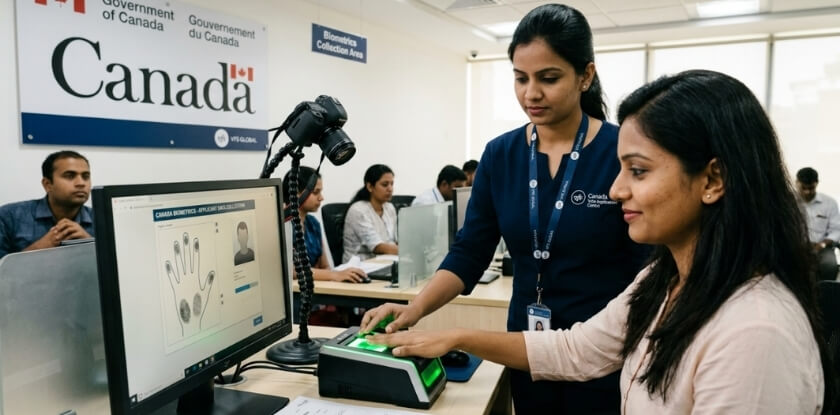
Biometrics collects your fingerprints, a digital photo and sometimes an iris scan. The appointment is brief, usually under 15 minutes, and the staff at the visa application center are capturing data, not judging your case.
What happens afterwards is where applicants get confused. Your data is cross-checked against immigration databases, law enforcement records and security watchlists. For the US, that means systems such as the FBI’s fingerprint database and Homeland Security’s IDENT. A Schengen application feeds into the Visa Information System (VIS), which is shared across member states. The UK runs similar checks through Home Office systems.
If a check turns up a prior deportation, an outstanding warrant, or a previous violation under a different name, that information goes to the officer reviewing your file. It does not disappear because you answered your form accurately.
What biometrics does not do is evaluate your finances, your ties to your home country, or whether your travel history fits your stated purpose. A clean biometric result will not make up for weak documents on a B1/B2 application or a credibility problem at an F1 interview. Completing biometrics also does not move you up the queue. The same holds for Canada: going for biometrics does not mean approval.
Reasons for Visa Rejection After Biometrics (Complete Checklist)
Officers review the whole application after the appointment, and four problems account for most refusals: weak finances, weak ties to home, a security or background flag, and a problematic travel history.
Financial Evidence and Documentation Issues
Officers want to see that you can fund the trip without working illegally or becoming a public charge. Thin or inconsistent bank statements, or a large deposit that appeared just before your appointment, raise questions.
For a B1/B2 application, steady account activity over three to six months looks far better than a lump sum that arrived two weeks earlier. Gaps between stated income and balances get flagged, and so do statements that look doctored or photocopied so that dates are hard to read.
A sponsorship letter needs backing from the sponsor’s tax returns, pay stubs or bank records. Self-employed applicants face extra scrutiny: business registration, tax filings and client contracts all matter, because income that cannot be traced to a verifiable source proves nothing.
Lack of Proof of Intent to Return to Your Home Country
This is one of the most common reasons for a refusal after a smooth appointment, especially for F1 and B1/B2 applicants. Officers look for ties that make returning the obvious choice: a job, property, family dependents, ongoing business responsibilities.
Young, unmarried applicants with no steady job or property often struggle here. That is not automatically disqualifying, but the rest of the file has to work harder, for example with a detailed itinerary, an employer letter confirming your return date, or school enrollment records. A rehearsed, vague answer about “tourism” with no detail tends to count against you.
Background Check or Security Flag
Your biometrics feed straight into background check systems. A flag can appear even if you were never convicted of anything, for example through a prior investigation or an identity mismatch.
For US applications, security advisory checks can extend processing considerably, and you will not always be told why. The refusal notice may cite only a general statutory ground. Criminal convictions, even older ones with no prison time, can trigger an inadmissibility finding, and some offenses need a separate waiver before a visa can be approved. A previous deportation also stays on record and needs a direct, documented explanation.
Travel History and Previous Visa Violations
Officers can see your stamps, entry and exit records and prior visa data, and UK and Schengen systems track earlier travel closely.
An overstay is among the most damaging entries, even if it was only a few days. If it was not disclosed on your current application, it can lead to a refusal and sometimes a multi-year bar. Working or studying on a tourist visa makes later applications harder in any category, and frequent short trips that look like attempts to reset a stay get noticed. Minimizing or omitting past problems usually backfires, because the records exist and the refusal will cite the inconsistency.
Post-Biometrics Visa Rejection Rules by Country
Each system handles the final decision differently, but all three decide after biometrics, and all three give you written grounds.
US Visa (B1/B2, F1)
Giving biometrics at a US embassy or consulate does not lock in approval. The consular officer decides after your fingerprints are processed alongside your interview answers, travel history and documents.
For a B1/B2, the usual triggers are weak home ties, inconsistent finances or a prior violation, and the typical result is a refusal under Section 214(b) of the Immigration and Nationality Act. F1 applicants also face a check on whether the study plan is credible and whether they intend to return home. The refusal is usually handed to you at the end of the interview or sent shortly afterwards.
Two recent rule changes matter here. Since 1 October 2025, most nonimmigrant visa applicants must attend an in-person interview, with narrow exceptions for some renewals, so the interview is now the usual place where a refusal happens. Separately, since 1 January 2026, Proclamation 10998 partially suspends B-1/B-2 visa issuance for nationals of 19 countries, including Nigeria. Those applicants can still apply, give biometrics and attend an interview, but they may be ineligible for a visa whatever their file shows.
UK Visa
The UK collects biometrics at a Visa Application Centre before the application is fully assessed, so a refusal can come weeks after the appointment. UK refusal letters are detailed and list specific reasons, such as insufficient finances, unexplained gaps in travel history, or doubts about the purpose of the visit.
Schengen Visa
The Schengen area now covers 29 countries, but each member state runs its own visa processing. You apply to your main destination or first point of entry, and that country’s consulate decides.
A refusal is issued on a standardized form that must state the reason. Common grounds are an incomplete or inconsistent application, a history of overstaying in the Schengen zone, insufficient funds, a security flag, or doubt that you will leave before the visa expires.
Can You Be Deported at a Biometrics Appointment?
Yes, but it is rare and needs specific circumstances. A biometrics appointment is not an immigration enforcement event: you give fingerprints and a photo so authorities can run identity checks, and the staff are usually administrative, not inspectors with arrest powers.
When Deportation or Detention at Biometrics Can Actually Occur
Detention almost always involves a pre-existing issue that surfaces the moment your fingerprints are run. That includes being in the country unlawfully after an overstay or unauthorized entry, an outstanding removal order or active warrant, or a prior deportation followed by re-entry without permission. In the US, the American Immigration Lawyers Association and 2025 news reports describe ICE arrests at USCIS biometrics appointments, including people with old removal orders. A serious criminal record involving offenses that make someone inadmissible or deportable can also lead to detention.
The Difference Between Rejection and Detention
A rejection means the application is denied and you are free to leave, appeal or reapply. Detention is an enforcement action against someone who is inside the country without legal status or has a standing legal issue.
If you apply from outside the destination country, the deportation concern essentially does not apply. A person in India attending a US visa biometrics appointment at a US consulate is not on US soil, so the worst outcome is a refusal. The risk is almost entirely limited to people already inside the country, such as someone in the US applying to adjust status or extend a visa.
Practical Guidance
With a clean immigration history, there is no realistic risk of enforcement action. If you have a prior overstay, a removal order you are unsure about, or a previous security flag, speak to an immigration attorney before attending. An attorney can check what is actually in the databases and tell you whether attending creates any legal exposure.
How Long Does Visa Approval Take After Biometrics?
It depends on the country, the visa category and whether your background check triggers a closer review. The table below gives the official targets, which are targets and not guarantees.

| Country | Usual decision time after biometrics | Notes |
|---|---|---|
| US (B1/B2, F1) | Often the day of the interview or within a few business days | If placed in 221(g) administrative processing, there is no fixed deadline and cases range from weeks to several months. |
| UK (Standard Visitor) | About 3 weeks (15 working days) on the GOV.UK outside-UK listing | Where it is offered, the paid priority service usually gives a decision within 5 working days. Complex cases run longer. |
| Schengen | 15 calendar days from a complete application | Can extend up to 45 days in individual cases, for example when other member states are consulted. |
| Canada (visitor visa) | Varies by country of application | Biometrics must be given first, and IRCC publishes current processing times by country. |
If the US places you in administrative processing, the State Department treats the case as refused under 221(g) until it is resolved, and you will usually be told this at the interview. After it clears, an approval or a final refusal follows. If the officer only needs missing documents, the State Department says you have one year from the refusal date to send them without a new application fee, and after that you must reapply and pay again.
What Slows Things Down
Certain situations add time regardless of the country:
- Security flag or name match: a partial match to a watchlist entry can trigger weeks of review even if the match turns out to be wrong.
- Prior immigration violations: any overstay, unauthorized work or deportation history means officers spend longer on your file.
- Incomplete financial documentation: missing bank statements or inconsistencies almost always prompt follow-up requests.
- High-volume periods: summer and major holiday windows slow every consulate.
Should You Be Worried If It’s Taking Long?
Not automatically. A long wait can simply mean a backlog or a background check that needs to run its full course, so processing time alone tells you little about the outcome.
Track your status on the official portal, respond immediately if more documents are requested, and avoid non-refundable travel bookings until the visa is in your passport. If the decision is genuinely overdue beyond the published window, you can send an inquiry to the embassy or consulate, though contacting them too early usually gets only an automated reply.
How to Understand a Rejection Letter or Refusal Notice
The refusal notice is the official document explaining why you were denied, and reading it carefully is the only way to work out your real options. Letters differ a lot by country.
What the Letter Actually Tells You
A US refusal usually cites a section of the Immigration and Nationality Act. The most common is 214(b), which means the officer was not convinced you would return home, and that is a very different problem from a security flag, which appears under a different citation.
UK refusal notices are more detailed and list specific reasons. A Schengen refusal comes on a standard form with checkboxes for common grounds, although the explanation behind each box varies by country. For Canada, IRCC has sent an officer decision note with the refusal of most temporary resident applications, visitor visas included, since 29 July 2025. The officer who made the final decision writes it to explain the refusal, although parts may be removed to protect sensitive information. Read the citation or category first, then the explanation. Together they tell you whether the problem was document-based, credibility-based or tied to a background check.
When the Reason Given Is Vague
Some notices say almost nothing, particularly for security-related refusals. You can contact the consulate or visa application center to ask whether extra documents would address the refusal, or ask an immigration attorney to request more information where that is possible. For US cases you can also file a Privacy Act or Freedom of Information Act request to see your record, but those requests can take months.
What to Check Before You Do Anything Else
Check whether the letter sets a waiting period before you can reapply. Some countries impose a bar of six months, a year or longer, and filing before it ends typically leads to automatic rejection. If the letter mentions a prior overstay or deportation record, treat that as a separate legal issue and get professional advice before taking any next step.
Reading Between the Lines
A refusal that arrives weeks after an uneventful appointment usually points to the background check or the substantive review of your file, not to anything that happened at the appointment.
Compare the letter with what you submitted. If it cites inadequate proof of financial ties and you did send bank statements and a property deed, ask whether those were received, translated correctly and judged sufficient for your category. That is a documentation gap you can fix. If it cites credibility or inconsistency, review what you said in the interview against your written documents. Discrepancies between spoken answers and paperwork cannot be fixed with more paperwork, and a second application that ignores them is likely to end the same way.
What to Do If Your Visa Is Rejected After Biometrics
A refusal does not close the door, but what you do next depends on the country, the stated grounds and whether your situation has actually changed.
The Appeal Process
Appeal rights differ sharply, and success is generally low unless there was a clear procedural error or there is new evidence.
| Country | Appeal or review? | What to do |
|---|---|---|
| US (B1/B2, F1) | No formal appeal. The consular decision is final. | Reapply with new evidence, or ask the same consulate to reconsider if you have information it did not review. |
| UK (visit visa) | Usually no right of appeal or administrative review unless a human rights claim was refused. | Read the refusal letter, which states what applies. Otherwise reapply, or take legal advice about judicial review. |
| Canada (visitor visa) | IRCC points to reapplying or, if the process was unfair, a judicial review at the Federal Court of Canada. | Read the officer decision note first. Reapply only with new information or documents that answer the stated reasons. |
| Schengen | Yes. Applicants have a right to appeal under the national law of the refusing state. | The refusal form says where and how to appeal. Procedures differ, for example between France and Germany. |
Reapplication: When and How
There is usually no mandatory waiting period unless the refusal notice specifies one, but reapplying at once with the same documents will almost certainly produce the same result.
Work through the grounds first. They show what the officer found unconvincing, and the new application must answer those points with concrete evidence. For a 214(b) refusal on a B1/B2, that usually means documenting employment, property, family dependents or other binding commitments more clearly. The State Department says a 214(b) refusal covers that one application only, so you need a new application, a new interview and evidence of changed circumstances. IRCC gives the same advice for Canada: a different purpose of travel, better employment or stronger finances can justify a new application, though nothing guarantees approval. For an F1 refusal on vague study plans, add a clearer statement of purpose and stronger evidence of post-graduation plans.
A Schengen refusal must be disclosed on future applications. Hiding it is treated as misrepresentation, so disclose it, explain what changed, and let the new documents do the work. Applying through a different member state is only sensible if your plans genuinely allow it, since the earlier refusal is visible in the system either way. If a violation contributed to the refusal, some countries impose mandatory ineligibility periods, and a consultation with a licensed immigration attorney before reapplying is worth the cost.
Do You Have to Submit Biometrics Again for Your Next Application?
Sometimes not, depending on the country and how recently your biometrics were collected.
For Canada, biometrics given with a visitor visa stay valid for 10 years even if the application is refused, so you usually do not repeat them within that window. For a Schengen visa, fingerprints entered in the VIS less than 59 months earlier are normally reused, although the consulate can retake them if it doubts your identity. For the US and UK, the new application will state whether a fresh appointment is needed. Also check current wait times at your local consulate before you book, since processing time can differ from your first attempt.
Can You Get a Refund After a Visa Rejection?
For most visa applications, no. The fee pays for the review, not for a guaranteed outcome, so once your documents have been assessed the work is done whatever the decision.
The US B visa fee of $185 is non-refundable, and the UK does not refund the application fee once an application has been considered and refused. Schengen fees follow the same principle. Many first-time applicants assume consumer protection applies, but the service you paid for was the review itself.
Are There Any Exceptions?
A few narrow ones exist. For the UK, withdrawing before you give biometrics gets the fee back, but once biometrics are submitted it is not usually refunded. A technical error on the consulate’s side, such as a duplicate charge, can typically be corrected. These are administrative fixes, not exceptions for refused applications.
What About Reapplication Costs?
A reapplication or appeal means paying the full fee again, with no discount or credit carried over. For the US, you pay another application fee before you can book a new appointment. Budget for the fee, updated supporting documents such as new employer letters or translated records, and the extra time, because reapplying after a refusal often takes longer when your record shows a prior refusal.
From our experience at MS International: we advise attendees to keep flights and hotels refundable until the visa is in the passport, and to keep the registration receipt and invitation letter ready in case the officer asks for them. A refusal does not mean the event is lost, so tell the organiser early, because some events can offer an alternative such as remote participation.
Frequently Asked Questions (FAQ)
Fingerprints given but no decision yet? Security flags, US rejections at this stage, refunds and the fear of being turned away or held at the appointment are what people worry about next.
Does biometrics mean my visa is approved?
No. Biometrics is a required step before your application is assessed, not an approval, and IRCC describes it the same way for Canada. The decision comes after officers review your documents and run background checks, so a lot can still happen before the final answer.
Can a US visa be rejected after biometrics?
Yes, and it happens regularly. For B1/B2 and F1 applicants, the interview often follows biometrics, and many refusals happen there. Officers can also find documentation problems, travel history inconsistencies or a security concern during the background check.
How will I know if my visa is rejected after biometrics?
You will receive a refusal notice or letter. For US visas the officer usually hands you a printed refusal slip citing the section of law. UK and Schengen applicants receive written decisions, and the level of detail varies by country.
Does a security flag always mean rejection?
No. A flag usually pauses the case for extra screening, such as US administrative processing, and some applicants clear it and are approved weeks later. If the flag relates to a criminal record, a prior visa violation or a watchlist match, the chance of refusal is much higher.
Can I reapply after a rejection?
In most cases, yes. There is no universal waiting period, but reapplying immediately with the same application rarely works. Fix the specific problem the refusal named, such as weak finances or home ties, before you submit again.
How long after biometrics will I get a visa decision?
It depends on the country. A US decision often comes on the interview day, the UK Standard Visitor target is about 3 weeks, and a Schengen decision takes 15 days, up to 45 in some cases. Security checks or administrative processing can add weeks.
Will I get a refund if my visa is rejected?
Generally no. Visa fees cover processing, not the outcome, so they are non-refundable in most cases whether you are approved or denied. This applies to US, UK and Schengen applications, although a few programs have specific refund conditions, so check the official guidance.
Can you be turned away or detained at a biometrics appointment?
Rarely, and mostly for people already inside the country. Someone applying from abroad faces at most a refusal. Detention needs a pre-existing issue, such as an outstanding warrant, a removal order or a serious immigration database match. For most applicants it is a brief administrative step.
What’s the most common reason visas get rejected after biometrics?
Weak documentation is the most consistent cause. Insufficient proof of funds, unclear ties to your home country, contradictory travel history and prior immigration violations lead to most refusals. Biometrics does not catch these, the reviewing officer does, usually well after the appointment.
Conclusion: Biometrics Is Not the Final Step, Preparation Is
The real evaluation happens after the appointment, in offices and databases you never see, and a refusal can come for reasons that have nothing to do with your fingerprints. If you are refused, read the letter before doing anything else, because it shows whether you can appeal or reapply and what must change. Applicants who get through are the ones who treated the application itself as the hard part: solid financial records, honest and consistent answers, and clear evidence of ties to home.
Disclaimer: This article is general information and not legal or immigration advice. Rules, fees and processing times change, so check the official government website for your destination country or speak to a licensed immigration professional before you apply or reapply.