
Walking into a women’s conference for the first time can leave you wondering whether it is a lecture, a social event, or a job fair. It is closer to a mix of learning and meeting people, and the day feels much easier once you know what the schedule looks like.
Quick answer: At a women’s conference, attendees listen to keynote talks and panels, join workshops, network, meet mentors, and visit information booths, all built around a theme such as leadership, business, wellness, or career growth. Events run from a few hours to several days. The exact mix depends on the organizer. You leave with new skills, contacts, and ideas you can act on.
What Is a Women’s Conference?
A women’s conference is an organized event built around topics that support women’s growth, leadership, confidence, and connection. It may be a one-day event, a multi-day summit, a virtual program, or a hybrid conference with both online and in-person attendees.
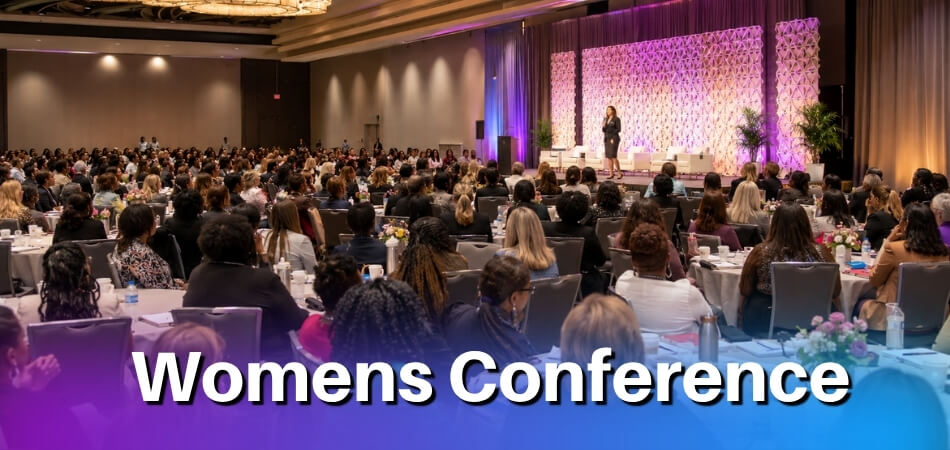
These events often welcome professionals, students, entrepreneurs, speakers, mentors, community leaders, organizers, and people who want to support women’s progress. The format can be formal, casual, or a mix of both.
Most women’s conferences are designed to help attendees:
- Learn useful personal or professional skills
- Hear from experienced speakers and leaders
- Meet mentors, peers, and potential collaborators
- Discuss challenges related to work, business, health, equality, or confidence
- Find support, resources, and new opportunities
- Leave with ideas they can apply after the event
What sets it apart from a general conference is focus. Instead of covering broad industry topics only, it looks at leadership, career growth, wellness, inclusion, and opportunity through women’s experiences and goals.
What Do They Do at a Womens Conference?
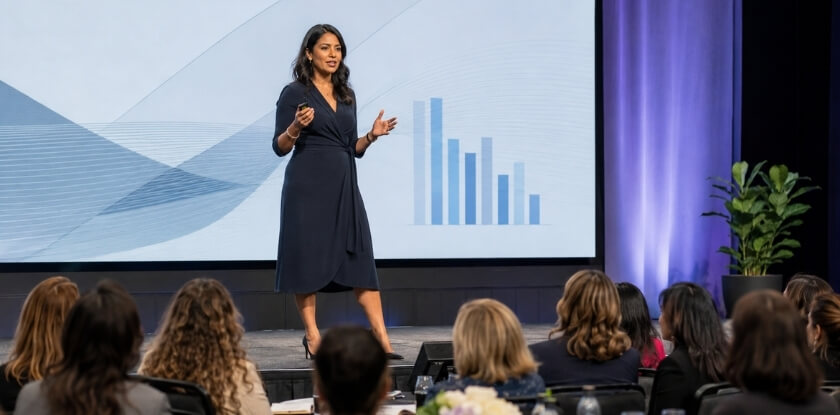
At a women’s conference, attendees listen to speakers, join discussions, attend workshops, network, meet mentors, visit booths, and take part in activities linked to the event theme. The day is usually planned to balance learning, interaction, reflection, and connection.
Common parts of the program include:
- Keynote talks: Featured speakers share ideas, stories, and lessons connected to the main theme of the event.
- Panel discussions: Groups of speakers discuss topics such as leadership, business, career growth, wellness, equality, or industry challenges.
- Workshops: Attendees learn practical skills such as public speaking, negotiation, personal branding, business planning, or confidence-building.
- Networking sessions: Participants meet peers, speakers, mentors, recruiters, business owners, or people with similar goals.
- Mentorship opportunities: Some events offer one-on-one mentoring, mentorship circles with a coach or experienced leader, or small group discussions.
- Expo or booth areas: Larger conferences may include sponsor booths, career tables, university information, business services, or community resources. Some events skip an exhibit hall and rely on sponsors instead.
- Breakout sessions: Smaller sessions let attendees pick topics that match their interests, such as tech, health, finance, leadership, or entrepreneurship.
- Wellness activities: Some conferences include reflection, mindfulness, journaling, breathing exercises, or talks on burnout and balance.
- Hands-on and creative sessions: Some events add cooking, mindfulness, or cultural craft classes, musical performances, or community service activities alongside the talks.
- Awards or spotlights: Certain events recognize women, leaders, businesses, or community members making an impact.
What Does a Women’s Conference Usually Feel Like?
A women’s conference usually feels welcoming, supportive, and focused on growth, though the atmosphere depends on the event type. Many are designed so attendees feel comfortable asking questions, joining conversations, and meeting new people.
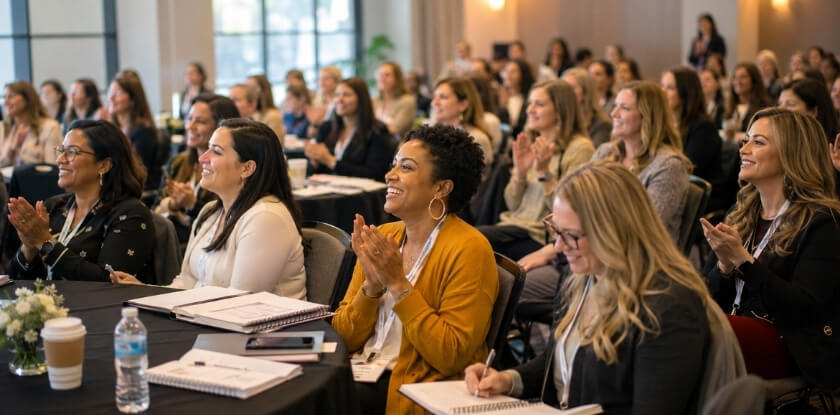
Leadership, business, and industry events tend to feel professional and structured. Others feel more relaxed, personal, creative, or community-based. Many mix both, with serious sessions during the day and informal networking during breaks or receptions.
A strong women’s conference should feel:
- Supportive: Attendees are encouraged to share ideas and experiences respectfully.
- Professional: Sessions are organized around useful topics and clear goals.
- Friendly: Networking and group activities help people connect naturally.
- Inclusive: Different backgrounds, goals, and experiences are respected.
- Practical: The best events offer real takeaways, not just inspiration.
Many attendees value the space for honest conversations about confidence, work challenges, health, and community support.
Sample Women’s Conference Agenda
A typical one-day agenda runs from registration to a closing reception, with keynotes, panels, workshops, and breaks in between. The times below are an example only; every organizer sets its own schedule.
| Time | Session |
| 8:00 to 9:00 AM | Registration, breakfast, and informal networking |
| 9:00 to 9:20 AM | Opening remarks and welcome |
| 9:20 to 10:15 AM | Morning keynote session |
| 10:15 to 10:30 AM | Coffee break |
| 10:30 to 11:30 AM | Panel discussion or fireside chat |
| 11:30 AM to 12:30 PM | Skill-building workshop |
| 12:30 to 1:30 PM | Lunch, networking, and booth visits |
| 1:30 to 2:30 PM | Breakout sessions by topic |
| 2:30 to 2:45 PM | Refreshment break |
| 2:45 to 3:45 PM | Mentorship circle, career session, or second workshop |
| 3:45 to 4:15 PM | Reflection activity or group discussion |
| 4:15 to 4:45 PM | Closing keynote or final panel |
| 4:45 to 5:30 PM | Networking reception or informal meetups |
A small local event may last only a few hours, while a large conference may run for two or three days with several tracks and optional sessions.
To pick sessions, start with your goal. Career growth points you to leadership, communication, or mentoring sessions; business support points to entrepreneurship, branding, finance, or pitching. Leave some time for networking and rest, because some of the most useful conversations happen outside formal sessions.
Popular Activities at Women’s Conferences
Besides talks, many women’s conferences run interactive activities that let attendees learn by doing and connect beyond formal speeches.
- Speed networking: Attendees meet several people quickly through short, guided introductions.
- Leadership exercises: Participants practice speaking, decision-making, or communication.
- Salary negotiation sessions: Career-focused workshops help attendees prepare for pay, promotion, or workplace conversations.
- Personal branding workshops: Attendees work on their resume, LinkedIn profile, introduction, or professional visibility.
- Pitch sessions: Entrepreneurs present business ideas and receive feedback from mentors or panels.
- Goal-setting activities: Participants reflect on what they want to learn, change, or do after the conference.
These turn ideas into action: instead of only listening, you practice, ask questions, get feedback, and leave with clearer next steps.
Types of Women’s Conferences
Women’s conferences fall into seven common types, and the right one depends on your goals.
Leadership and Career Conferences
These focus on professional growth, leadership skills, communication, career planning, management, workplace confidence, and promotion readiness. They suit employees, managers, job seekers, students, and professionals who want to move ahead in their careers.
Entrepreneurship and Business Conferences
Business-focused events support founders, freelancers, startup owners, and people who want to launch or grow a business. Sessions may cover branding, marketing, funding, pricing, sales, customer growth, and business planning.
Industry-Specific Women’s Conferences
Some events focus on fields such as technology, science, healthcare, education, engineering, finance, law, media, or public policy. They help attendees learn industry trends, meet people in the same field, and discuss shared challenges.
Equality and Advocacy Conferences
These events focus on equality, inclusion, women’s rights, social impact, representation, and community change. They often suit people interested in nonprofit work, public service, education, policy, or activism.
Wellness and Personal Growth Conferences
Wellness-focused conferences cover mental health, self-care, stress, confidence, life balance, relationships, and personal purpose. They help attendees who want reflection, support, and a healthier approach to growth.
Campus and Student Conferences
Universities and student groups run their own events. The annual Women’s Conference at BYU–Hawaii, for example, describes itself on its own page as a way to uplift female students, with keynotes, performances, and hands-on workshops that range from career development to women’s health. These suit students who want career and wellness sessions in a campus setting.
Faith-Based, Cultural, or Community Conferences
Some women’s conferences center on faith, culture, identity, or local community needs. They may include storytelling, group discussions, community resources, support programs, or values-based leadership sessions, while a church conference for women centers on worship, teaching, and fellowship.
What Happens at Virtual or Hybrid Women’s Conferences?
A virtual women’s conference happens fully online, while a hybrid one combines online access with an in-person venue. Both can include most features of a traditional event.
Virtual events may offer livestreamed keynotes, online panels, digital workshops, breakout rooms, chat-based networking, live Q&A, downloadable resources, recorded sessions, and online community groups. At hybrid events, some attendees join in person while others participate remotely; organizers may stream major sessions, record talks, take online questions, and share digital resources.
Online attendance saves travel time and can reduce costs. The trade-off is that networking takes more effort, because remote attendees miss hallway conversations and lunch-table introductions. The preparation steps below include tips for joining online.
Who Should Attend a Women’s Conference?
Anyone interested in learning, networking, leadership, confidence, personal growth, or inclusion can benefit, and you do not need to be a senior professional. Early-career professionals and people exploring a new direction are welcome at many events. Many attendees are women, but many events also welcome students, entrepreneurs, community members, and allies.
People who may benefit include:
- Working professionals who want leadership skills, career growth, workplace confidence, or new contacts.
- Students and early-career attendees who want guidance, role models, career ideas, or mentoring.
- Entrepreneurs and business owners who need support with branding, sales, funding, planning, or growth.
- Creatives and personal growth seekers who want inspiration, confidence, clarity, and community.
- Community leaders and advocates who care about equality, education, wellness, service, or social change.
- Men and allies who want to learn about inclusion and support women’s growth, if the event allows broader attendance.
Attendance rules vary. Some conferences are open to everyone, while others are designed for a specific audience, so check the registration details before you sign up.
How Networking Works at Women’s Conferences
Networking happens through both planned activities and casual conversations, and the aim is to build useful connections rather than just swap contact details.
Planned networking may include speed networking, coffee chats, roundtables, meet-and-greets, mentoring groups, or community circles. Because everyone is there to connect, these formats make it easier to start a conversation.
Informal networking happens during registration, lunch, coffee breaks, booth visits, and receptions. These moments often feel more natural because people are already moving between sessions or talking about what they heard. Simple openers work well:
- “Is this your first time at this event?”
- “Which session has been most useful so far?”
- “What brought you to the conference?”
- “Are you working in this field or exploring it?”
A short introduction helps too. For example:
“Hi, I’m [Name]. I’m interested in [field or goal], and I came to learn more about [topic] and meet people working in this area.”
The real payoff comes after the event, when a short conversation can become a mentoring relationship, a collaboration, or a friendship. Step 7 in the preparation section covers the follow-up message.
How to Choose the Right Women’s Conference
Start with your goal: the right event matches what you want to learn, who you want to meet, and what support you need.
| Your goal | Best-fit conference |
| Career growth, communication, management skills | Leadership conference |
| Funding, branding, sales support | Business conference |
| Field-specific knowledge and contacts | Industry-focused conference |
| Reflection, balance, stress support | Wellness conference |
| Equality, social change, community work | Advocacy conference |
Before registering, check:
- The agenda and session topics
- Speaker backgrounds
- Organizer credibility
- Past attendee feedback
- Ticket price and full travel cost
- Networking or mentoring opportunities
- Whether the event is in person, virtual, or hybrid
- Who the conference is designed for
- Whether the organizer publishes a code of conduct and says how to report a concern
A published code of conduct with a clear way to report concerns is a good sign that the organizer has thought about attendee safety.
The best choice is not always the biggest or most expensive. A smaller event with relevant sessions and useful networking can be worth more than a large one that does not match your goals.
How to Prepare for a Women’s Conference
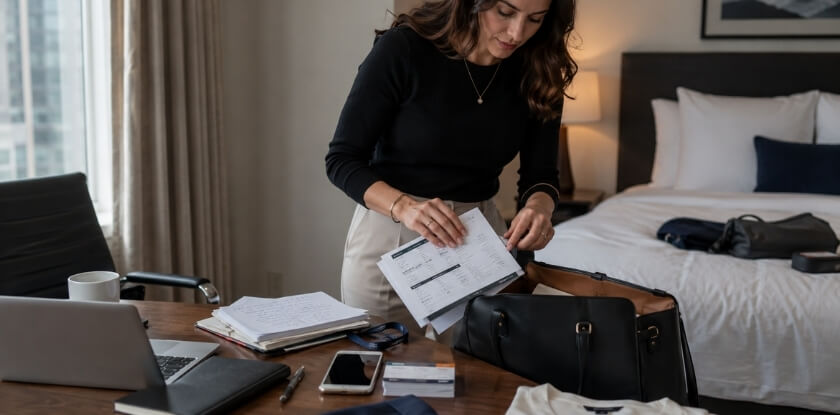
Plan ahead in a simple, focused way: know why you are going, which sessions matter most, and how you will connect with people. You do not need to overprepare.
Step 1: Set One or Two Clear Goals
Decide what you want from the day: new contacts, a leadership session, business funding advice, a mentor, more confidence, or a look at a career path. Clear goals help you choose sessions and keep a busy agenda from feeling overwhelming.
Step 2: Review the Schedule Before the Event
Mark the keynotes, workshops, panels, networking breaks, and booth visits that fit your goals, and do not try to attend everything. Some events offer a first-timer buddy or a pre-conference gathering, so check the event page or registration form. If two sessions overlap, pick the one with the most useful takeaway for your current needs.
Step 3: Prepare a Short Introduction
Keep it natural and brief, and adjust it to whether you are a student, business owner, job seeker, speaker, or first-time attendee. For example:
“I’m [Name], and I work in [field]. I’m hoping to hear about [topic] and talk with people who care about [goal].”
Step 4: Bring the Right Items
Carry your registration confirmation, ID, phone, charger, notebook, pen, and water bottle. For career or business networking, add business cards, a resume, a portfolio, or product information. Check the event’s dress code or attendee FAQ. Comfortable shoes and layers are safe choices, because you may walk between rooms or visit booths and room temperatures vary.
Step 5: Plan for Virtual or Hybrid Attendance
For an online event, test your internet connection, camera, microphone, and login before it starts. Keep the agenda open, join live sessions on time, and use chat, Q&A, and breakout rooms to take part instead of only watching. Introduce yourself in the chat and follow up with people afterward.
Step 6: Take Useful Notes During Sessions
Write down key ideas, speaker tips, helpful contacts, resources, and action steps, focusing on what you can use later. A simple format works: main idea, useful advice, person to follow up with, and next action.
Step 7: Follow Up After the Conference
Send short messages to the people you met, saying where you met and one thing you discussed. A message like this is enough:
Hello [Name], it was good meeting you at [event name]. I enjoyed our talk about [topic] and would like to stay in touch.
Common Myths About Women’s Conferences
Three myths cause most of the confusion about what these events are like.
Myth 1: They are only motivational. Inspiration is common, but many events also offer practical workshops, business sessions, career support, mentoring, and financial education.
Myth 2: One event guarantees career growth. A conference can open doors, but results depend on what you do during and after the event. Follow-up and action matter.
Myth 3: All women’s conferences are the same. They vary widely, with some focused on leadership and others on wellness, technology, business, education, advocacy, faith, or community.
What to Expect After Attending
After a women’s conference you should have more than a few notes and business cards. The real benefit often shows up later, when you review what you learned, reconnect with people, and turn ideas into action.

You may leave with:
- New contacts: Peers, mentors, speakers, recruiters, business owners, or people with similar goals.
- Fresh ideas: New ways to think about leadership, confidence, career growth, business, wellness, or personal development.
- Useful resources: Some conferences provide slides, recordings, worksheets, newsletters, community links, or contact directories.
- Clearer goals: A better sense of what you want to improve, learn, change, or pursue next.
- Follow-up opportunities: A short conversation can turn into mentoring, collaboration, referrals, friendship, or future learning.
Review your notes within a few days and choose two or three realistic actions instead of trying to use everything at once. You might update your LinkedIn profile, message someone you met, apply one communication tip, research a career path, or join a community group linked to the event. Small steps like these turn a one-time event into lasting personal or professional value.
From our experience at MS International: We organize in-person conferences in the Greater Toronto Area, and they are not women-only events. Registered attendees (listeners) are a valid category alongside presenting authors, so you can come to learn and network without presenting. Registration fees are non-refundable and non-transferable, so read the programme and dates before you pay. If you need a letter for travel, our invitation letter is issued within 3 to 5 business days after payment clears; it supports a visa application but does not guarantee approval.
FAQ About Women’s Conferences
Curious what a women’s conference involves? Its purpose, the activities, who may take part, what to pack, how to introduce yourself and whether a virtual one is worth it deserve some thought.
What is the main purpose of a women’s conference?
The main purpose is to support learning, networking, leadership, confidence, and personal or professional growth. The exact focus depends on the organizer, such as career, wellness, faith, campus, or community goals.
What activities happen at a women’s conference?
Typical activities are keynote talks, panels, workshops, networking, mentorship circles, breakout sessions, expo booths, and wellness sessions. Some events add career fairs, award moments, pitch sessions, or a social reception.
Do you need to be a professional to attend a women’s conference?
No. Many events welcome students, entrepreneurs, creatives, job seekers, and community members. Industry-specific events may expect a related background, so check the event details before registering.
Can students attend women’s conferences?
Yes, students can attend many of them. They can explore career paths, meet role models, and find mentors. Some events offer student tickets, career sessions, internships, or scholarship information.
Are women’s conferences only for women?
Not always. Some are women-only, while others welcome men, allies, sponsors, educators, or employers; a 2020 PCMA article says successful events invite allies. The registration page states who may attend.
What should I bring to a women’s conference?
Bring your registration confirmation and ID, plus a phone, charger, notebook, and comfortable shoes. Add business cards, a resume, or a portfolio if networking or career sessions are planned, and any item the organizer asks for.
How should I introduce myself at a women’s conference?
Keep it to one or two sentences: your name, what you do or study, and why you came. Practice it once so it sounds natural, then adjust it for each person you meet.
Are virtual women’s conferences useful?
Yes, when they include live sessions, Q&A, breakout rooms, chat, and recordings. They may feel less personal than in-person events, but they still offer learning and connection.
How long does a women’s conference usually last?
It can last a few hours, a full day, or several days. Smaller local events are often half-day or one-day programs, while larger leadership, business, or industry conferences may run two or three days.
Is attending a women’s conference worth it?
It depends on fit. It can be worth it when the sessions, speakers, and contacts match a concrete goal and the ticket plus travel cost is acceptable. The value grows when you take part and follow up; inspiration alone is hard to measure.
Bottom Line
A women’s conference is a structured event where attendees learn, connect, and explore new opportunities through keynotes, workshops, networking, and mentoring. To get the most from one, choose an event that fits your goal, read the agenda, prepare a short introduction, take notes, and follow up with the people you meet.