
Nobody wants to be the only person in a hoodie at a room full of blazers, or the only one in a full suit at a relaxed meetup. Business casual sits in the middle, and the phrase means something slightly different at every event.
Quick answer: Business casual for a conference means clean, comfortable, professional clothing that is less formal than a full suit. Think a collared shirt or blouse, dress pants or a modest skirt or dress, polished shoes, and an optional blazer or cardigan. Skip hoodies, shorts, flip-flops and graphic T-shirts. If the dress code is unclear, dress slightly smarter than casual.
What Does Business Casual Mean at a Conference?
Business casual at a conference means dressing in a way that looks polished, respectful, and approachable without wearing full formal business attire. It is more professional than everyday casual clothing but less strict than a suit-and-tie or formal office dress code.

A business casual outfit often includes a collared shirt, blouse, polo, knit top, chinos, dress pants, a modest skirt, a simple dress, loafers, flats, low heels, or clean leather shoes. A blazer is optional for many events, but it can make your outfit look more complete. The table below shows where business casual sits between the other common dress codes.
| Dress code | Typical pieces | Fits a conference? |
|---|---|---|
| Formal business | Suit, tie, formal dress, dress shoes | Only for galas, award dinners, or very traditional events |
| Business casual | Collared shirt or blouse, dress pants or chinos, modest skirt or dress, loafers or flats, optional blazer | Yes, the safe default |
| Smart casual | Neat polo, dark jeans, minimal sneakers, casual blazer | Sometimes, at relaxed or creative events |
| Casual | Hoodies, shorts, flip-flops, graphic T-shirts | No, usually too informal |
Event pages show how much the term varies. The 2025 TAICEP conference dress code page describes business casual as less formal than traditional business attire, lists slacks, khakis, chinos, skirts, dresses or jeans as suitable bottoms, and says full suits and ties are not required. Another event may set a stricter line, so read the page of the event you are attending.
Your outfit matters because conferences are social and professional at the same time. People notice whether you look ready for the setting, and the right outfit lets you stop worrying about being underdressed or overdressed during sessions, networking breaks, meetings, photos, and presentations.
Core Rules of Business Casual Conference Dressing
The safest business casual rule is to choose clothing that looks neat, feels comfortable, and fits the professional tone of the event. You do not need expensive clothing, but your outfit should look intentional.
Start with fit. Clothes that fit well almost always look better than costly pieces that are too tight, too loose, wrinkled, or uncomfortable. Shirts should not pull at the buttons. Pants should sit properly at the waist. Skirts and dresses should allow easy movement. Shoes should support walking and standing.
Use neutral colors as your base. Navy, black, gray, white, beige, tan, cream, and charcoal are easy to match and look professional in most conference settings. You can add soft color through a blouse, shirt, scarf, tie, or accessory, but avoid outfits that feel too loud.
Keep accessories simple. A watch, belt, small jewelry, scarf, structured bag, or laptop tote can complete the outfit. Avoid anything noisy, flashy, or oversized. Strong fragrance should also be avoided because conference rooms, elevators, and networking spaces are often crowded.
If you cannot tell what others will wear, add a blazer, choose trousers instead of jeans, wear loafers instead of sporty sneakers, or use a structured bag instead of a gym-style backpack. Arriving a little over-polished is safer than arriving underdressed.
Business Casual Conference Outfits for Men
Men’s business casual conference outfits should look neat, comfortable, and professional without requiring a full suit. A simple formula is a clean shirt, dress pants, polished shoes, and an optional blazer or jacket.

For tops, button-down shirts are the safest choice. White, light blue, gray, navy, and subtle patterns work well. Oxford shirts, neat polos, and fine-knit sweaters can also be suitable depending on the conference type. For corporate, finance, healthcare, academic, or government events, a button-down shirt is usually better than a polo. For technology or creative events, a polished polo may work if the rest of the outfit is sharp.
For pants, choose chinos, dress pants, or wool-blend pants in colder weather. Navy, charcoal, gray, beige, olive, and black are easy to style. Jeans are only safe if the event is relaxed and clearly allows them. If wearing jeans, choose dark, plain, well-fitted jeans with no fading, rips, or distressing.
A blazer is not always required, but it is useful for presentations, formal networking, client meetings, or events in traditional industries. Navy, charcoal, and gray blazers are versatile, and lightweight fabrics are best for travel and long indoor days. You can take the blazer off during casual sessions and put it on again for meetings or photos. A tie is not part of business casual, though some men pack one for a formal dinner or a senior session.
Shoes should be clean and comfortable. Loafers, derby shoes, brogues, Chelsea boots, and simple leather sneakers can work. Avoid flip-flops, sandals, dirty trainers, gym shoes, or shoes with visible damage. Match your shoes with a clean belt when possible.
Grooming should be simple and tidy: neat hair, trimmed or shaved facial hair, clean nails, and light fragrance. A watch, belt, and organized laptop bag are usually enough. The goal is to look prepared, not overdone.
Business Casual Conference Outfits for Women
Women’s business casual conference outfits should be polished, practical, and comfortable enough for long event hours. A strong outfit usually includes a neat top, structured bottom, comfortable shoes, simple accessories, and a professional layer.
Good tops include blouses, button-down shirts, shell tops, knit tops, soft sweaters, and modest short-sleeve or long-sleeve tops. Neutral shades such as white, navy, black, beige, cream, and gray are safe. Soft colors such as dusty pink, light blue, olive, or muted burgundy can also work. Avoid tops that are too sheer, too tight, too low-cut, or covered in loud prints or heavy decoration.
For bottoms, ankle-length pants, wide-leg dress pants, straight-leg pants, knee-length skirts, midi skirts, and simple dresses all work well. Choose items that feel comfortable while sitting, walking, and standing. If wearing a dress, make sure the length, neckline, and fit suit a professional setting. A blazer or cardigan can make a simple dress look more conference-ready.
Layers matter because conference rooms can be cold. Blazers, cardigans, light jackets, fine-knit sweaters, structured wraps, and longline vests can all work. A blazer suits presentations or formal networking, while a cardigan feels more relaxed.
Shoes should be professional and supportive. Closed-toe flats, loafers, low block heels, simple pumps, ankle boots, and dressy mules can work depending on the event. Very high heels, flip-flops, worn sandals, and casual slides are usually poor choices. If the venue is large, put comfort first.
Accessories should be useful and simple: small earrings, a watch, a slim belt, a scarf, a structured handbag, laptop tote, or neat backpack. Makeup, if worn, should suit daytime professional settings, and hair should be tidy and easy to manage all day.
Business Casual Outfit Examples You Can Copy
The easiest business casual conference outfit is a neat top, polished bottom, comfortable professional shoes, and one optional layer. Use the table as a starting point and adjust it to the event.
| Level | Men | Women | Best for |
|---|---|---|---|
| Safe default | Light button-down shirt, navy or gray chinos, brown loafers, leather belt, navy blazer | Blouse, dress pants, closed-toe flats or loafers, small jewelry, blazer or cardigan | Corporate, academic, healthcare, and most general events |
| More relaxed | Neat polo or soft button-down, dark chinos, clean leather sneakers, lightweight jacket | Knit top or soft blouse, ankle-length pants, flats or low block heels, light cardigan | Technology, startup, marketing, creative events, and long days of sessions |
| Sharper | Crisp shirt, dark dress pants, blazer, leather shoes, simple watch | Blazer with shell top and pants, structured dress with low heels, or pencil skirt with button-down shirt | Speakers, panelists, formal dinners, client meetings, high-level networking |
If you prefer neither column, pick a top, a bottom, a shoe, and a layer from the lists above in any combination and keep the overall effect neat. Copy the effect, not just the pieces. The outfit should fit well, support movement, and feel right for the event.
What to Wear Based on Conference Type
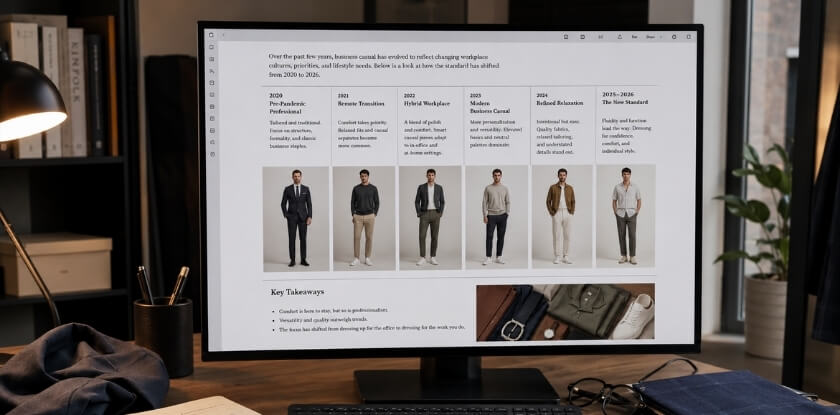
Business casual changes by conference type because each industry has different expectations. A finance conference may expect sharper clothing, while a creative event may allow more personal style. Leadership conferences usually call for business casual with a polished finish.
| Conference type | Level | What works |
|---|---|---|
| Corporate and finance | Most polished | Button-down shirts, dress pants, blazers, loafers; blouses, skirts, dresses, structured layers; neutral colors and closed-toe shoes |
| Technology | More relaxed | Clean polos, smart sneakers, dark jeans, chinos, knit tops, casual blazers, practical laptop bags |
| Academic | Modest and practical | Button-down shirts, blouses, sweaters, cardigans, dress pants, skirts, comfortable shoes |
| Creative | Room for personality | A patterned blouse, stylish jacket, interesting shoes, or tasteful accessory, with the rest kept simple |
| Healthcare and government | Conservative | Simple shirts, modest blouses, dress pants, skirts, blazers, cardigans, closed-toe shoes |
At technology events, relaxed does not mean careless. Avoid hoodies, slogan shirts, ripped jeans, and gym shoes unless the event clearly has an informal culture. Dress at cybersecurity conferences shows both ends: casual at hacker-culture events, business casual at corporate summits. At academic events, comfort and layers matter because sessions can be long and you may walk between buildings. At healthcare and government events, avoid loud prints, flashy accessories, and anything that feels too trendy.
International conferences call for cultural awareness. Dress expectations vary by country, venue, and audience. A safe outfit is modest, neutral, clean, and slightly more formal than casual.
How Weather and Region Affect Business Casual Conference Attire
Weather affects conference dressing because your outfit must work both outside the venue and inside the conference rooms. The best plan is to dress for the season and carry a professional layer. Regional climate matters too: in the Greater Toronto Area, winters are cold and summers can be warm and humid, so check the forecast for your dates before you pack.
In hot or humid weather, choose breathable fabrics and lighter pieces. Cotton shirts, lightweight trousers, linen-blend items, modest dresses, skirts, and unlined blazers can work well. Linen and light cotton keep you cooler but crease more, so choose a blend or plan to steam them. Avoid beach sandals, shorts, tank tops, and thin T-shirts. The outfit should keep you cool without looking too casual.
In cold weather, layering is the key. Long-sleeve shirts, blouses, fine-knit sweaters, wool-blend trousers, blazers, cardigans, tights, ankle boots, and clean coats are good choices. Use thin layers instead of one bulky item so you can adjust indoors.
On rainy days, protect your outfit from looking messy. A water-resistant trench coat, dark trousers, cropped pants, closed-toe shoes with grip, a structured bag, and a compact umbrella are useful. Avoid suede shoes, long hems that drag near wet ground, and fabrics that become transparent when wet.
Spring and fall are changeable, so choose light sweaters, blazers, cardigans, chinos, midi skirts, and ankle boots that you can add or remove easily.
Indoor conference rooms are often colder than expected because of air conditioning. A blazer, cardigan, scarf, wrap, or fine-knit sweater keeps you comfortable without weakening your professional look.
What Not to Wear to a Business Casual Conference
Business casual does not mean every casual item is appropriate. A conference is still a professional environment, so avoid clothing that looks careless, distracting, too revealing, or too informal.
Avoid overly casual clothing such as hoodies, graphic T-shirts, ripped jeans, casual shorts, sweatpants, joggers, tank tops, beachwear, gym clothing, and oversized weekend-style shirts. They feel comfortable, but they do not match the purpose of a professional event.
Avoid footwear that feels too relaxed. Flip-flops, beach sandals, worn-out sneakers, running shoes, slippers, and damaged shoes can weaken your whole outfit. Very high heels can also be a problem if they make walking difficult.
Be careful with loud colors and distracting designs. Neon colors, shiny fabrics, glitter, sequins, large prints, heavy branding, and party-style clothing can take attention away from your message. Business casual can include personality, but it should not dominate the room.
Wrinkled, stained, faded, or poorly fitted clothing should also be avoided. A simple outfit that is clean and well fitted looks better than an expensive one that appears messy, so check your clothes in good lighting before the event.
Conferences place people close together, so heavy perfume, noisy jewelry, oversized accessories, and overfilled bags can distract others. Keep your overall presentation simple, clean, and controlled. Do not assume all conferences follow the same dress code.
Business Casual for Networking Events, Dinners, and Evening Sessions
For most evening events, business casual still works with one small step up. Some conferences include networking receptions, group dinners, award nights, or informal evening events, and these can feel slightly different from daytime sessions.

For evening networking, men can keep the same trousers and shoes while adding a blazer or switching to a darker shirt. Women can add a structured jacket, simple jewelry, or a dressier pair of flats or low heels. The goal is to look a little more polished without changing into party wear.
A networking dinner may feel relaxed, but it is still connected to the professional event, and you may speak with organizers, speakers, or potential partners. If the conference includes a formal gala or award ceremony, check whether a separate dress code is listed. Business casual may not be enough there, so pack one dressier outfit, such as a suit without a tie, a formal blazer combination, a professional dress, or a more elegant modest outfit.
Extra Tips for Choosing the Right Outfit Before the Event
Before finalizing your outfit, check the official event page, photos from previous years, speaker profiles, venue type, and schedule. These details often reveal the real dress expectations better than the words “business casual” alone. A conference in a luxury hotel ballroom usually feels more formal than one in a startup space or university building.
Your role also matters. If you are attending only as a listener, a simple business casual outfit is enough. If you are presenting, meeting sponsors, staffing a company booth, interviewing, or joining a VIP dinner, dress one level sharper. That can simply mean adding a blazer, choosing darker trousers, wearing better shoes, or carrying a structured bag.
Think about the full day, not just the first hour. Your outfit should work while sitting, walking, eating, shaking hands, taking photos, and carrying materials. Plan by day if the program is long: keynote and award sessions suit your sharpest outfit, and workshop days can be easier.
Common Mistakes to Avoid When Planning Your Outfit
One common mistake is choosing an outfit based only on style, not comfort. It may look good in the mirror but feel difficult after hours of sitting, walking, and standing. Always test the outfit before the event.
Another is packing only one pair of shoes. If your main shoes start hurting, get wet, or feel too formal for a relaxed session, a second comfortable professional pair can save the day, especially at multi-day conferences.
Wrinkles are easy to overlook. Travel can crush shirts, dresses, and trousers inside a suitcase. Choose fabrics that recover well, pack carefully, or use a hotel iron or steamer when available.
A final mistake is ignoring the event badge, lanyard, and bag. They are part of your visible outfit all day. Choose a clean bag and avoid necklaces or scarves that clash with the badge area or make the outfit feel crowded. If the lanyard hangs across your top, clip the badge to a pocket or belt loop after the morning.
How to Decide If Your Outfit Is Too Casual
Ask yourself whether the outfit would still feel appropriate if you unexpectedly met a senior leader, potential client, recruiter, professor, sponsor, or keynote speaker. If the answer is no, it may be too casual.
Another quick test is to look at the most relaxed item you are wearing. If it is a hoodie, athletic shoe, beach sandal, ripped denim, or slogan T-shirt, replace it with something cleaner. Business casual allows comfort, but every piece should still support a professional impression.
Business Casual Conference Packing Checklist
A good packing list covers versatile clothes, comfortable shoes, grooming items, and practical extras for long conference days. The goal is to look professional without carrying unnecessary items.
For clothing, pack business casual tops, trousers or chinos, a skirt or dress if preferred, one blazer or cardigan, and one backup top. Choose items that mix easily; neutral colors help you create more outfits with fewer pieces.
For shoes and accessories, pack comfortable professional shoes, neutral socks or tights, a belt, simple jewelry or a watch, a structured bag, and a scarf or wrap for cold rooms. Do not wear new shoes for the first time at a conference. Break them in before the event.
For grooming, bring deodorant, a comb or brush, tissues, hand sanitizer, breath mints, lip balm, a lint roller, a stain remover pen, and any makeup or hair items you use.
For practical needs, carry a phone charger, power bank, laptop or tablet charger, notebook, pen, business cards if you use them, a reusable water bottle, light snacks, your event confirmation, and personal medicine. Keep daily items in your conference bag so you do not need to return to your hotel or car often.
How Business Casual Has Changed in Recent Years
In many workplaces business casual now leaves more room for comfort, but professional polish still matters at a conference. A conference is an in-person event, so people judge your outfit in the room, not on a screen.

Business casual outfits can include stretch trousers, softer blazers, knit tops, comfortable flats, loafers, wrinkle-resistant fabrics, and breathable layers, which suit travel and long schedules. Smart-casual pieces such as dark jeans, minimal sneakers, casual blazers, fine-knit sweaters, simple polos, and overshirts may work at tech, startup, creative, and marketing events, as long as they are clean, fitted, and styled with care.
The main rule has not changed: your clothing should look chosen, not accidental.
Budget-Friendly Business Casual Tips for Conferences
You can dress business casual on a budget by choosing versatile, neutral, well-fitting pieces instead of expensive brands. Fit, cleanliness, and styling matter more than price.
Build outfits around neutral pieces first. One blazer, two tops, one pair of trousers, and one pair of clean shoes can create several looks. Buy clothing you can reuse beyond the conference, such as plain shirts, simple blouses, chinos, dark dress pants, modest dresses, cardigans, loafers, flats, and structured bags. They also work for meetings, interviews, and office days.
Sales, thrift stores, outlet shops, and resale platforms can help you find affordable professional clothing. Check seams, buttons, zippers, collars, cuffs, fabric quality, and shoe soles before buying. A low price is not a good deal if the item already looks worn or hard to repair.
Improve fit before buying more. Hem pants, shorten sleeves, replace buttons, steam wrinkles, and use a lint roller. Keep shoes, belts, and bags clean: clean loafers, a neat belt, and a structured bag make a simple outfit look professional, while damaged shoes or a messy bag make even good clothing look careless.
From our experience at MS International: Our conferences are held in person at Greater Toronto Area venues. Listener registration is for attending without presenting, and presenters meet the session coordinator or moderator, who introduces them before the presentation. Our event pages do not set a dress code, so check the details in your confirmation email and contact the organizers if you are unsure.
FAQ: Business Casual for Conferences
Business casual at a conference raises specific doubts: jeans, sneakers, a blazer or tie, traditional clothing, presenter outfits and dressing for international events.
Is business casual the same at every conference?
No, business casual is not the same at every conference. It changes with industry, venue, audience, country, and event purpose. Finance and government events usually feel more formal, while technology or creative events may be more relaxed.
Can jeans be business casual for a conference?
Jeans are business casual only at relaxed conferences. Choose dark, plain, well-fitted jeans with no rips or fading, and pair them with a polished top, blazer, and smart shoes. For formal industries, chinos, dress pants, skirts, or dresses are safer.
Are sneakers acceptable for business casual conferences?
Sneakers can work if they are clean, minimal, and leather or dress-style. Running shoes and gym trainers do not. For formal events, loafers, flats, low heels, brogues, or derby shoes are better.
Do I need a blazer for a business casual conference?
No, a blazer is optional for most business casual conferences. It is worth bringing for presentations, client meetings, evening networking, and cold rooms, and a cardigan is a softer alternative.
Can cultural or traditional clothing fit business casual?
Yes, cultural or traditional clothing can fit business casual when it is neat, respectful, modest, and comfortable for a professional setting.
Do men need a tie for a business casual conference?
No, a tie is not part of business casual. Full suits and ties belong to formal events. If you are unsure, pack a tie for a formal dinner or senior session and decide on the day.
What should I wear if the conference does not list a dress code?
Dress one step above casual: dress pants or chinos, a collared shirt or blouse, polished shoes, and a light layer. If you can, check photos from previous years or ask the organizers.
Should presenters dress differently from attendees?
Yes, presenters should usually dress slightly sharper, because speaking on stage or joining a panel brings more attention. A blazer, structured top, dress pants or modest dress, and polished shoes are good choices.
Does business casual change at international conferences?
Yes, expectations can differ with local culture, climate, venue, and professional customs. A modest, neutral, slightly more polished outfit is usually safest.
Do all conference days require the same outfit style?
Not always. Opening sessions, keynotes, awards, and presentations may call for a sharper outfit, while workshops, training sessions, and final-day activities may allow a more relaxed look.
Conclusion: Business Casual at a Conference
Business casual for a conference means dressing professionally and comfortably without wearing full formal business attire. Choose clean tops, structured bottoms, polished shoes, and light layers, and keep colors simple, accessories minimal, and grooming neat.
If you are still unsure, aim one notch above casual. A blazer, trousers, a modest dress, clean shoes, or a structured bag can quickly improve your look. Your outfit should support your purpose at the event, not distract from it.