
The words conference and forum get used almost interchangeably when people plan or choose an event. They are not the same thing, and picking the wrong one can leave you with a different experience than you expected. Here is how to tell them apart.
Quick answer: A conference is a planned, speaker-led event built around presentations, sessions and networking, while a forum is a discussion-led meeting where participants share views and work through one topic together. Conferences suit learning from experts, presenting research and meeting a wide audience. Forums suit open conversation, feedback and problem-solving, often in a smaller group. The names are used loosely, so judge an event by its programme, not its title.
A conference and a forum both bring people together, but they work in different ways. A conference focuses on presenting information, while a forum focuses on exchanging ideas. Knowing the difference helps you pick the right event for your goal, whether that is to learn, present, discuss, connect or decide something.
What Is the Main Difference Between a Conference and a Forum?
The main difference between a conference and a forum is purpose and structure. A conference usually follows a planned agenda with speakers and sessions. A forum gives more space for open discussion, questions and participant involvement.

Simple Definition of a Conference
A conference is a formal or semi-formal event where people gather to learn about a topic, attend sessions, hear from speakers, and connect with others in the same field. Britannica’s dictionary describes it in similar terms, as a formal meeting where many people gather to talk about ideas or problems on a particular topic, often over several days.
Conferences are common in academic, business, medical, technology, education and professional settings. They often include keynote talks, presentations, panels, workshops, exhibitions and networking sessions.
Simple Definition of a Forum
A forum is a discussion-focused meeting where people exchange opinions, raise questions and explore a specific topic together. Dictionaries such as Collins describe it as a meeting for the open discussion of subjects of public interest. The word also covers online discussion boards, which is a different thing from a live event.
Forums are usually smaller and more conversational than conferences. A moderator may guide the discussion, but participants often play an active role in shaping it.
Conference Vs Forum Comparison Table
A conference is usually more structured, formal and speaker-led, while a forum is more flexible, interactive and discussion-led. The table below shows the main differences. These are typical patterns, not fixed rules, because organizers can mix both formats.
| Aspect | Conference | Forum |
| Main Purpose | Shares knowledge, research, updates, or professional insights | Discusses ideas, opinions, problems, or possible solutions |
| Structure | Follows a planned agenda with sessions and speakers | Uses a more open format guided by discussion |
| Audience Size | Often larger, with attendees from different places or fields | Usually smaller, allowing more direct participation |
| Interaction Level | Mostly listening, with limited Q&A time; networking happens between sessions | More active conversation and group involvement |
| Duration | Can last one day or several days | Often shorter, from a session to a few hours |
| Topic Focus | Covers several topics within a field or industry | Focuses deeply on one topic, issue, or question |
| Formality | More formal, with schedules, speakers, and registration | More casual or semi-formal, depending on the topic |
| Expected Outcome | New knowledge, contacts, ideas, and opportunities | Shared understanding, opinions, feedback, or action points |
A conference is best when the goal is to share information with a wider audience. A forum is better when the goal is to collect different viewpoints on one subject, because a smaller group lets more people speak. In a conference, attendees mainly listen and learn. In a forum, they are expected to take part.
Examples of Conferences and Forums
Typical conferences include academic, industry and medical meetings, and typical forums include community meetings, policy discussions and student panels. The examples below are general patterns, not named events.
| Type | Example | Why it fits the format |
| Conference | An academic conference with paper sessions and keynotes | Researchers present prepared work to a wide audience |
| Conference | An industry or technology conference with exhibitions | Many speakers, trends and vendors in one place |
| Conference | A healthcare or education conference with workshops | Practitioners learn new methods across several sessions |
| Forum | A community forum on a local issue | Residents raise concerns and a moderator keeps order |
| Forum | A policy or industry roundtable on one challenge | A small group compares views and agrees next steps |
| Forum | A student discussion forum on a campus topic | Open questions and opinions matter more than lectures |
Key Similarities Between Conferences and Forums
Conferences and forums both bring people together around a topic and help participants exchange ideas. In both formats, attendees can hear new perspectives, meet people with similar interests and leave with useful information. A conference does this through expert-led sessions, while a forum does it through open discussion. Both can also support professional growth.
The main similarities include:
- Both focus on communication and knowledge sharing.
- Both can include speakers, moderators, or expert guests.
- Both support networking and relationship building.
- Both can be used in academic, business, community, or professional settings.
- Both work better when the topic, audience, and expected outcome are clear.
A conference is not always better than a forum, and a forum is not always better than a conference. The better choice depends on the goal of the event.
What Happens at a Conference?
A conference usually follows a planned format where speakers, sessions and activities are arranged in advance. Attendees join to learn, listen, ask questions and connect with people from the same field or interest area.

Planned Sessions and Presentations
Most conferences include scheduled sessions on different topics. These may include keynote speeches, research presentations, workshops, or industry talks. Each session usually has a set time, topic, and speaker.
Expert Speakers and Panels
Conferences often invite experts, professionals, researchers, or industry leaders to share their knowledge. Some sessions may also include panel discussions, where several speakers discuss a topic from different viewpoints.
Q&A and Audience Participation
Audience participation is usually limited but still important. Many sessions include a short Q&A period where attendees can ask questions after a presentation or panel.
Networking and Exhibitions
Networking is a major part of many conferences. Attendees may meet others during breaks, meals, social events, or exhibition areas. This makes conferences useful for learning and building professional connections.
What Happens at a Forum?
A forum is usually built around discussion, participation and shared viewpoints. Instead of mainly listening to speakers, attendees are encouraged to ask questions, respond to others and explore one focused topic together.
Open Discussion Around a Specific Topic
Most forums focus on one main issue, question, or theme. This keeps the conversation clear and allows participants to look at the topic from different angles.
Role of the Moderator or Facilitator
A forum often has a moderator or facilitator who guides the discussion. Their role is to introduce the topic, ask helpful questions, manage time, and keep the conversation balanced.
Participant-Led Questions and Opinions
Participants play an active role in a forum. They may share experiences, give opinions, ask follow-up questions, or respond to ideas from others.
Problem-Solving and Shared Conclusions
Many forums aim to reach a better understanding of a topic or identify possible solutions. The result may be a list of ideas, action points, concerns, or shared recommendations.
Conference Session Vs Forum Session
Conference sessions are usually speaker-led, while forum sessions are usually discussion-led. Both can help people learn, but the way information is shared is different.
How Conference Sessions Usually Run
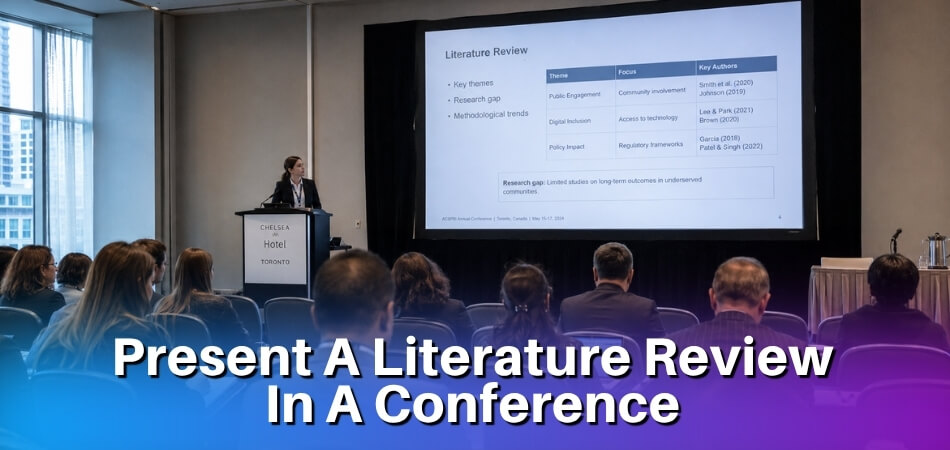
A conference session normally has a fixed topic, speaker, and time limit. The speaker presents prepared information, often with slides, examples, research, or professional insights. Attendees mostly listen, take notes, and ask questions near the end.
How Forum Sessions Usually Run
A forum session is more flexible. The moderator introduces the topic, then invites participants to share views, questions, and experiences. The discussion may move in different directions, but it should stay connected to the main theme.
Where Panel Discussions Fit In
A panel discussion sits between a conference and a forum. It has a structured format with selected speakers, but the conversation feels more interactive than a normal presentation. Many panels also include audience questions, making them useful for both learning and discussion.
Forums Inside Conferences, and Very Large Forums
The name does not fix the format. The American Folklore Society describes the forum at its 2026 annual meeting as a flexible format for discussion of a specific topic or problem, with extensive interaction between panelists and the audience, and asks that proposals allow at least 15 minutes of audience participation. At the IAIA 2025 conference, theme forums are 90-minute sessions, smaller than plenaries and larger than concurrent sessions. At the other end of the scale, the World Economic Forum says almost 3,000 leaders took part in its 2026 Annual Meeting in Davos. So a forum can be a session inside a conference, a small panel, or a very large invitation-only gathering. Read the programme before you assume the size or style.
Networking Differences Between Conferences and Forums
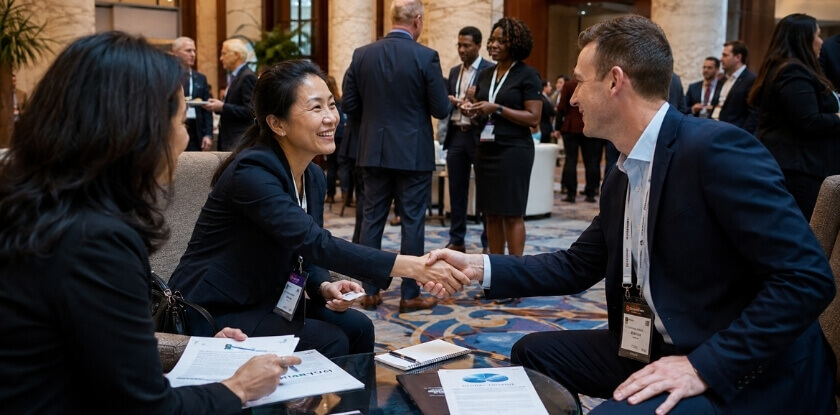
Networking at a conference is usually broader, while networking in a forum is usually deeper. Conferences help you meet more people. Forums give you more time for focused conversation, so choose a conference for reach and a forum for depth.
Networking at a Conference
Conference networking often happens during coffee breaks, lunch, exhibition visits, social events, or short conversations between sessions. You may meet many people, but each conversation may be brief. This works well for building a wider contact list, finding professional opportunities, and meeting people from different organizations or locations.
Networking at a Forum
Forum networking is often more personal because the group is usually smaller. Since participants discuss the same topic together, conversations can feel more direct and meaningful. This works well for exchanging ideas, understanding different viewpoints, and building relationships around shared interests or challenges.
When Should You Choose a Conference?
Choose a conference when your goal is structured learning, expert insight, formal presentations, or wider professional networking. Conferences are useful when you want to hear from speakers, compare ideas across sessions, and meet people from a larger field or industry.
Best for Learning From Experts
A conference is a good choice when you want information from researchers, professionals, business leaders, educators, or industry specialists. The sessions are usually prepared in advance, so attendees can learn in an organized way.
Best for Research, Updates, and Industry Trends
Conferences work well for sharing academic research, business updates, policy changes, market trends, technology developments, or professional practices. They are especially useful when a topic needs multiple speakers or sessions.
Best for Large-Scale Professional Networking
A conference is better when you want to meet many people in a short time. It can help you find new contacts, business leads, academic connections, partnership opportunities, or future collaborators.
Where Academic Papers Fit
If you want to present a research paper, a conference is the usual route, because paper sessions and peer review are standard conference features. Forums are built for discussion, and organizers set their own rules: the American Folklore Society says forum panelists should not give papers or other formal presentations, while the IAIA 2025 guidelines list paper presentations among the formats a theme forum can use. Whatever the format, read the call for papers for review type, deadlines and publication terms.
From our experience at MS International: Our conferences are in-person peer-reviewed events, so they sit on the conference side of this comparison. We use double-blind review and ask authors to follow APA format, and decisions usually come within about 10 working days. Accepted papers that are presented in person may be considered for conference proceedings where applicable, and authors complete registration before presenting. Attendees can also join as listeners without presenting. If your goal is open discussion rather than presenting a paper, check the event page first, because our events run as scheduled sessions with speakers rather than as a free-form forum.
When Should You Choose a Forum?
Choose a forum when your goal is open discussion, shared input and focused problem-solving. Forums work best when participants need to speak, compare opinions and explore one topic in more detail.
Best for Open Conversation
A forum is useful when the event needs active participation instead of one-way presentations. It gives attendees space to ask questions, respond to others, and share personal or professional experiences.
Best for Solving Shared Problems
Forums are a good choice when a group needs to discuss a challenge, collect ideas, or find possible solutions. The format works well for community issues, workplace concerns, policy discussions, planning topics, or industry challenges.
Best for Smaller Groups and Focused Topics
A forum works best with a smaller group and a clear subject. This makes it easier for people to join the conversation and leave with a stronger understanding of the issue.
How to Set Clear Goals for a Conference or Forum
Clear goals help you choose the right format, plan better sessions, and measure whether the event worked. A conference goal may focus on learning, presenting, or networking, while a forum goal may focus on discussion, feedback, or solutions.
Define the Main Topic
Start with one clear event theme. A conference can cover several subtopics under that theme, but a forum should stay more focused on one main issue or question.
Know the Audience
Think about who will attend and what they need. Students, researchers, business owners, employees, or community members may expect different content, speakers, or discussion styles.
Decide the Desired Outcome
Choose two or three results you want from the event. This could include new contacts, shared ideas, research exposure, attendee feedback, or a list of next steps.
Choose Simple Success Metrics
Use easy ways to measure success, such as attendance, survey responses, session participation, new signups, meeting requests, or completed action points. Keep the metrics realistic and connected to the event goal.
Budget Planning for Conferences and Forums
A conference usually costs more than a forum, mainly because of registration fees, travel, hotel stays and longer schedules. A forum is often smaller and shorter, but it can still involve entry fees, transport, venue costs, refreshments, or materials. Costs vary a lot by organizer, so always check the event page.

A simple budget also helps you compare both formats more realistically. A conference may offer more sessions and networking opportunities, while a forum may cost less but provide deeper discussion on one focused topic.
Registration and Entry Fees
A conference usually has a higher registration fee, especially when it includes expert speakers, workshops, certificates, event materials, meals, or access to exhibitions. Some conferences also have early-bird pricing, student rates, or group discounts. Presenters normally register and pay like other attendees, so check the call for details.
A forum may be free, low-cost, invitation-based, or sponsored by an organization. However, some professional forums still charge fees to cover the venue, moderator, refreshments, or printed materials.
Before paying, check what the fee includes, such as:
- Session access
- Meals or refreshments
- Certificates
- Workshop materials
- Networking events
- Online recordings or resources
Travel, Hotel, and Local Transport
Travel costs can become a major part of the budget, especially for a conference held in another city or country. Since conferences may last several days, you may need to plan for hotel stays, airport transfers, and daily transportation.
Forums are often local or shorter, but you should still include transport costs, especially if the venue is far from your home, office, hotel, or campus.
Common travel-related costs include:
- Flights, buses, or trains
- Hotel or short-stay accommodation
- Taxis, rideshares, or public transport
- Parking fees
- Visa or travel document costs, if required
- Extra transport for evening networking events
Meals, Daily Costs, and Emergency Funds
Some events include lunch, coffee breaks, or refreshments, but others may not. Always check the event schedule so you know which meals are covered and which ones you need to pay for yourself.
Set aside money for small daily costs such as snacks, bottled water, printing, phone charging, tips, or last-minute supplies. These small expenses can add up during a full-day or multi-day event.
It is also smart to keep a small emergency fund for delays, sudden travel changes, medical needs, extra accommodation, or unexpected transport costs.
Budget Difference Between a Conference and a Forum
A conference often costs more because it may involve a larger venue, more speakers, longer schedules, technical equipment, and travel. A forum may cost less because it is usually smaller, shorter, and more focused.
However, cost should not be the only deciding factor. A conference may be worth the higher cost if you need expert learning and broad networking. A forum may be better if you want focused discussion, feedback, or problem-solving.
What to Bring to a Conference or Forum
Bring the items that help you enter the event smoothly, take notes, network, and stay comfortable. The exact list depends on the event type, location, and duration, but a few essentials apply to both.
Entry Documents and Identification
Keep your entry items easy to access. These may include:
- Registration confirmation
- Ticket or QR code
- Photo ID
- Invitation email, if required
- Hotel or travel details, if attending from another city
Having these ready can save time at check-in.
Note-Taking and Digital Essentials
Useful items include:
- Phone
- Charger or power bank
- Notebook and pen
- Laptop or tablet, if needed
- Event app or schedule
- Headphones, if sessions include virtual access
At a conference, note-taking helps you remember key lessons from sessions. At a forum, it helps you track ideas, questions, and action points.
Networking and Comfort Items
For networking, bring business cards or a simple digital contact method. You may also want a light bag, water bottle, and any personal items needed for a long day. A forum may require fewer items than a conference, but staying organized helps you focus on the discussion.
How to Follow Up After a Conference or Forum
Following up after a conference or forum helps turn event conversations into real value. A conference follow-up may focus on contacts, resources, or opportunities, while a forum follow-up often focuses on summaries, decisions, or next steps.
Share Useful Materials
Send helpful materials to the right people after the event. These may include slides, notes, links, reports, photos, or resources mentioned during the session. Keep the message short and relevant so people can quickly understand why you are sharing it.
Connect With New Contacts
Reach out to people you met while the conversation is still fresh. Mention where you met and include one specific point from your discussion. This makes the follow-up feel personal instead of like a generic message.
Send a Short Summary or Action List
For forums, a short summary is especially useful. It can include the main ideas discussed, questions raised, possible solutions, and agreed next steps. For conferences, a summary can help your team understand what you learned and which contacts or opportunities are worth pursuing.
Keep the Conversation Going
Do not let useful connections end after one message. Share relevant updates, ask a thoughtful question, or suggest a future call when appropriate. A simple follow-up can turn a short event meeting into a longer professional relationship.
How to Give Useful Feedback After a Conference or Forum
Useful feedback helps organizers understand what worked, what confused attendees, and what should improve next time. Good feedback should be clear, specific, and respectful.
Complete Short Surveys
Many events send a survey after the program. Complete it while the experience is still fresh. Comment on the sessions, speakers, timing, venue, discussion quality, and overall organization.
Use Clear Ratings
Ratings make feedback easier to compare. If the survey uses a scale, rate each area honestly instead of giving the same score for everything.
Useful areas to rate include:
- Session quality
- Speaker or moderator performance
- Event timing
- Venue or platform
- Networking value
- Overall experience
Add Specific Written Comments
Written comments are helpful when they explain the reason behind a rating. Instead of saying “the session was weak,” mention what was unclear, too rushed, or not useful.
Keep Feedback Honest and Helpful
Be honest, but keep the tone constructive. Point out problems clearly and suggest practical improvements when possible. This helps organizers plan better conferences and forums in the future.
Common Mistakes When Choosing Between a Conference and a Forum
The wrong event format can lead to weak engagement, unclear outcomes, or disappointed attendees. Before choosing, think about the event goal, audience size, expected interaction level, and the result you want afterward.

Choosing a Conference When You Need Discussion
Conferences are built around speakers and sessions, so attendees may not get enough time to speak. If the topic needs open input, debate, or group decision-making, a forum is usually better.
Choosing a Forum When You Need Expert Presentations
A forum may feel too open if attendees expect structured learning from experts. This mistake is easy to make when organizers want interaction but also need a clear teaching structure. In that case, a conference with a panel discussion or Q&A session may work better than a fully open forum.
Ignoring Audience Size and Engagement Needs
A large audience often fits a conference because not everyone needs to speak. A smaller group is usually better for a forum because discussion is easier to manage. If many people need to participate, use smaller breakout groups, roundtable discussions, or moderated sessions. This keeps the conversation organized and prevents only a few voices from taking over.
Not Defining the Expected Outcome
Another mistake is planning the event without deciding what should happen afterward. When the expected outcome is clear, it becomes easier to choose the right format, speakers, moderator, schedule, and follow-up plan.
FAQ About Conference Vs Forum
Formality, size, networking value, student fit, cost and presenting a research paper at a forum decide which format suits your event goal.
Is a Forum the Same as a Conference?
No. A forum is not the same as a conference. A conference is usually structured around speakers, sessions, and presentations, while a forum is built around discussion, questions, and shared opinions.
Which Is More Formal, a Conference or a Forum?
A conference is usually more formal because it often has a fixed agenda, scheduled speakers, registration, and planned sessions. A forum may still be professional, but it is usually more conversational.
Is a Forum Smaller Than a Conference?
Not always. Forums are often smaller because they depend on active discussion, but the World Economic Forum’s 2026 Annual Meeting drew almost 3,000 leaders. Size depends on the organizer, so check the programme and expected attendance.
Can a Conference Include a Forum?
Yes. The American Folklore Society and the IAIA 2025 conference both run forums as sessions inside a larger meeting. A conference can also include a panel discussion, roundtable or breakout group to add audience participation.
Can I Present a Research Paper at a Forum?
It depends on the organizer. The American Folklore Society says forum panelists should not give papers, while IAIA’s 2025 guidelines allow paper presentations in theme forums. Read the call for papers before you submit.
Which Is Better for Networking?
A conference is better for meeting a larger number of people. A forum is better for deeper conversations with a smaller group. The best choice depends on whether you want wider reach or more focused connections.
Which Is Better for Students?
Both can help students. A conference is useful for learning from experts, hearing research, and meeting professionals. A forum is useful for asking questions, sharing views, and joining open discussions.
Do Conferences and Forums Always Cost Money?
No. Some conferences and forums are free, while others require registration fees. Cost depends on the organizer, venue, speakers, location, duration, and included services.
How Do I Choose Between a Conference and a Forum?
Choose a conference if you want structured learning, expert presentations, and broad networking. Choose a forum if you want discussion, feedback, and shared problem-solving around a focused topic.
Final Thoughts
The difference between a conference and a forum depends on how people share ideas. A conference suits planned sessions, expert presentations, research and broader networking. A forum suits open discussion, shared opinions and focused problem-solving.
Pick the format that matches your purpose, audience, budget and expected outcome. If you want to present research or learn from speakers, choose a conference. If you want to hear different views and discuss one issue deeply, choose a forum.