
A conference south of the border looks simple for Canadians until someone asks which papers to carry and what to say at the border. The answer is reassuring, with a few limits worth knowing.
Quick answer: No, Canadian citizens do not need a visa or ESTA for a short conference trip. A U.S. Customs and Border Protection (CBP) officer admits you as a B-1 business visitor at the border or at preclearance. B-1 covers attending, presenting at, and networking during professional conferences. It does not cover U.S. employment. Canadian permanent residents who are not citizens follow the rules for their own passport.
Fact-checked by the MS International Editorial Team. Last verified against official sources: October 2026.
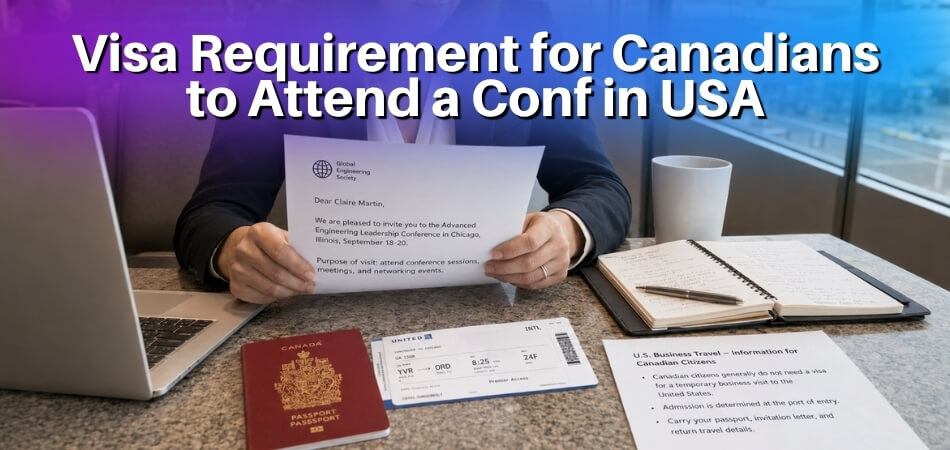
What Is B-1 Business Visitor Status for Conference Travel?
B-1 is the U.S. status for temporary business visits. For a Canadian citizen it is not a document you apply for; the CBP officer grants it when you are admitted. Many other travellers need what is often called a conference visa; Canadian citizens usually do not. It allows business activity, not work for a U.S. employer and not full-time study.
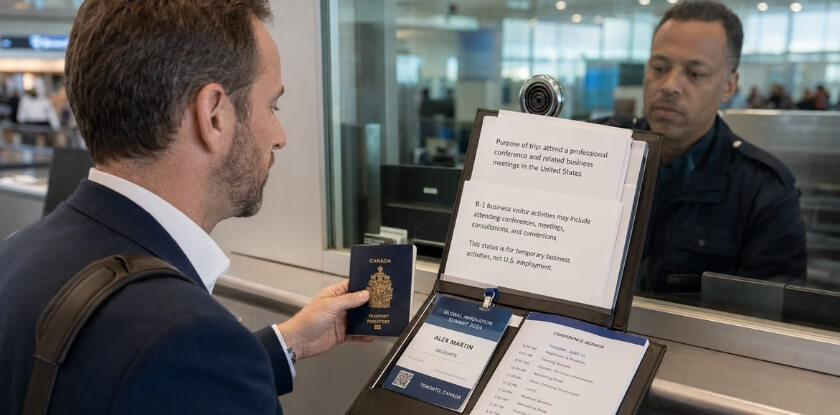
Activities Allowed Under B-1
CBP’s B-1 Permissible Activities guide (updated January 2026) says these are generally allowed as long as you are not paid by a U.S. employer or business:
- Participating in scientific, educational, professional or business conventions, conferences and seminars
- Consulting with business associates
- Negotiating contracts
- Undertaking independent research
- Observing how a business or professional activity is conducted
- Speaking at a conference as a volunteer for a religious or non-profit organization
Activities Not Allowed Under B-1
- Taking a job with, or receiving a salary from, a U.S. employer
- Performing skilled or unskilled labour for hire
- Enrolling in a course of study
- Starting work at a new U.S. branch or affiliate of your employer (L-1 is the route for that)
- Living in the U.S. under repeated “visits”
B-1 is temporary by definition. U.S. law describes a B visitor as someone with a residence abroad that they have no intention of abandoning, so your trip should have clear dates and a reason to return to Canada.
ESTA, Visa, or B-1: Which One Applies to Canadians?
For a Canadian citizen, B-1 applies. ESTA and a visitor visa do not. ESTA belongs to the Visa Waiver Program, which covers citizens of other countries. Canadians are already visa-exempt for business visits, so they skip both.
What changes from person to person is the document you show and the status you need, as this table summarizes.
| Traveler | Visa needed for a U.S. conference? | What to check |
| Canadian citizen attending or presenting | No visa, no ESTA | Passport for air travel; passport, NEXUS or Enhanced Driver’s Licence by land |
| Canadian permanent resident (not a citizen) | Depends on the passport you hold | Visa Waiver Program passport: ESTA. Other passports: B-1/B-2 visa |
| Canadian citizen taking U.S. employment | Usually no visa stamp, but B-1 is not enough | Work status such as TN, L-1 or H-1B |
| Canadian citizen enrolling in full-time study | Usually no visa stamp, but student status is required | F-1 status with a Form I-20 from the school |
| Canadian with a past refusal, overstay or criminal record | May need a waiver or visa | Check CBP’s admissibility guidance before booking |
When a Canadian Citizen Needs Something More
- Paid U.S. work. Canadians usually do not need a visa stamp for work either, but they need a work status such as TN (for listed professions), L-1 or H-1B before they start.
- Full-time study. Canadians need F-1 status with a Form I-20 from the school and the SEVIS fee paid, again usually without a visa stamp.
- Treaty trader, treaty investor, fiancé(e) and some official roles. The U.S. Department of State lists the few purposes for which Canadian citizens do need a visa: treaty trader or investor (E-1, E-2), fiancé(e) and some spouse categories (K), certain government and international organization roles (A, G, NATO), and a few rare others. Conference attendance is not on the State Department list for citizens of Canada and Bermuda.
- U.S.-Canadian dual citizens. U.S. law requires dual citizens to enter the United States on their U.S. passport, so carry both passports.
- Past immigration or criminal problems. Canadians who are inadmissible may need a waiver from CBP, and the State Department notes they can also apply for a visa at a U.S. embassy or consulate.
Canadian Permanent Residents
Living in Canada does not give you Canadian visa-exempt status, so if your passport needs a visa, the usual visa for a US conference is a B-1 or B-1/B-2 visitor visa. A permanent resident (landed immigrant) uses the rules for the passport they hold. If that passport is from a Visa Waiver Program country, an approved ESTA is usually enough, for stays of up to 90 days. If not, you need a B-1/B-2 visitor visa from a U.S. embassy or consulate before the conference, so apply early and ask the organizer for an invitation letter.
Documents Canadians Should Bring to a U.S. Conference
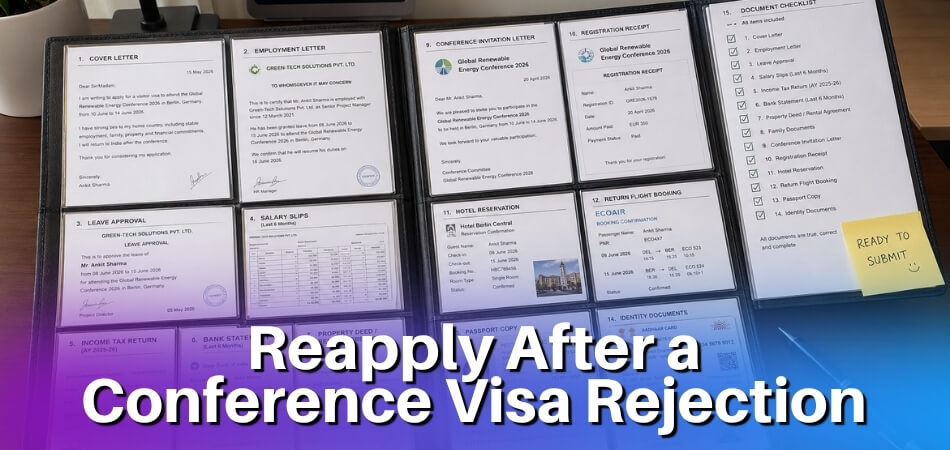
You need proof of citizenship to enter and proof of your conference purpose in case the officer asks. Keep printed and digital copies together.
| Document | Why it helps |
| Canadian passport (required by air; by land a NEXUS card or Enhanced Driver’s Licence also works) | Proves identity and Canadian citizenship |
| Conference invitation letter | Shows your name, the event, dates, venue and your role |
| Registration confirmation | Proves you are registered and paid |
| Conference agenda | Shows the sessions you will attend or present in |
| Return ticket or itinerary | Supports your plan to leave after the event |
| Hotel booking | Shows where you will stay |
| Employer or institution letter (or a recent pay stub) | Links the trip to your job, research or studies in Canada and states who pays |
| Travel health insurance | Not required for entry, but U.S. medical bills are expensive and provincial plans cover little abroad |
The passport rule comes from the Western Hemisphere Travel Initiative: Canadian citizens arriving by air need a passport (a NEXUS card works by air only at designated NEXUS sites, and an Enhanced Driver’s Licence is not accepted for flights), while land and sea travellers can also use NEXUS, FAST or an Enhanced Driver’s Licence. Whichever document you use must be valid for your whole stay. See CBP’s page for Canadian and Mexican citizens.
An invitation letter is useful even when no visa is needed, because it answers the officer’s first question in writing. Officers may also ask how you will pay for the trip, so a recent bank statement or an employer funding letter is worth carrying, even though it is not always requested.
How to Prove Your Conference Visit Is Temporary and Business-Related
Your dates, documents and answers need to tell the same story: a fixed event, a fixed return date, and a life that continues in Canada.
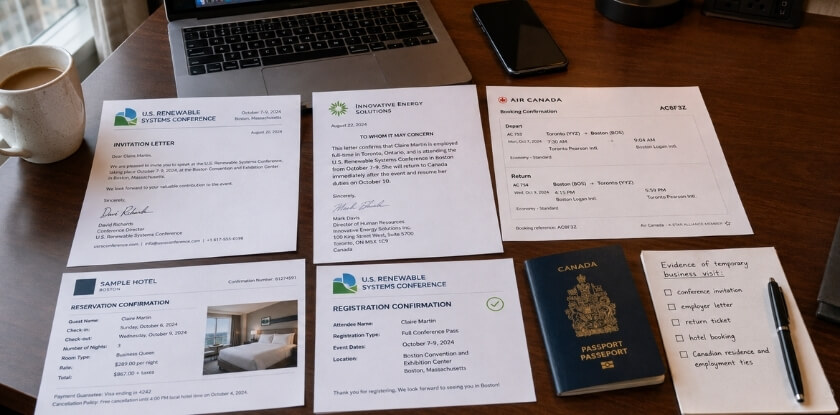
Three things do most of the work:
- A clear purpose. The invitation letter, registration and agenda show exactly which event you are attending and in what role.
- Matching dates. Your flight, hotel and conference dates should line up. If you add a few days of sightseeing, say so.
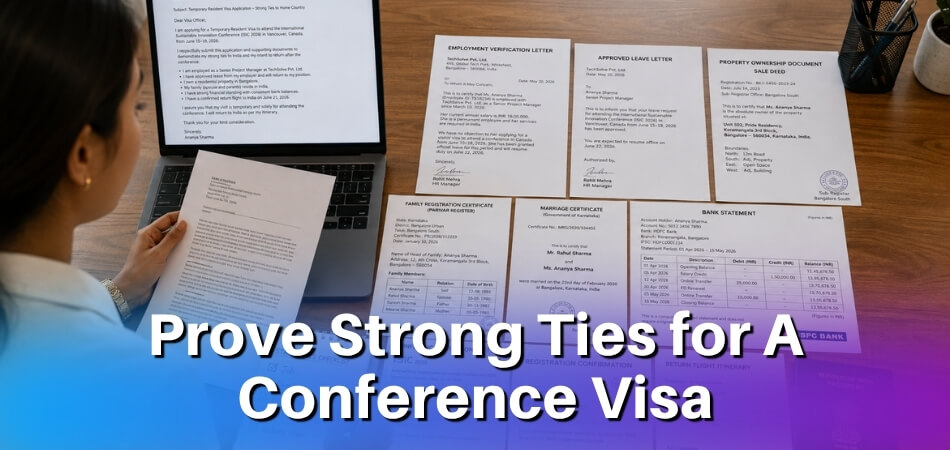
- Ties to Canada. A job, studies, a business or a home in Canada show you will return. An employer letter, a recent pay stub, a bill showing your Canadian address or your return ticket is usually enough; you do not need to bring a pile of paperwork.
Most Canadians crossing for a conference are asked a few questions and admitted. The documents matter most when something looks unusual, such as a long stay, frequent recent visits, or a trip paid for by a U.S. company.
What Questions Might U.S. Border Officers Ask?
Expect questions about why you are travelling, how long you will stay, who is paying, and whether you will work. Answer briefly and truthfully. If you fly from Calgary, Edmonton, Halifax, Montreal, Ottawa, Toronto Pearson, Billy Bishop Toronto, Vancouver, Victoria or Winnipeg, these questions happen at CBP preclearance before you board, not on arrival.
Purpose of Visit
Name the event, the city and the dates. For example: “I’m attending [Conference Name] in [City] from [Start Date] to [End Date]. I have my registration and agenda here.”
Your Role at the Conference
Say whether you are attending, presenting a paper, sitting on a panel or exhibiting. If you are presenting, have the acceptance email or programme listing ready.
Length of Stay
Give the exact number of days and your return date. For example: “Six days. My flight back to Toronto is on [Date].”
Who Is Paying
You, your employer, your university or a grant. If a U.S. organization covers expenses, be ready to explain that it is reimbursement, not a salary.
Whether You Will Work
If you are only attending or presenting, say so: “No, I’m not working for any U.S. company. I’m here for the conference.” Avoid casual phrasing like “I’m here for work” when you mean a business trip, because “work” means employment to an officer.
What Canadians Can and Cannot Do During a U.S. Conference Trip
You can attend sessions, present, network and hold business meetings. You cannot be hired or paid for services by a U.S. source, with narrow exceptions for expenses and academic honoraria.
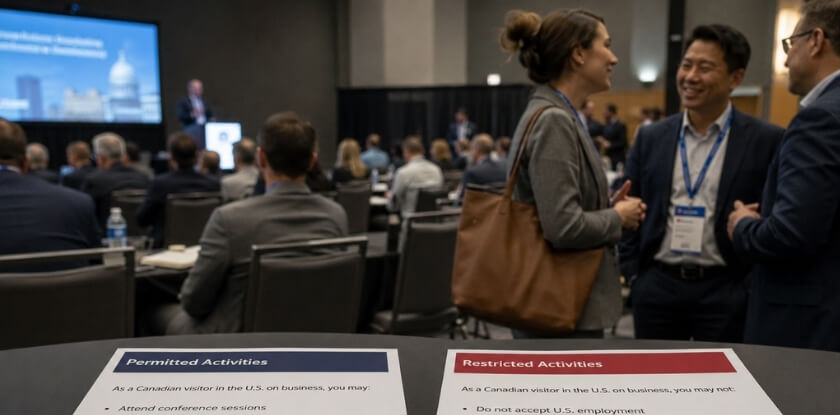
Presenting and Networking
Giving a paper, joining a panel, presenting a poster or meeting potential partners all fit B-1. Discussing future projects or contracts is fine; doing the project work on U.S. soil for a U.S. client is not.
Reimbursement, Honoraria and Speaker Fees
The rules depend on what the money is for and who pays it. According to the State Department’s Foreign Affairs Manual (9 FAM 402.2):
- Expense reimbursement from a U.S. source is allowed if it does not exceed your reasonable costs for travel, meals and lodging.
- An honorarium for usual academic activities (such as a lecture) is allowed only if it comes from a university, an affiliated non-profit or a non-profit or government research organization, the activity lasts no more than nine days at that institution, and you have not accepted such payments from more than five institutions in the past six months.
- A salary or a commercial speaker fee for services in the U.S. is not allowed under B-1 and needs a work status.
If a U.S. organizer offers you anything beyond expenses, check the rule before you travel, not at the border.
Can Canadians Stay in the U.S. After the Conference?
Yes, within limits. Canadian visitors are generally admitted for up to six months (180 days), so a few days of sightseeing after a conference is normal. Tell the officer about the extra days when you enter.
Most Canadian citizens entering as visitors are not issued an I-94 record. If you were given one, it shows the date you must leave, and you can look it up on the CBP website.
Staying 30 days or more? U.S. registration applies to visitors aged 14 and over who stay 30 days or longer. USCIS lists Canadian visitors who entered at a land port and were not issued an I-94 among those who have not yet registered, and the form is G-325R. The Government of Canada warns that failing to register can bring fines and prosecution. USCIS also notes that a court order currently limits enforcement against some people, so read its alien registration page before a long stay.
If you need to stay longer than you were admitted for, you must file for an extension with USCIS (Form I-539) before your authorized stay ends. Overstaying can lead to refusal on future trips, so treat the departure date as fixed.
Travel Tips for Canadians Attending a U.S. Conference
Check your passport, keep your documents together, and confirm any payment arrangements before you leave.
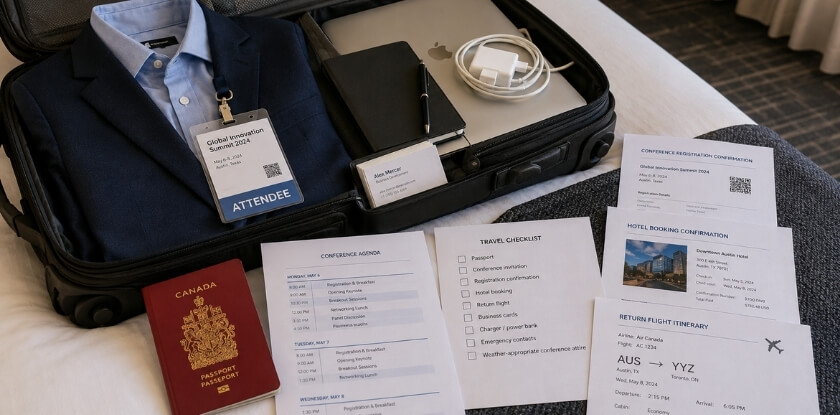
- Passport validity: Canadians only need a passport valid for the length of the trip, but renew early if it expires soon after.
- One folder: keep the invitation letter, registration, agenda, hotel booking, return ticket and employer letter in one printed folder and one phone folder.
- Know the event: be able to state the conference name, venue, dates and your role without looking it up.
- Insurance and contacts: carry your travel insurance details and phone numbers for your employer, hotel and the conference organizer.
- Devices: the Government of Canada advises that U.S. border agents can search electronic devices and do not need a reason to ask for a password. It suggests switching devices to airplane mode before you cross.
- Allow time at preclearance: at major Canadian airports, U.S. inspection happens before departure, so arrive early.
From our experience at MS International: our conferences are held in person in the Greater Toronto Area, and we have listed more than 864 conferences across 11 cities in Canada. For our events, the invitation letter is issued within 3 to 5 business days after payment clears. It supports your travel plans but does not guarantee a visa or entry, and corrections requested after it is issued may carry a US$50 fee, so check your details before you register. If you are comparing a U.S. event with one closer to home, browse our conferences in Canada.
FAQs About Canadians Attending Conferences in the U.S.
Canadian travellers heading to a U.S. event weigh ESTA, B-1 status for presenting, speaking fees, mixing the trip with tourism and the registration rule for a stay lasting 30 days or longer.
Do Canadians need a visa for a U.S. business conference?
No. Canadian citizens are visa-exempt for business visits and are admitted as B-1 business visitors by CBP. Bring a passport if flying and documents that show the conference purpose.
Do Canadians need ESTA to attend a U.S. conference?
No. ESTA is for Visa Waiver Program travellers. Canadian citizens do not use it.
Can Canadian permanent residents attend a U.S. conference without a visa?
Only if their passport is from a Visa Waiver Program country, in which case they need an approved ESTA. Other permanent residents need a U.S. visitor visa.
Can Canadians present at a U.S. conference under B-1 status?
Yes. Presenting a paper, poster or panel talk is a normal conference activity under B-1, as long as you are not employed or paid a salary by a U.S. source.
Can Canadians be paid for speaking at a U.S. conference?
Expense reimbursement is allowed. An academic honorarium is allowed only from a university or non-profit research body, for nine days or less, and from no more than five institutions in six months. A commercial speaker fee needs a work status.
Can Canadians combine a conference trip with tourism?
Yes. Tell the officer your full plan, including the extra days and your return date.
Do Canadians have to register if they stay in the U.S. for 30 days or more?
Yes, if they were not issued an I-94 or other evidence of registration at entry, as often happens at land crossings. The form is G-325R. Most conference trips are shorter, but check USCIS before a long stay.
What documents should Canadians show at the border?
A Canadian passport valid for the whole stay (or NEXUS or Enhanced Driver’s Licence by land), plus the invitation letter, registration confirmation, agenda, return ticket, hotel booking and an employer or institution letter.
How long can Canadians stay after a U.S. conference?
Canadian visitors are generally admitted for up to six months. Stays of 30 days or more may require U.S. registration (Form G-325R), and staying past your admitted date needs Form I-539 filed with USCIS before it.
Final Thoughts on U.S. Conference Travel for Canadians
Canadian citizens can fly or drive to a U.S. conference without a visa or ESTA and are admitted as B-1 business visitors. Carry proof of the event, keep your answers consistent, and do not accept U.S. pay beyond expenses or a qualifying academic honorarium. Permanent residents who are not citizens should check their own passport’s requirements early. If you need a conference invitation letter, our conference invitation letter is issued within 3 to 5 business days after your registration payment clears; MS International also provides notarized invitation letters and visa expedite request letters.
Disclaimer: This article is general information, not legal or immigration advice. Entry rules change. Confirm the current requirements with U.S. Customs and Border Protection (cbp.gov) or the U.S. Department of State before you travel.