
Waiting for a biometrics appointment can feel like the quietest part of a US application. You file, nothing arrives, and it is hard to tell whether that is normal or a sign something went wrong.
Quick answer: Most USCIS applicants inside the US get a biometrics appointment notice about 3 to 8 weeks (21 to 56 days) after filing, but USCIS publishes no official timeline, so treat this as an estimate. If you apply for a US visa abroad, there is usually no separate wait: fingerprints are taken at your visa appointment.
Fact-checked by the MS International Editorial Team. Last verified against official sources: October 2026.
“Biometric appointment” means two different things in US immigration. A USCIS filer waits for a mailed notice. A visa applicant abroad books one visa appointment. This guide covers both, so find your case first.
What Is a US Biometric Appointment?
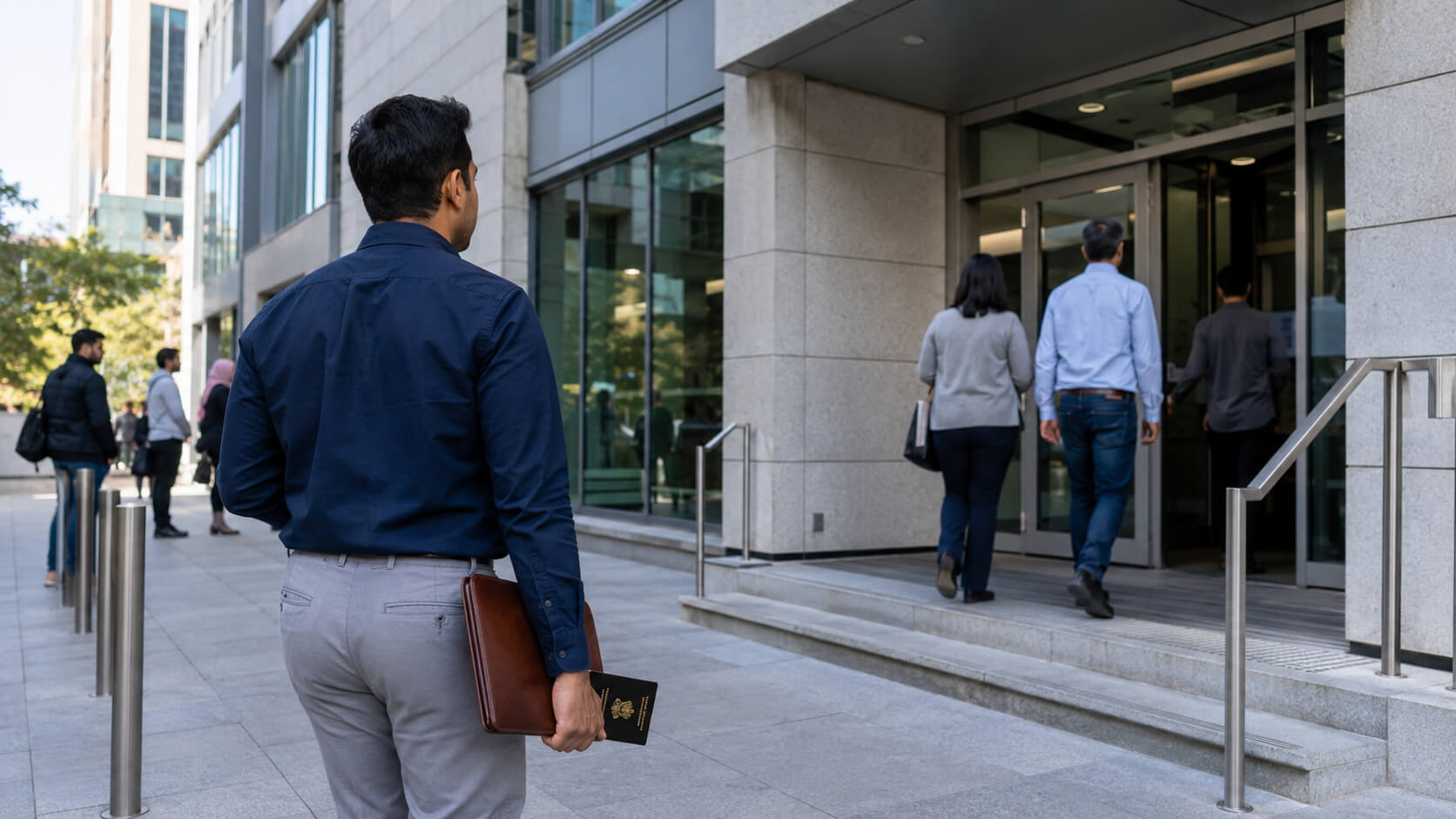
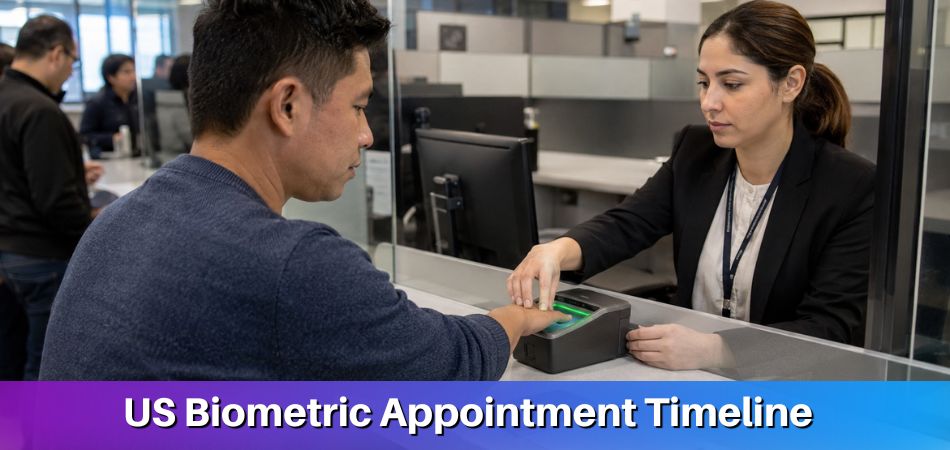
It is an identity check where officials collect your fingerprints, a digital photo and, for USCIS applicants aged 14 or older, an electronic signature. They use these to confirm who you are and to run background and security checks.
Who Usually Needs Biometrics?
Many USCIS filings call for biometrics, including adjustment of status, work permits, travel documents, naturalization and green card renewal or replacement. Visa applicants abroad, such as visitor, student, exchange and work visa applicants, also give fingerprints and a photo. Completing biometrics does not mean your application is approved. It is one identity step among several.
USCIS Biometrics vs Consular Visa Biometrics
USCIS biometrics are for people filing inside the US. Consular biometrics are for people applying for a visa outside the US. The wait is controlled by different systems, which is why the same question gets different answers.

| Category | USCIS Biometrics | Consular Visa Biometrics |
| Applies to | Applicants inside the US | Applicants outside the US |
| Managed by | USCIS | US embassy or consulate, sometimes with a visa service provider |
| Location | Application Support Center (ASC) | Embassy, consulate or visa center named in your confirmation |
| Timing | After filing, on the date in your notice | At your visa appointment |
| What sets the wait | ASC slots and USCIS workload | Interview availability at your post |
The State Department says all of a visa applicant’s fingers are scanned electronically during the consular interview. Some posts use a separate visa center first, so follow the instructions in your own appointment confirmation.
The State Department also expects nonimmigrant visa applicants to book the interview at the US embassy or consulate in their country of nationality or residence (guidance updated 15 July 2026). If you apply based on residence, you must be able to show you live there. Applying elsewhere can mean a longer wait and a harder approval, and the fees are not refunded or transferred.
How Long Does It Take to Receive a Biometric Appointment Notice?
For USCIS cases, the notice usually follows the receipt notice, about 3 to 8 weeks after filing. Applicants report shorter and longer waits, because there is no published schedule.
| Applicant Type | Typical Biometrics Timing |
| USCIS applicants inside the US | Often 3 to 8 weeks after filing (estimate, not an official figure) |
| Visa applicants outside the US | Taken at the visa appointment, so it follows local embassy or consulate scheduling |
| Applicants with reusable biometrics | No new appointment may be needed |
The appointment itself is short. Most of the waiting happens before the notice arrives.
| Stage | What Happens |
| Application received | USCIS accepts the filing and creates a case record |
| Receipt notice | You receive confirmation that the case was received |
| Biometrics notice | USCIS schedules an ASC visit if new biometrics are needed |
| Appointment | Fingerprints, photo and signature are collected |
| Case continues | Background checks and review move forward |
The notice (Form I-797C) shows your appointment date, time and location, so read it as soon as it arrives.
Why Wait Times Vary
Two people who file the same week can get different dates. The form type, the local Application Support Center (ASC) schedule, USCIS workload, seasonal filing peaks, office closures and staffing all play a part, and so does whether new biometrics are needed at all. A friend’s timeline is not a prediction for yours.
Applicants planning to attend a conference in the United States should allow for this early, since biometric and visa steps can use up weeks of the preparation time.
Where to Check Current Wait Times
Check your USCIS online account if you filed with USCIS, or your visa scheduling account if you applied abroad. Published embassy wait estimates usually show interview availability only. They may not include administrative processing or passport return, so your own confirmation is the reliable source. If the notice is late, see the delay section below.
What It Means If USCIS Reuses Previous Biometrics
Sometimes USCIS skips a new appointment because it can reuse biometrics it already holds. You may receive a notice saying no new appointment is required.
For photos, the USCIS Policy Manual allows reuse only if the photo was taken by USCIS or another authorized entity and no more than 36 months have passed at filing. Since the policy alert of 12 December 2025, photos you submit yourself are no longer accepted, and Forms N-400, N-600, I-90 and I-485 always need a new photo. USCIS can also ask for a new photo in other cases. Reuse saves time but is not an approval. Your case still goes through normal review and background checks.
Biometric Appointment Wait Times by Application or Visa Type
No category has an official wait time. The table shows where biometrics usually happen and what drives the timing.
| Application | Where and When Biometrics Usually Happen |
| Adjustment of status, family-based or employment-based green card | USCIS ASC, several weeks after filing; depends on local ASC availability |
| Work permit or travel document | USCIS ASC, but old biometrics may be reused for renewals |
| Naturalization | USCIS ASC, normally before the citizenship interview; missing it can delay later steps |
| B-1/B-2 visitor visa abroad | Embassy, consulate or visa center, linked to your interview booking |
| F, M, J student and exchange visas abroad | Same as above; slots tighten before academic intakes |
| H, L, O, P work visas abroad | Same as above; depends on the local post and demand |
| Immigrant visa abroad | Follow the National Visa Center and embassy instructions |
What to Bring to a US Biometric Appointment
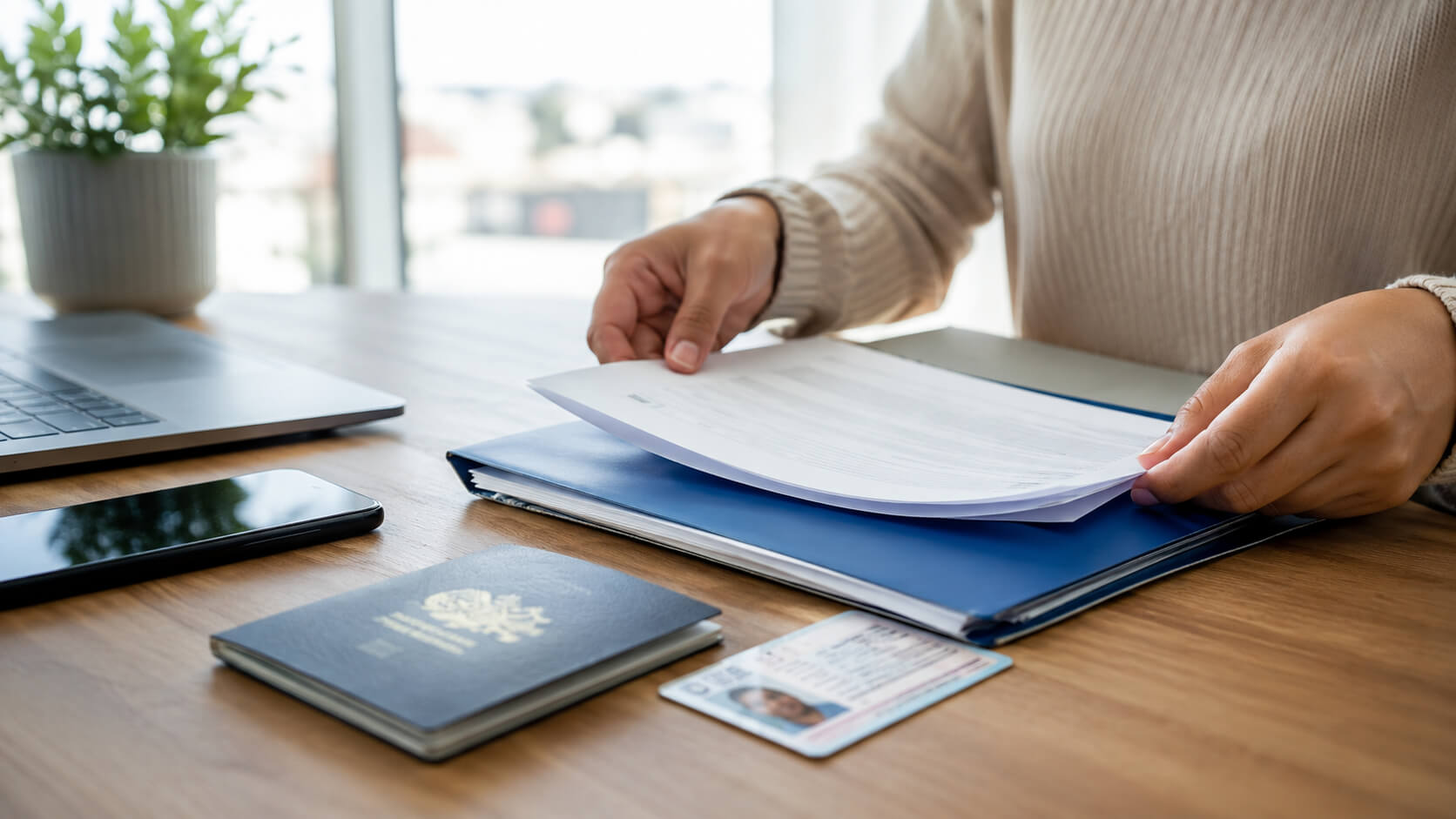
Bring your appointment notice and valid photo ID. USCIS also asks you to bring every biometrics notice you received, and your notice may list more items.
| Document | Why It Matters |
| Appointment notice (Form I-797C) | Confirms your visit and case details |
| Valid photo ID or passport | Verifies your identity |
| Receipt notice | Helps match the visit to your USCIS case |
| DS-160 confirmation and appointment confirmation | Needed for visa applicants abroad |
| Name change proof | Explains differences between documents |
Keep everything in one folder, and do not rely on digital copies unless your instructions allow them.
What Happens During the Biometric Appointment?
Staff check your identity, then collect fingerprints, a photo and, if required, a signature. Expect this order:
- Security screening at the entrance
- Check-in with your notice and photo ID
- Fingerprint scanning on a digital scanner
- Digital photo
- Electronic signature, if required
Collection takes only a short time, but the full visit depends on lines and security. At a USCIS ASC you sign an acknowledgement on the machine. A parent or legal guardian may sign for a child under 14.
What to Do If Your Biometric Appointment Is Delayed
First check your online account and mail, then confirm your address. Contact the right office only if the delay goes beyond normal. A late notice does not always mean a problem.
- Log in and read the latest case status using your receipt number.
- Look through your mail and email.
- Confirm the mailing address on file.
- Check whether biometrics may have been reused.
- Contact USCIS or the visa post if the notice appears missing.
Contact may be right if your status shows an appointment but no notice arrived, the notice has wrong personal details, or you lost it. The USCIS Contact Center number is 800-375-5283. For visa cases, use the local scheduling portal or embassy instructions, not USCIS.
Before you write or call, gather your receipt or confirmation number, full name, date of birth and filing date. One clear request is better than several incomplete ones.
Can You Reschedule a US Biometric Appointment?
Yes. For USCIS, request a new date through your online account at least 12 hours before the appointment, with a good reason. Rescheduling can delay your case because the new date depends on open slots.
USCIS accepts reasons such as illness, previously planned travel, a family emergency, or a notice that arrived late or never arrived. For less than 12 hours’ notice, or after a missed appointment, call the USCIS Contact Center on 800-375-5283. If an ASC closes unexpectedly, USCIS reschedules you automatically.
What If You Miss the Appointment?
USCIS may treat the request as abandoned and deny it if you do not appear and have not asked to reschedule or given a change of address by the appointment time. If you already missed it, call right away and explain.
Are Walk-Ins Allowed?
Do not count on it. USCIS tells applicants to wait for the appointment notice before visiting an ASC, and a visit to a different ASC without rescheduling will not be processed.
How to Prepare for Your Biometric Appointment
Read the notice, organize your documents, arrive early and follow the location’s security rules.
- Confirm the date, time and location.
- Plan transport and parking.
- Leave weapons and other restricted items at home; they are banned at USCIS facilities.
- Bring an interpreter if you do not understand spoken English. If a parent, caregiver or legal representative needs to come with you, check the location’s rules before the day.
Common mistakes that cause avoidable delays:
- Moving without updating your mailing address
- Missing the notice in the mail or ignoring online updates
- Arriving without photo ID or with the wrong notice
- Waiting too long to reschedule
- Using unofficial appointment services; pay only through official government or authorized visa channels
From our experience at MS International: we issue conference invitation letters and hear from many attendees about US visa steps. Those asking about “biometrics” for a conference are usually applying for a visitor visa from abroad, so the USCIS notice described above does not apply to them. Check which process you are in before you plan your dates.
What Happens After Biometrics Are Completed?
Your biometrics are added to your case so identity and background checks can continue. It is not a decision.
| Next Step | What It Means |
| Case review continues | Officers keep checking your application |
| Request for Evidence | More documents or details are needed |
| Interview scheduled | You must attend an interview |
| Administrative processing | Additional review is required |
| Decision issued | The case has been approved or denied |
If your status does not change right after biometrics, do not panic. Some cases move forward internally while online updates are limited.
Disclaimer: This article is general information, not legal or immigration advice. Visa rules, fees, and processing times change. Confirm the current requirements on the official USCIS website (uscis.gov) or the US Department of State website (travel.state.gov) before you apply.
FAQ About US Biometric Appointment Timelines
Filed with USCIS and still waiting for the appointment notice? Online filing, a notice running past 8 weeks, the biometrics fee, rescheduling or missing the date and reusing old fingerprints each get a plain reply.
How many days after filing do biometrics usually happen?
For many USCIS applicants, about 21 to 56 days (3 to 8 weeks). This is an estimate, since USCIS publishes no official timeline. Some cases are faster, others slower.
What if the notice takes longer than 8 weeks?
Not necessarily a problem. Check your online account, confirm your mailing address, and contact USCIS only if your status shows an appointment but no notice arrived.
Can online filing speed up the appointment?
Not reliably. Online filing avoids mail delays and lets you see notices in your account, but scheduling still depends on USCIS and local ASC capacity.
Can you choose your biometric appointment date?
Not for the first date. USCIS assigns it, and you can ask to reschedule with a good reason. Visa applicants abroad may pick a slot in the local scheduling system.
Do you need to pay a separate biometrics fee?
For most USCIS forms, no. The biometrics fee has been included in the filing fee since April 2024. A few filings, such as Form I-821 (TPS) and some immigration court forms, still list a separate fee. Check Form G-1055 for your form and pay only through official channels.
What if you lose the appointment notice?
Check your USCIS online account or visa scheduling account for a copy. If you cannot find one, contact the correct office before the appointment date.
Can you reschedule a biometrics appointment?
Yes, for a good reason such as illness or planned travel. Use your online account before the 12-hour cutoff; later requests go to the Contact Center on 800-375-5283.
What happens if you miss the appointment?
USCIS may consider the case abandoned and deny it. Ask to reschedule before the appointment, or call 800-375-5283 right away if you already missed it.
Can biometrics be reused?
Yes. USCIS may reuse biometrics it already has, and you may get a notice saying no new appointment is needed. A new photo is always required for Forms N-400, N-600, I-90 and I-485, and self-submitted photos are no longer accepted.
Conclusion
For most USCIS applicants, expect a biometrics notice about 21 to 56 days (3 to 8 weeks) after filing, though USCIS gives no official number. Visa applicants abroad give fingerprints at their visa appointment, so their wait is the local appointment wait.
While you wait, check your mail and online account, keep your address updated and attend on time. Biometrics are one step; your case still needs normal review and background checks.