
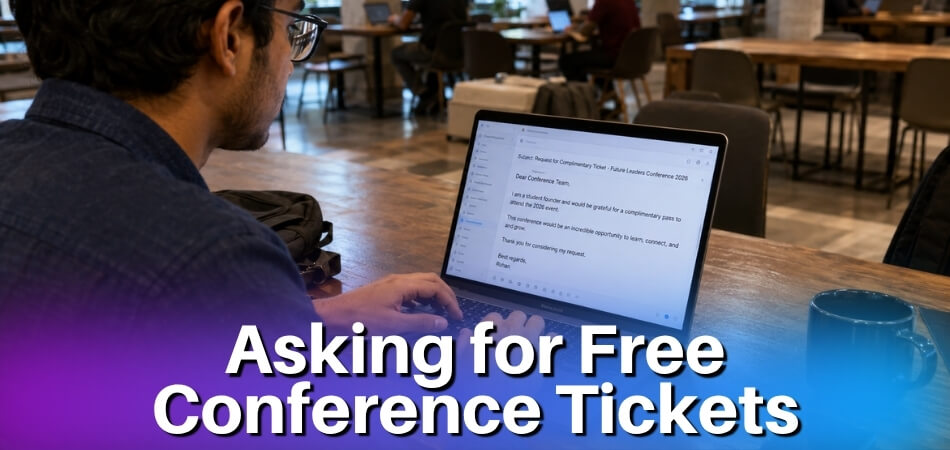
Conference tickets can cost hundreds of dollars, yet some organizers have a way to let people in without the full price. Some people never ask because they assume the answer will be no, or they don’t know who to ask.
Quick answer: To ask for a free conference ticket, pick the route that fits you (volunteering, a speaker proposal, a press pass, a scholarship, a student rate or an employer), email the right team early, and say clearly what you will give in return. Follow up once after about a week. If the answer is no, thank them and ask about other options.
This guide covers each route, who to contact, three sample emails, what to avoid, and what to do after a rejection.
How to Ask for a Free Conference Ticket: The Main Routes
The best route is the one where you can offer something the organizer actually wants: your time, your audience, your expertise or your presence as a student. Check what the conference already lists before you write to anyone.
| Route | What you give | What to know |
|---|---|---|
| Volunteering | Hours of work at the event | You miss some sessions while you work |
| Scholarship or diversity ticket | An honest application | Programs open months ahead and close when full |
| Speaker or session proposal | A talk or workshop | Free registration varies by event and is not guaranteed |
| Press or media pass | Coverage for a real audience | Organizers may ask for links to past work |
| Student or researcher rate | Proof of enrollment or affiliation | Often a discount, sometimes a free pass |
| Sponsor giveaway | A repost, comment or entry | Luck is involved, but entry is cheap |
| Employer | A business case | May cover the ticket and travel |
| Community or group tickets | Running a local group that can promote the event | Some events set passes aside for group leaders; ask the organizer |
| Direct request | A specific offer in return | Works best when no program fits |
A fee waiver for registration costs is a separate request with its own wording, so keep it apart from a request for a complimentary ticket.
First, Check What the Conference Already Offers for Free
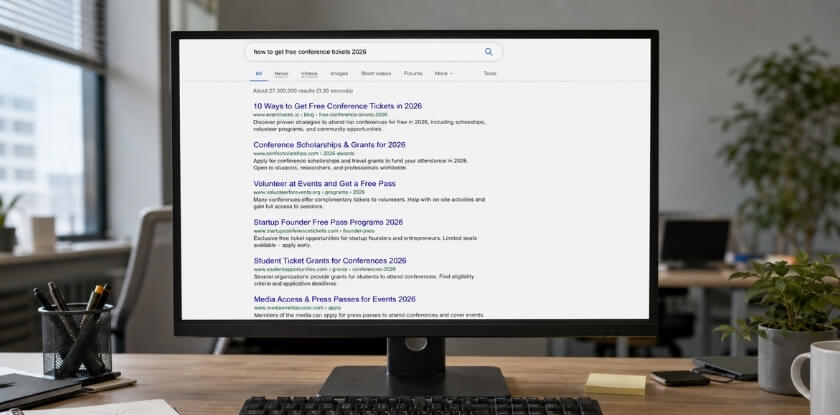
Start with the conference website. Spend twenty minutes on the registration page, the FAQ and the footer, because free or reduced access is often listed under “Community,” “Get Involved” or a separate pricing tier. A formal program saves you a cold pitch.
Scholarships and Diversity Grants
Some conferences set aside tickets for people who could not otherwise afford to attend. They may be called scholarships, inclusion grants or community tickets. The application is usually a short form about your background, why you want to attend and what barriers you face.
Be honest and specific. “I’d love to grow professionally” moves nobody. “I’m a first-generation college graduate working at a small nonprofit with no training budget, and I want to learn X” gives the reader something to weigh. These programs often open months before the event and close once the places are filled. Approval is not guaranteed, and a free pass may not cover travel or accommodation, so read the terms before you plan around it.
Volunteer Programs
Some conferences run a volunteer program: you work a set number of hours, for example checking badges, helping speakers find rooms or staffing the registration desk, in exchange for free admission. The commitment can range from part of a day to the whole event.
Search the site for “volunteer” or “crew” and look for an application form. The trade-off is real, because you will miss some sessions. If your main goal is sitting in talks all day, factor that in before you apply. Read the terms too: some calls say no previous experience is needed, some ask for a minimum number of shifts or hours, and volunteering does not necessarily cover travel or lodging, so ask before you count it as free.
Speaker and Session Proposal Passes
Some conferences give accepted speakers a complimentary or discounted pass, but it is not universal. At academic conferences, presenting authors usually still register and pay. Read the call for speakers to see what is included before you count on a free ticket.
Some conferences also give a free or discounted pass just for submitting a proposal, accepted or not, though that is not standard. Calls for proposals can open months before the event, so check the dates on the call itself. Study last year’s lineup, find a gap and pitch something concrete. “I’ll show attendees how to set up X in 30 minutes” beats “I’ll discuss strategy.” If you are new to speaking, a smaller or regional event is an easier first step than a flagship one.
Sponsor and Partner Giveaways
Sponsors may receive a block of tickets as part of their package, and some give them away on social media or newsletters in the weeks before the event. Follow the conference hashtag and the accounts of last year’s sponsors. If you know someone at a sponsor, you can also ask their marketing or events team directly.
Ticket Lotteries and Application Windows
Some events open a short application window and pick the people who get free tickets at random, and some allow only one free ticket per person. Join the organizer’s mailing list and follow its official accounts so you hear when the window opens. Entering costs nothing, but a win is not guaranteed.
Ask Directly with a Clear Offer
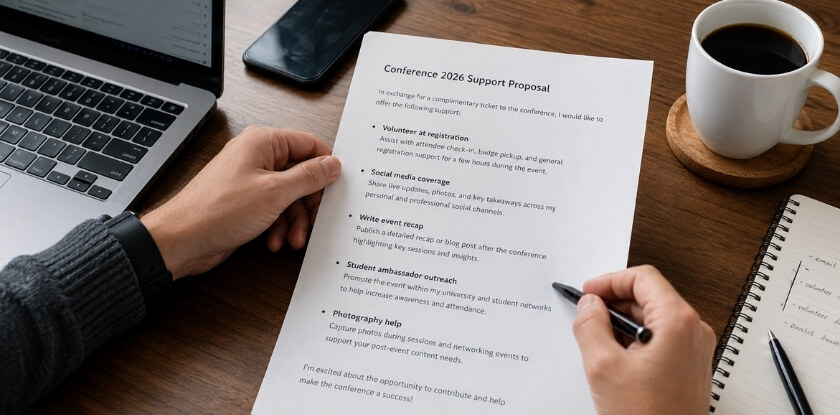
When no program fits, write to the organizer yourself. Keep it short: who you are, why you want to attend, and what you offer in return, such as coverage, a testimonial, community promotion or a future session. The offer does not need to be elaborate, only specific and real. A skill the event can use, such as photography or a written recap, is easier to say yes to than a general wish to help. If you represent a community group, you can offer to attend and report back to its members. If you want to speak, name the session where you would add a view the program does not already have.
Student Discounts and Researcher Passes
Check the full pricing page before assuming there is only one price, because student and researcher tiers are sometimes listed apart from “scholarships.” If you are enrolled or affiliated with a research institution, look for these tiers first and keep proof of enrollment ready.
How to Find the Right Person to Contact
Write to the team that owns your type of request. A generic “info@” address is one of the fastest ways to get no reply, because a ticket ask that lands in the wrong inbox quietly dies there.
Check the Conference Website First
Many conferences list their team on an “About,” “Contact” or “FAQ” page. Look for titles like Community Manager, Events Team or Diversity Programs. Local community-run events often name their organizers, which gives you a person to address. Many events also have separate addresses for scholarships, volunteers or press, and those reach someone who can act.
Match Your Request to the Right Channel
| Request | Usually handled by | Where to look |
|---|---|---|
| Scholarship or student discount | Community or inclusion coordinator | “Scholarship,” “Accessibility” or “Students” page |
| Press or media pass | PR or communications team | “Press” or “Media” section, not the general inbox |
| Volunteering | Volunteer manager | A formal application form or portal, if there is one |
| Speaker or session proposal | Programming team or content committee | Call for speakers page |
| Sponsor giveaway | No one at the conference | The sponsor’s own social accounts |
When There’s No Clear Contact Listed
For smaller or newer events, the website may not split contacts by function. Search LinkedIn for the conference name and look for people with “Events,” “Community” or “Marketing” in their titles. A short, direct message often gets a faster reply than a cold email.
Some event teams also watch their mentions on X (Twitter). A brief, professional public post tagging the organizer account can get you pointed to the right person.
If you do write to a general address, name the program in the subject line, for example “Volunteer Program Inquiry” or “Scholarship Question.” That tells the reader which team your message belongs to and makes it more likely to be forwarded.
How to Write a Free Ticket Request Email (With Templates)
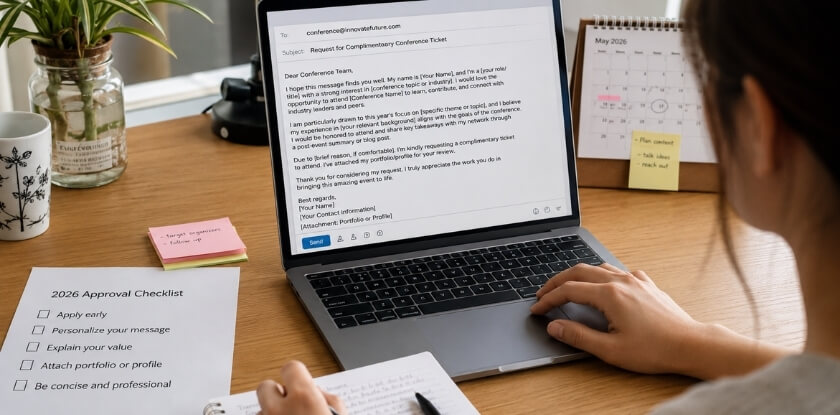
A good request is short, specific and offers something in return. Requests fail when they are vague, too long or ask without giving anything back. The three samples below cover the usual cases. Change the wording to sound like you, but keep the structure.
Template 1: Press or Coverage Request
This fits you if you run a blog, newsletter or podcast, or have a real social following. You are proposing coverage in exchange for a press pass. Send it to the press contact. If there isn’t one, use the community manager or events team.
Subject: Press pass request: [Your Name] / [Your Publication or Platform]
Hi [Name or “Events Team”],
I’m [Your Name], and I write about [topic area] at [blog or newsletter name]. My audience is about [number] readers, mostly [short description, for example “freelance web designers”].
I’d like to attend [Conference Name] and would cover it in return for a press pass or complimentary ticket. I plan to publish a recap in my newsletter and post session highlights on [platform] during the event.
If a media pass isn’t available, I’d also be glad to be considered for any sponsor ticket or scholarship place you have open. I can send links to my earlier event coverage.
Thank you for your time.
[Your name, title and publication link]
Keep the audience number honest. A smaller, engaged audience is a stronger pitch than vague claims, and organizers can tell the difference.
Some event press pages limit complimentary press registration to working members of the press and say the organizer decides at its own discretion. Check the press page for its form and its rules, and be ready to share links to work you have published. If you do not write for a publication, use a different route.
Template 2: Student or Researcher Request
Some conferences offer a student rate or researcher pass without advertising it. Even when no program exists, a direct email to the events team can work, especially for academic events or those with an education track.
Subject: Student attendance question: [Conference Name] [Year]
Dear [Name],
I’m a [year, for example second-year] [degree program] student at [University Name], working on [research topic]. I found [Conference Name] while reading about [topic or speaker], and it relates directly to my current project on [short description].
A full ticket is beyond my budget at the moment. Could you tell me whether there is a student rate, a researcher pass or a volunteer place I could apply for? I would use the attendance well, especially for [one or two sessions or tracks].
If there is an application form, I’m happy to complete it.
Kind regards,
[Your name, institution and program]
For community-run events with local organizing teams, check that specific event’s own site for scholarship and volunteer details rather than a central organization page.
Template 3: Volunteer or Community Offer
This suits people without media credentials or an academic affiliation who can still contribute: staffing registration, helping in a workshop room, or supporting the events team on the day.
Subject: Volunteer offer: [Conference Name]
Hello [Name],
I have followed [Conference Name] for [X years] and would like to be there this year. A full ticket isn’t realistic for me right now, so I’m writing to ask whether you have a volunteer program or other support roles.
I have experience in [relevant skill, for example “welcoming guests at events” or “coordinating speakers”], and I can help wherever your team needs it. I’m free on [dates and times].
If there is a formal process, point me to it and I’ll apply.
Thanks, and good luck with the preparations.
[Your name and a line about your background]
What to Say and What Not to Say (Do’s and Don’ts)
Specific requests get answers and vague ones get ignored. These points follow from one fact: an events inbox is busy, and each message gets a quick decision.
Do: Be specific about what you bring
“I’m passionate about this industry” tells the reader nothing. “I run a local meetup of about 400 members and plan to share what I learn with them” is something an organizer can picture. That line is only an example, so use your own real numbers.
- Name a real audience. A newsletter, a LinkedIn following or a recap on your company blog all count, and rough numbers help when press passes are on the table.
- Tie it to their goals. Community events want the community to grow, sponsors want exposure, and trade events want practitioners sharing sessions. Show how your attendance helps.
- Name the sessions or track you would attend. It shows you did your homework and did not send the same message to twenty events.
Don’t: Lead with your financial situation
Opening with “I can’t afford the ticket” can read as a request for charity rather than an exchange of value, and organizers are not a hardship fund. For a general request, lead with what you offer. Scholarships and student rates are the exception. Those programs exist for financial barriers, so you can be direct there.
Do: Match the request to the right person
A speaker proposal, a volunteer application and a press request are three different asks for three different people. For a session proposal, the pitch is about your topic. The free admission is a by-product, not the point you make.
Don’t: Stay vague about who you are
Give your name, your role, what you write or build and where to find you, such as a website, LinkedIn profile or X handle. A linked portfolio or a recent relevant article beats a job title alone.
Do: Keep it short
Three or four short paragraphs is enough: who you are, what you will contribute, and the specific ask. A long email suggests you have not worked out what matters to the reader.
Don’t: Claim credentials you don’t have
Don’t inflate your traffic, call yourself press when you wrote one article last year, or claim to be a researcher to get a researcher pass. If it comes out during the event, you have damaged a professional relationship for the price of one ticket.
Do: Adapt the ask for virtual and hybrid formats
Access to online events costs the organizer less, so a lighter request by email or LinkedIn is reasonable. You can also mention an employer training budget if it applies to you.
How to Follow Up If You Don’t Hear Back
Wait five to seven business days, then send one short follow-up. If the event is less than two weeks away, three days is fair. Silence is common because organizers handle many messages before an event, and a follow-up is expected rather than pushy.
How to Write Your Follow-Up
One or two sentences are enough. Refer to your first message, confirm they received it and ask if they need anything else from you. You do not need to re-pitch or attach the original email.
Hi [Name],
I’m following up on my email of [date] about a press pass / scholarship / volunteer place for [Conference Name]. I know the team is busy with preparations, so I’ll keep this brief. Is my request still being considered, or is there a better process I should use?
Thank you again.
If You Still Don’t Hear Back
Try another channel. A polite LinkedIn message or a public post on X to the official account can reach the right person when the inbox is overloaded. Smaller community events often have a contact form or a chat channel for organizers.
If a speaker or session proposal is still pending, a follow-up on the proposal is a natural moment to ask about ticket status too.
When to Accept That the Answer Is No
After the follow-up, or a second one when the date is close, treat silence as a no and move on. Keep an eye on the conference’s social channels for last-minute sponsor giveaways, check whether a student or researcher rate has opened, and look for a lower-priced virtual option if there is one. Some events also release volunteer places close to the date when confirmed volunteers drop out, so check the site again even if the original window looked closed. A late request is a long shot rather than an impossibility: one conference organizer writes that unsold tickets lose value as the date nears, but treat that as a backup to applying early.
What to Do After a Rejection
Reply politely, thank them, and ask about other routes. A no can come because places filled up or a budget changed, and it does not close the door. It also tells you someone read your request and decided.
Reply Graciously and Don’t Disappear
A short thank-you acknowledging that places are limited takes thirty seconds and keeps the contact open if a place frees up later. Do not reply to argue. It will not reverse the decision and it closes the door with that organizer.
Ask About Other Options
A no on one route does not close the others. If a scholarship was declined, ask whether the volunteer program still has openings. If a press pass was denied, ask about a student or researcher rate, or a cheaper virtual pass. Some conferences also sell or share post-event recordings, which can be a lower-cost way to follow the content. Keep it short: “Understood, and thanks for reviewing my application. Is the volunteer program still taking applications, or is there a discounted option I might have missed?”
Watch the Sponsor Giveaways
Sponsor draws run separately from the organizer’s decision, so a rejection does not affect your eligibility. Set a search alert for the conference name plus “ticket giveaway” or “free pass” and check it every few days before the event.
Try the Speaker Path for Next Year
If you have never submitted a proposal, a rejection is a good prompt. The lead time is longer, since calls for speakers open months ahead, but it is worth putting on your calendar. A declined proposal still leaves you with a written pitch you can improve and send to the next event.
Apply Earlier Next Time
Scholarships, volunteer places and press passes can fill up, so a late application may explain the no. Note the date registration opens and any scholarship deadline, and apply as soon as the call opens.
Getting Free Access to Virtual and Hybrid Conferences
Virtual access can be easier to get for free, because there is no seat or meal to cover. Some online events already have a free tier, a community pass or limited free registration, so check the registration page before you email anyone, and see whether a hybrid option exists before assuming the full ticket is your only way in.
Ask for Virtual Access Only
If you cannot attend in person but the event streams its sessions, ask specifically for the virtual pass. A hybrid event’s organizer who cannot justify a free in-person ticket may find a virtual pass an easy yes. For example: “I understand the in-person event may not be possible, but I’d be grateful for access to the virtual stream.” Acknowledge that you are asking for a login, not a seat, and the request feels proportionate.
Sponsor Giveaways, Press Passes and Remote Volunteering
Sponsors of online events may run ticket giveaways. Some also share promo codes through their own newsletters, so subscribing to a few sponsor lists a month ahead can help.
A press pass request is as valid for a virtual event as an in-person one. Link two or three examples of earlier coverage, which separates a genuine media request from someone hoping the label gets them in.
Some online events also have remote volunteer roles such as moderating chat, managing the Q&A queue or helping with tech support. They are less common than in-person roles, but you can ask: “Do you have any virtual volunteer positions that come with attendee access?”
Student and Researcher Tiers
Virtual and hybrid events are less limited by venue capacity, so an organizer may have room for students and researchers. If you are affiliated with a university or research institution, email the events team to ask whether an academic pass exists, even if the pricing page does not list one.
Timing
Pricing tiers and scholarship deadlines still pass on virtual events. Check the registration page early and send your request well before the event.
How to Get Your Employer or Organization to Sponsor Your Ticket
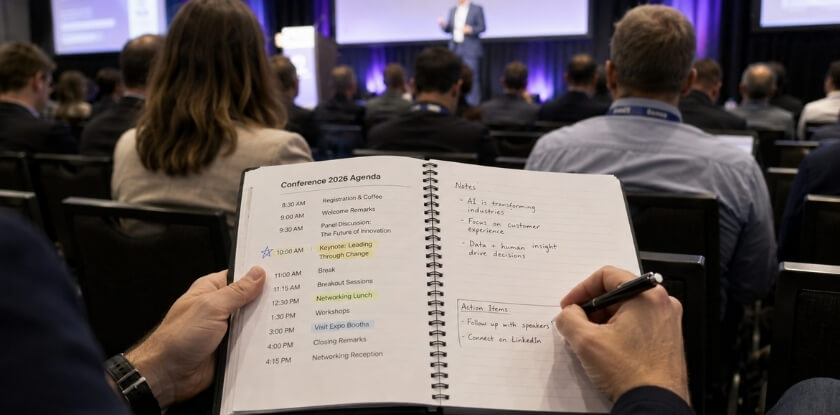
Ask your manager for a professional development budget before you chase a free ticket. Some employers will pay for registration if you tie the event to your work, and a clear request helps.
Make the Case in Business Terms
Your manager does not need convincing that conferences are valuable in general. They need to know why this specific conference is worth the cost for your role.
- Name what you will bring back. For example: “This event covers technical SEO and content strategy, which fits the campaign we are planning next quarter.” Vague requests like “it’ll be good for my development” are harder to approve.
- Connect it to a current project or gap. If the team is evaluating a tool or entering a new area, tie the event to that work.
- Mention networking as a business asset. Conferences put you in the same room as potential partners, clients and vendors.
- Include the full cost. Ticket, travel, accommodation and time away. Hidden costs make approval harder. Mention anything that lowers the cost, such as a group discount, a virtual option or a trip to that city you are already making.
What to Send
Send a short email rather than relying on a chat, because it gives your manager something to forward to their own boss or to HR. Use three paragraphs: what the event is and when, why it matters for your current work, and what exactly you are requesting (ticket only, or ticket plus travel). Attach the agenda, the speaker list and a cost breakdown.
If your company has a training budget or reimbursement process, find out before you write. Fitting your request into an existing process is easier than asking for a one-off spend.
When Your Company Won’t Pay
If there is no budget, there are still angles to try.
- A cheaper format. Ask whether the company would cover a virtual ticket instead. A low-priced virtual pass is an easier approval than a full in-person pass plus flights, though prices vary by event.
- A speaking slot. If you represent your company on stage, the cost can count as marketing or recruitment rather than training. A session proposal submitted under the company’s name can change the conversation.
- Outside funding. Check whether your professional association, alumni network or union offers development grants or subsidized tickets. The process is often simple.
From our experience at MS International: Our events are held in person in the Greater Toronto Area, and the event pages list no free tickets, grants or fee waivers. The only reduced rate on the pages is the Author Early Bird price (US$499, against US$599 for the regular author fee). Listener registration is US$499. Presenting authors submit first, go through double-blind review (about 10 working days) and register after acceptance at the author fee, so presenting does not come with a free ticket. Fees are non-refundable and non-transferable, so register only when you are sure.
FAQ: Asking for Free Conference Tickets
Asking an organizer for a free pass feels awkward, so timing your outreach, requesting with no following or media outlet, email versus LinkedIn and follow-up limits are worth settling first.
Is it rude to ask for a free conference ticket?
No, asking politely through the right channel is acceptable, and the organizer may simply say no. Scholarships, volunteer programs, press passes and speaker proposals are routes built for applications. Rudeness comes from vague, entitled or mass-sent requests, not from asking.
How far in advance should I reach out?
As soon as the program or call opens, because deadlines differ by event and places can fill. If no dates are listed, email the organizer and ask. A late request can still work for an unsold ticket, but it is the weaker bet.
What if I have no following, no media outlet and no speaking experience?
Volunteering. It asks for no following, media outlet or speaking record, and some volunteer calls say no experience is needed. A scholarship is another route if you meet its criteria, and an honest, specific email can work with smaller events.
Should I apply for several free ticket options at the same conference?
Pick the one or two routes that fit best and say which one you are asking for. A speaker proposal, a press request and a scholarship application sent together can look unfocused to the events team.
Can I ask on LinkedIn or X instead of email?
Yes, a quick public comment or direct message can open the door. Follow up with a proper email once you have a name and address, because social messages are easy to miss and hard to track.
Why do free ticket requests get rejected?
Often for reasons you cannot see, such as places filled, a budget change or a request sent to the wrong team. What you control is clarity: say what you do, what you offer and why this event matters to your work.
If a conference has a student discount, is it still worth asking for a full free pass?
Check the student discount first, because it is often the faster and more reliable route. If the discounted price is manageable, take it. Save the free-ticket request for when no discounted option fits.
Do virtual and hybrid conferences get these requests too?
Yes, and an online pass can be easier to get, because an extra online attendee costs the organizer less. Some events grant access in exchange for a written review, a social post or community support work.
Does a free ticket include travel and hotel?
Not necessarily. A free pass covers entry unless the program says more, and scholarship and volunteer terms can leave travel and accommodation to you. Read the terms before you accept.
How many follow-up emails is too many?
One follow-up after five to seven business days is appropriate. A second is acceptable when the deadline is close. After that, treat it as a no and move on.
Final Thoughts
Asking feels awkward the first time, but a clear email from the right person is a normal thing for an organizer to receive. Be specific about what you offer, follow up once, and if one route fails, try another.