
Leaving the biometrics centre feels like progress, and it is. It is also easy to read more into that moment than it deserves, especially after waiting weeks to get this far. Before you start planning around it, it helps to know what the step actually tells you.
Quick answer: No, giving biometrics does not mean your Canada visa is approved. Biometrics (fingerprints and a photo) only confirm your identity. IRCC still reviews your documents, funds, purpose of travel and background before it decides. The fee is $85 per person, and biometrics stay valid for 10 years.
Fact-checked by the MS International Editorial Team. Last verified against official sources: October 2026.
After the appointment, many people wonder if the visa is almost approved. It is not a decision. It is one completed step, and the real review continues afterward. Below is what biometrics do, who must give them, and what to watch for next.
What Biometrics Mean in the Canada Visa Process
Biometrics mean IRCC has collected your fingerprints and a digital photo to confirm who you are. It is a required step for many applicants, but it is not an approval.
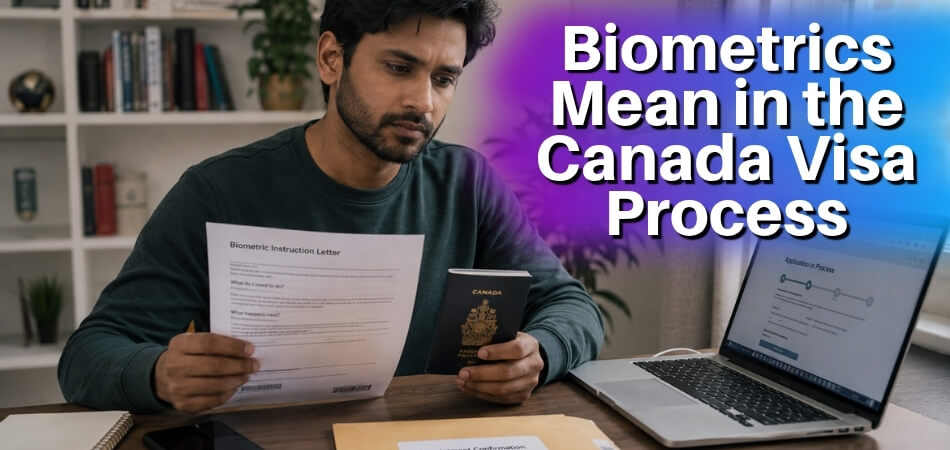
After you apply, IRCC sends a biometrics instruction letter that tells you where and when to go. Wait for that letter before you book. Once your biometrics are recorded, they are linked to your file, and officers can check them against past immigration records.
Biometrics help IRCC in four ways:
- Confirm that the person applying is the person in the file
- Catch duplicate identities or applications made under false details
- Support background and security screening
- Help border officers confirm identity when you arrive in Canada
None of this decides the outcome. Approval still depends on your eligibility, financial proof, purpose of travel, supporting documents, background checks, a medical exam if one is required, and the officer’s review. Fingerprints and a photo are much harder to fake than a name or a document, so linking them to your record gives IRCC cleaner files and more reliable security checks. If extra checks are needed, a file can take longer.
Who Needs to Give Biometrics for Canada?
Most applicants for a visitor visa, study permit, work permit, permanent residence or asylum need to give biometrics, unless they are exempt. Your biometrics instruction letter confirms whether this applies to you.
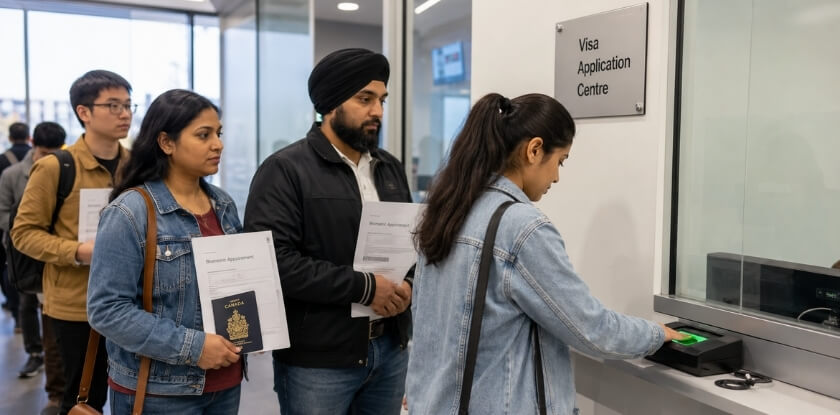
If you apply to attend a conference in Canada, study at a Canadian school or work for an employer, biometrics are usually part of the process. You are likely to be asked for them if you apply for:
- A visitor visa, study permit or work permit
- Permanent residence
- A refugee or asylum claim
- An extension or restoration of temporary status, depending on the case
Common exemptions on the official IRCC page include:
- Children aged 13 and under when the application is submitted
- Applicants aged 80 and over when they apply (not for asylum claimants). If you were 79 when you applied and turn 80 during processing, you still give biometrics
- US nationals applying for temporary residence, and eTA applicants
- Canadian citizens and most permanent residents
- Heads of state, diplomatic or official visa holders, and US visa holders transiting Canada
- Visitor, study or work permit applicants who already gave biometrics for a permanent residence application that is still being processed
Do not guess. Follow your IRCC account or letter, and complete the step by the deadline shown on it.
How Many Days Do You Have to Give Biometrics for Canada?
You have 30 days from the time you get your biometric instruction letter (BIL) to give your biometrics. Book your appointment as soon as the letter arrives. Booking is free, and you give biometrics in person at an official collection site.
Take these to the appointment and keep to these rules:
- Bring your BIL and your valid passport. Do not use a BIL from an earlier application, because it can delay your current application or lead to a refusal.
- If you cannot make the 30 days, use the IRCC web form to explain why you need more time. If you could not get an appointment in time, add the appointment date and a screenshot of the confirmation.
- For the photo: glasses are fine if your eyes are clearly visible and there is no glare, but sunglasses and tinted glasses are not allowed. Keep your hair off your face. Religious or medical head coverings are allowed if your full face is visible.
- For the fingerprints: hands must be free of henna and any temporary injury healed. If the prints are not good enough quality, you may be asked to give them again later.
IRCC cannot finish processing your application without your biometrics, and it may refuse an application if you decline to give them.
Do You Need to Give Biometrics Again for Canada?
Usually not, if your earlier biometrics are still valid. For visitor visas, study permits and work permits they last 10 years. If you gave them within that period, they are attached to your new application and you will not get a new letter.
| Biometrics fact | Detail |
| Fee | $85 per person, up to $170 for a family applying together; paid when you submit the application |
| Validity (visitor, study, work) | 10 years; a visa or permit cannot go past the biometrics expiry date |
| After a refusal | Biometrics stay valid; you generally do not repeat them for the next application |
| Permanent residence | Rules differ, so follow the letter in your account |
You can check whether yours are valid, and when they expire, with the IRCC online biometrics status tool or your account. IRCC may ask again if your biometrics have expired, your application type needs new ones, or your previous ones cannot be reused. You can also choose to give them again when you apply if they are close to expiring. Once your visa or permit has been issued, you can no longer give biometrics to extend it.
Do not give biometrics again unless IRCC sends a new letter. If an application was refused because biometrics were not given, an old letter should not be reused; you need a new application, the fees and a new letter.
What Happens After Biometrics for Canada Visa Approval?
After biometrics, IRCC keeps reviewing your file. Biometrics move it forward but do not confirm approval. Your account usually shows the first update as “biometrics received”.
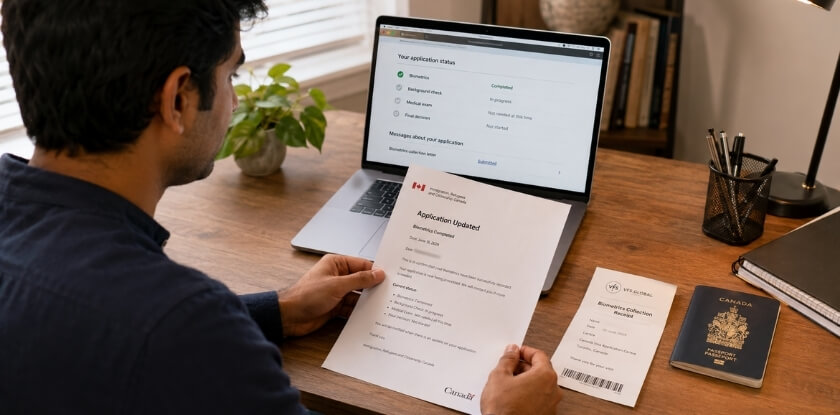
The next steps are:
- Completeness check: forms, fees, signatures and documents. Missing items can delay, return or refuse the application.
- Eligibility review: purpose of travel, funds, invitation letter if any, study or work papers, travel history and ties to your home country.
- Background and security checks: IRCC shares your biometrics with the RCMP, which checks your fingerprints against records for criminals, refugee claimants, deportees and earlier temporary resident applicants. Extra checks can add time.
- Medical exam, if required: done with an approved panel physician, and reviewed before the decision.
- Final decision: a passport request or approval letter, or a refusal notice with the reason.
How Long After Biometrics to Get a Canada Visa Decision?
There is no fixed time after biometrics. It depends on the visa type, your country of application, your documents and IRCC workload. Two people who gave biometrics on the same day can hear back weeks apart.
| Application Type | What Affects the Wait |
| Visitor Visa | Visa office, document checks, travel history review, application volume |
| Study Permit | School documents, financial proof, medical exam, background review |
| Work Permit | Employer details, job type, country of application, extra verification |
We do not quote day counts here because they change often by country and category. Use the official IRCC processing times tool for your country and application type. A complete application with clear documents is the best way to avoid delays. Requests for more documents, medical results or clarification slow things down.
Special measures in 2026: IRCC’s Ebola-related measures run from 27 May to 27 November 2026, unless extended. They apply to applications whose last country of residence is the Democratic Republic of the Congo, South Sudan or Uganda, whatever your citizenship. IRCC keeps processing these applications but does not finalize them, so a biometrics appointment there cannot lead to a decision until the measures end. Exemption requests are considered case by case.
Common Reasons Canada Visa Applications Are Refused After Biometrics
A visa can be refused after biometrics if the full application does not meet IRCC requirements. Biometrics confirm identity only; officers still judge everything else.
Common reasons are:
- Missing or weak documents: incomplete forms, letters or proof of funds leave too little evidence.
- Insufficient financial proof: unclear bank statements, income records or sponsor documents for the trip, tuition or living costs.
- Unclear purpose of travel: a vague plan or a weak invitation letter makes officers doubt the reason for the visit.
- Weak ties to your home country: limited family, job, study or property ties, or a problematic travel history, can raise concerns that you will not leave after your stay.
- Background or inadmissibility issues: criminal history, earlier immigration violations or misrepresentation.
- Medical concerns: a medical result that raises issues under Canada’s immigration rules.
- Inconsistent information: details that differ across forms, documents and past applications.
For conference visitors, an invitation letter that clearly states the event dates, venue and your role supports your purpose of travel. It does not replace funds or ties to your home country.
Myths and Facts About Biometrics and Canada Visa Approval
The main myth is that biometrics mean the decision is already positive. They do not. They only support identity checks.
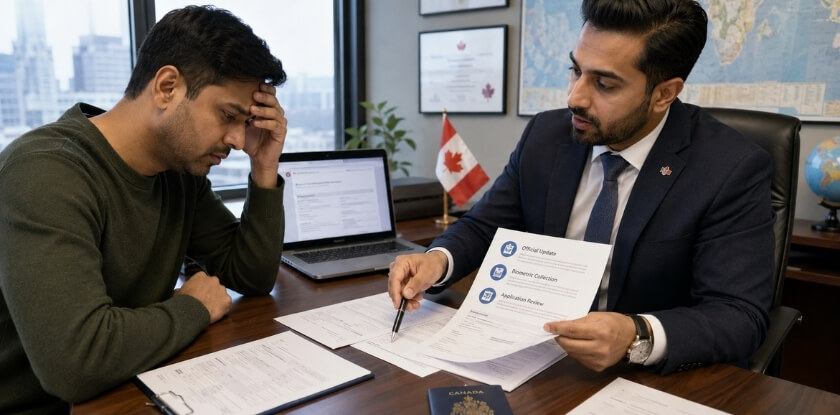
Myth: Biometrics make every application faster. Fact: processing time still depends on your visa type, country, documents, medical requirements, security checks and workload.
Myth: Accepted or valid biometrics guarantee a positive decision. Fact: accepted means collected successfully, and valid biometrics only mean your fingerprints and photo are on record and may be reused for a new application. You can still be refused for weak documents, unclear purpose, low funds or inconsistent information.
How to Check Canada Visa Status After Biometrics
Check your IRCC online account first. It is the best place to see progress after biometrics. Use official sources only, because unofficial tracking sites can give wrong or unsafe information.
Your account may show biometrics received, eligibility review, medical status, document requests, a passport request, approval or refusal. “Biometrics received” is a progress update, not an approval, while a passport request or approval letter is the strongest sign of approval. Log in regularly and also read your email, since a message can appear in the account before the email arrives.
If you submitted your passport through VFS Global, you can track its movement with your tracking ID and date of birth. VFS tracking shows document or passport movement, not the review itself.
If your application is delayed, you can contact IRCC through the IRCC web form. Have these ready:
- UCI and application number
- Full name and date of birth
- Application type
- A clear description of your concern
Send repeat inquiries only when you have new information. A real decision comes through your IRCC account, official email, a passport request, an approval letter or a refusal notice. Ignore agents or social media posts that claim to confirm approval.
What to Do While Waiting After Biometrics
Keep checking your IRCC account and email, answer official requests quickly, and do not make final travel plans until approval is confirmed. The application is still under review.

- Check email, including spam and promotions folders, so you do not miss an IRCC notice.
- Reply fast to extra requests for documents, a medical exam or clarification, and meet the deadline.
- Do not book non-refundable flights or hotels until you have official approval.
- Ignore rumors. Other people’s timelines and online comments say nothing about your file.
From our experience at MS International: we issue invitation letters within 3 to 5 business days after payment clears, and the letter supports your application but does not guarantee a visa. Our registration fees are non-refundable once paid, so register when you are ready to commit, and book flights and hotels with free cancellation until your passport request or approval letter arrives.
FAQs About Biometrics and Canada Visa Approval
Giving biometrics can feel like a green light. Whether a refusal can still follow, how to confirm acceptance, the deadline and fee, a missing account update and biometrics on reapplication are what to check.
Can I Get Refused After Biometrics?
Yes. Biometrics confirm your identity but do not approve your visa. IRCC still reviews documents, eligibility, purpose of travel, funds, background checks and admissibility before the final decision.
Does Biometrics Mean My Canada Visa Is Almost Approved?
No. It only shows one required step is done. Some applications move quickly afterward, while others take longer because of eligibility review, security checks, medical exams or document verification.
How Do I Know If My Biometrics Were Accepted?
Use IRCC’s online Check status tool or your IRCC account. They show whether your biometrics are valid and when they expire. If something is wrong with the check, IRCC contacts you through your account.
Do I Need Biometrics Again If I Reapply?
Usually not, if they are still valid. For a visitor visa, study permit or work permit they last 10 years, even after a refusal. IRCC will send a new letter if it needs new ones.
How Many Days Do I Have to Give Biometrics for Canada?
30 days from the time you get your biometric instruction letter. Book as soon as it arrives. If you cannot make it, use the IRCC web form to explain why you need more time.
How Much Is the Canada Biometrics Fee?
$85 per person, or up to $170 for a family applying together. For a first application, you pay it when you submit, unless you are exempt.
What If My Biometrics Do Not Show in My Account?
Check your receipt and account details first. If they still do not appear, contact IRCC through the official web form.
Do Biometrics Make Canada Visa Processing Faster?
No. They let IRCC verify identity and continue checks, but total time depends on visa type, country, document quality, background review and workload.
What Is the Next Step After Biometrics for Canada Visa?
IRCC continues the review. The next update may be a document or medical request, a background check, a passport request, an approval or a refusal. Keep checking your account and email.
Conclusion
The answer is no: biometrics confirm your identity, but they do not decide your visa, study permit or work permit. Treat the appointment as one finished step, keep watching your account and email for what IRCC asks for next, and treat only a passport request, approval letter or final decision as the real result.
Disclaimer: This article is general information, not legal or immigration advice. Visa rules, fees, and processing times change. Confirm the current requirements on the official Immigration, Refugees and Citizenship Canada (IRCC) website before you apply.